

Our Voices, Our Stories
Where the voices, journeys, and projects of the NPY Women’s Council come alive. Here we share perspectives from across our communities; the wins, challenges, and everyday moments that shape our collective story.
Stories
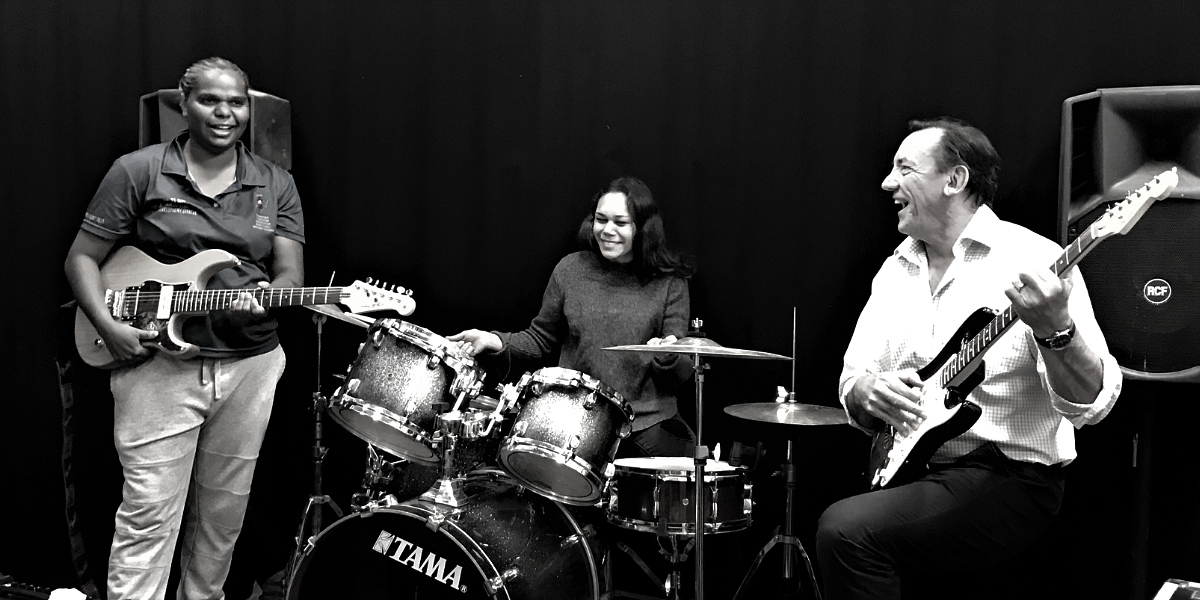
New Youth Programs opened by the Hon. Minister Tinley AM MLA
NPY Women’s Council has received funding from the Western Australian Government to deliver new Youth Programs to the Mantamaru (Jameson) and Papulankutja (Blackstone) communities in the Ngaanyatjarra lands for the next 3 years.
The NPY Women’s Council Youth Programs will support remote Yarnangu young people and their communities to lead safe and healthy lives through culturally relevant education, recreation and leadership activities.
The Hon. Minister Peter Tinley AM, MLA and delegates visited Papulankutja, Irrunytju and Mantamaru communities in the Ngaanyatjarra Lands to officially open the programs and to speak with the communities about their interests.
The visit was important to the communities and NPY Women’s Council and gave Yarnangu the opportunity to speak directly with the Minister about their worries and their hopes for children, young people and their communities.
“Young people are very special to us. We would like to see something good happening for our young people, because they are the future of tomorrow” said NPY Women’s Chairperson Maime Butler.
It was a great honour to host the Minister’s visit, which was filled with community meetings, rounds of softball, checking out the school holiday activities at the Mantamaru recreation hall and a tour of the Ng Media studios where the Minister got to jam with youth workers Azaria Foster & Shardina Tunkin.
NPY Women’s Council would like to say a special thank you to Yarnangu in these communities, in particular Carlton Reid Chairperson for Papulankutja community, Chris Reid Chairperson for Irrunytju community and Elvis McLean Deputy Chairperson for Mantamaru. Also a special thank you to our Chairperson Maimie Butler and Director Janet Forbes for being our wonderful hosts.
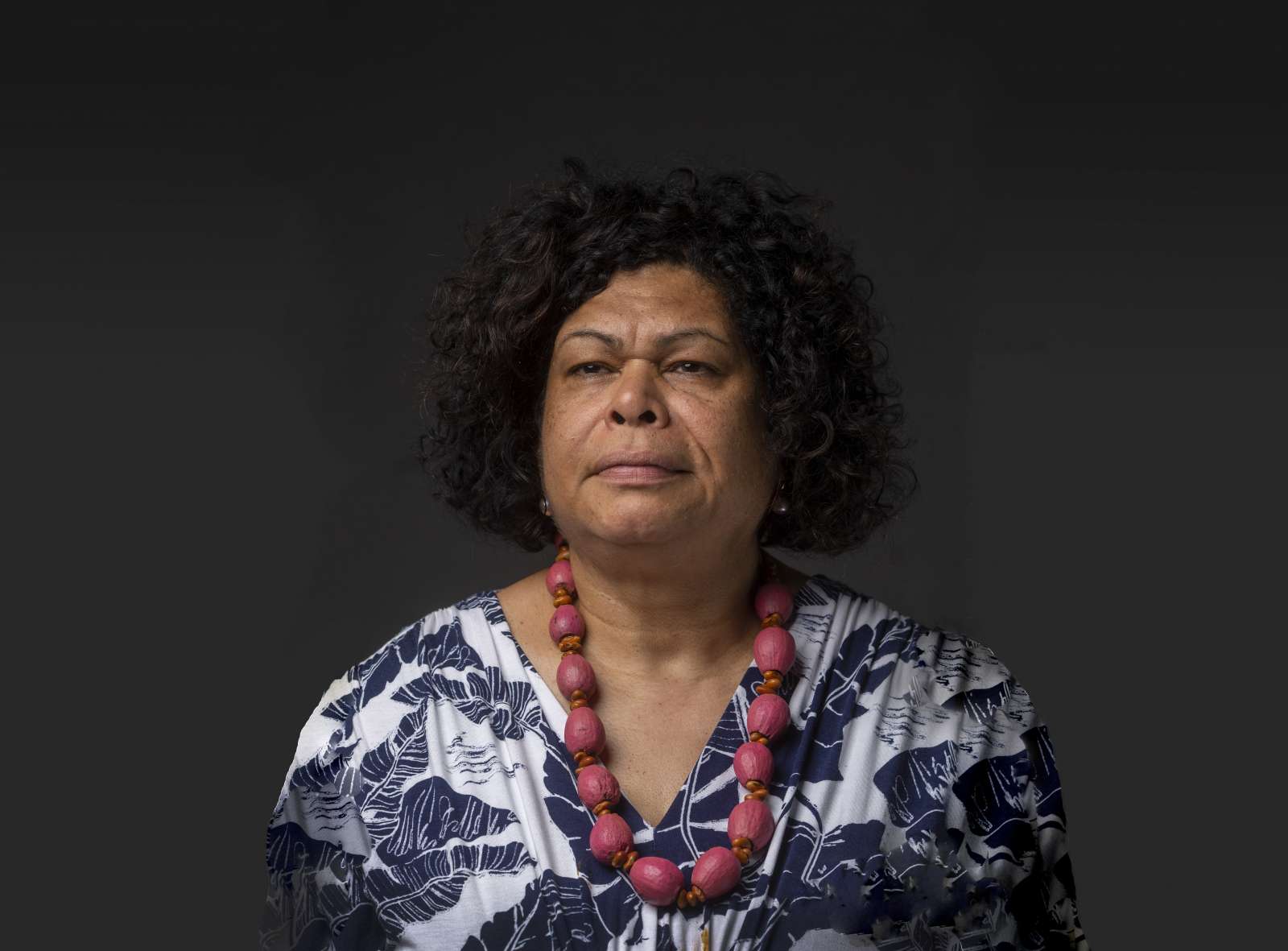
NPY Women’s Council celebrates our long-standing CEO Andrea Mason as she departs from her role of over 10 years with NPYWC, upon her appointment to serve as a commissioner in the Royal Commission into Violence, Abuse, Neglect and Exploitation of People with Disability.
It is with heartfelt sadness that the directors, staff and the communities we serve say goodbye to Andrea, but know that she will bring her dynamism and strengths to her new role, once again best serving Anangu within the Central Desert region.
Andrea has accomplished so much in her role as CEO.
Andrea is committed to delivering long-term positive change to the communities across the Ngaanyatjarra Pitjantjatjara Yankunytjatjara (NPY) Lands, this is a responsibility she has been delivering since joining NPY Women’s Council in 2008.
Since 2010 she has led the organisation as Chief Executive Officer. Andrea’s relationship to the NPY Lands is strong both professionally and personally. Her mother’s people are Karonie people and her father is Ngaanyatjarra. Andrea believes her responsibility as CEO is one of being a custodian for the hopes and aspirations of the members of the Council.
Her career prior to joining the Council in 2008 tells the story of the areas she has had a long-term interest in reconciliation and genuine self-determination for Aboriginal people. Andrea has close to a 15-year career working in the South Australian and Australian public services. During these years, she worked in the SA Housing Trust in a team that provided housing and tenancy projects to communities in the APY Lands; and in the Australian Public Service she worked on policy to increase community engagement in Aboriginal communities and also building the leadership of Indigenous women.
Andrea enjoys working with and alongside people who have a passion to find solutions to complex issues and to follow on with implementation. In the early 1990s, she worked as a Community Manager in an SA Government project that campaigned for the right to host the 1998 Commonwealth Games in Adelaide.
She has worked for Reconciliation Australia as a Relationships Manager in the Reconciliation Action Plan (RAPs) project; an initiative that offers Australian workplaces a framework to increase their engagement and awareness of Aboriginal and Torres Strait Islander peoples and culture.
A stint working in the SA Parliament and an attempt to enter politics prepared her for working in the political sector and various terms on boards and committees including Transfield Services, Indigenous Advisory Board.
Like the story of many young Australians, participation in sport has enabled her to develop positive life skills. During her 10-year netball career, Andrea learned that hard work can provide a good reward, a core belief she has taken with her into her professional and community work.
Andrea believed being CEO at NPYWC was the best job in the world. She worked with strong Aboriginal women and alongside highly committed Aboriginal and non-Aboriginal staff, who gave their best every day to see the vision of the organisation advanced. She sees herself as a reconstructive social entrepreneur, delivering (with the guidance of NPY Directors and members) transformative change that will enable women and their families to exercise their right to control their own lives and life matters, in communities free of violence and sustained by a genuine hope for the future.
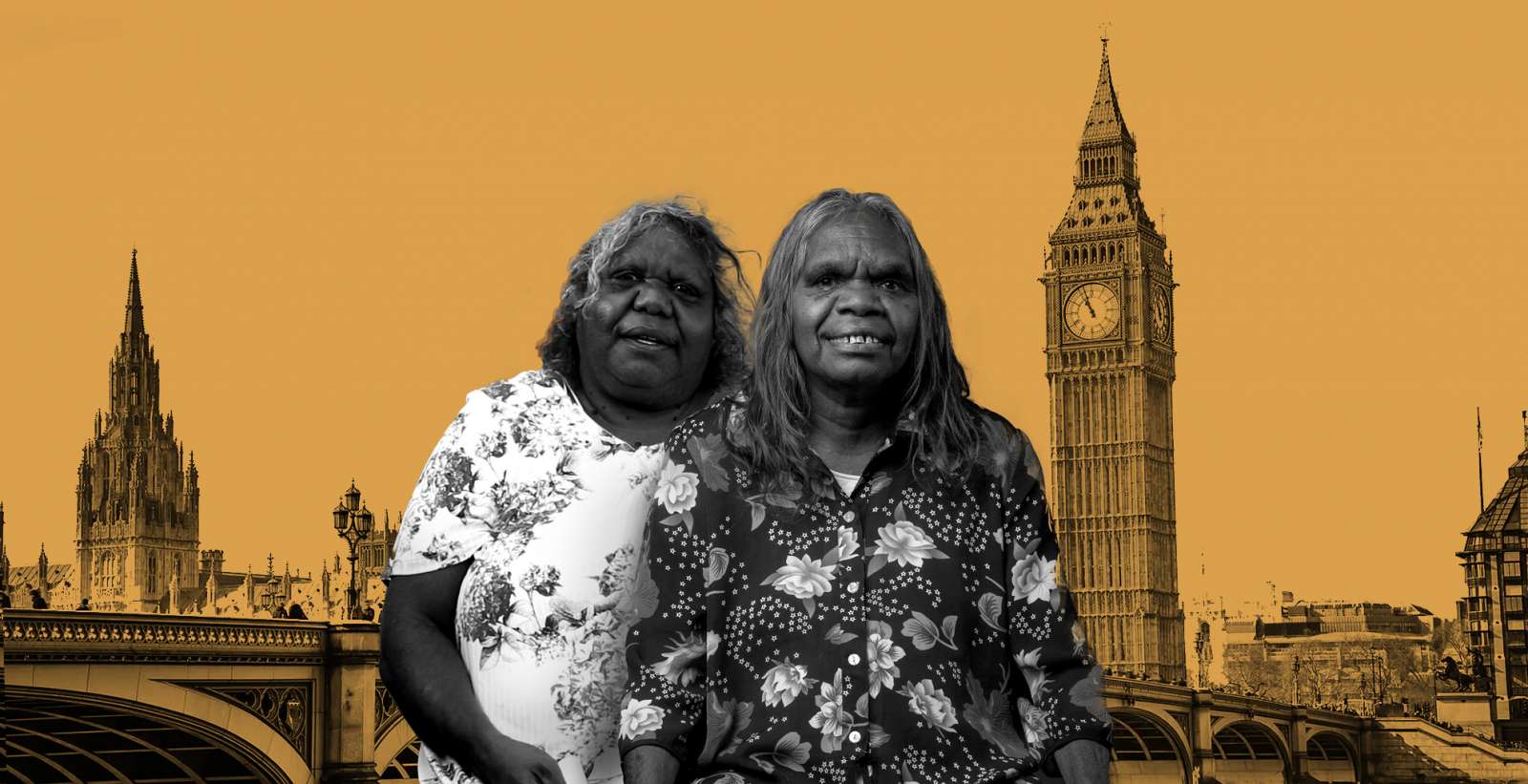
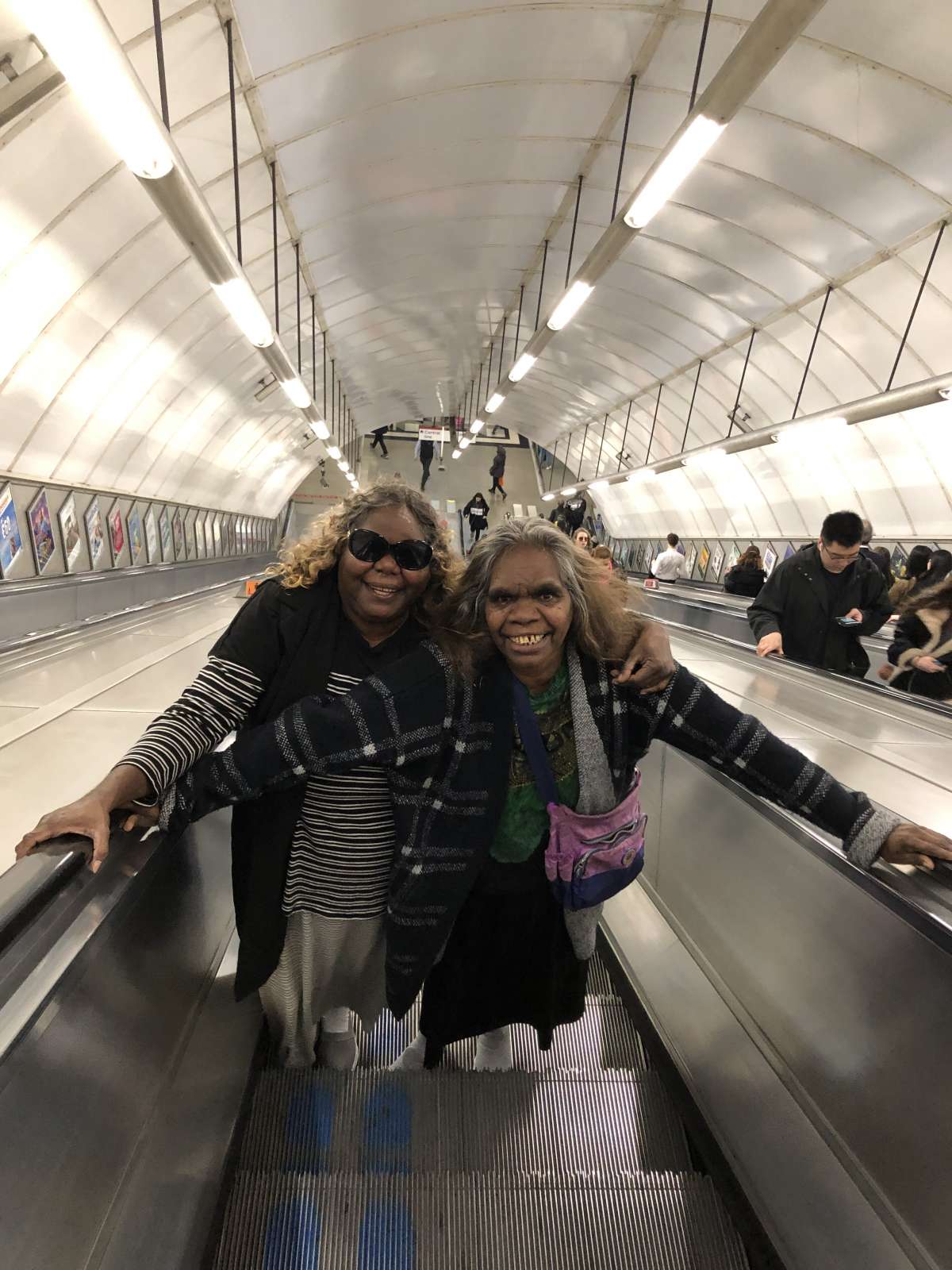
Rene Kulitja and Pantjiti Lewis return from their trip to London!
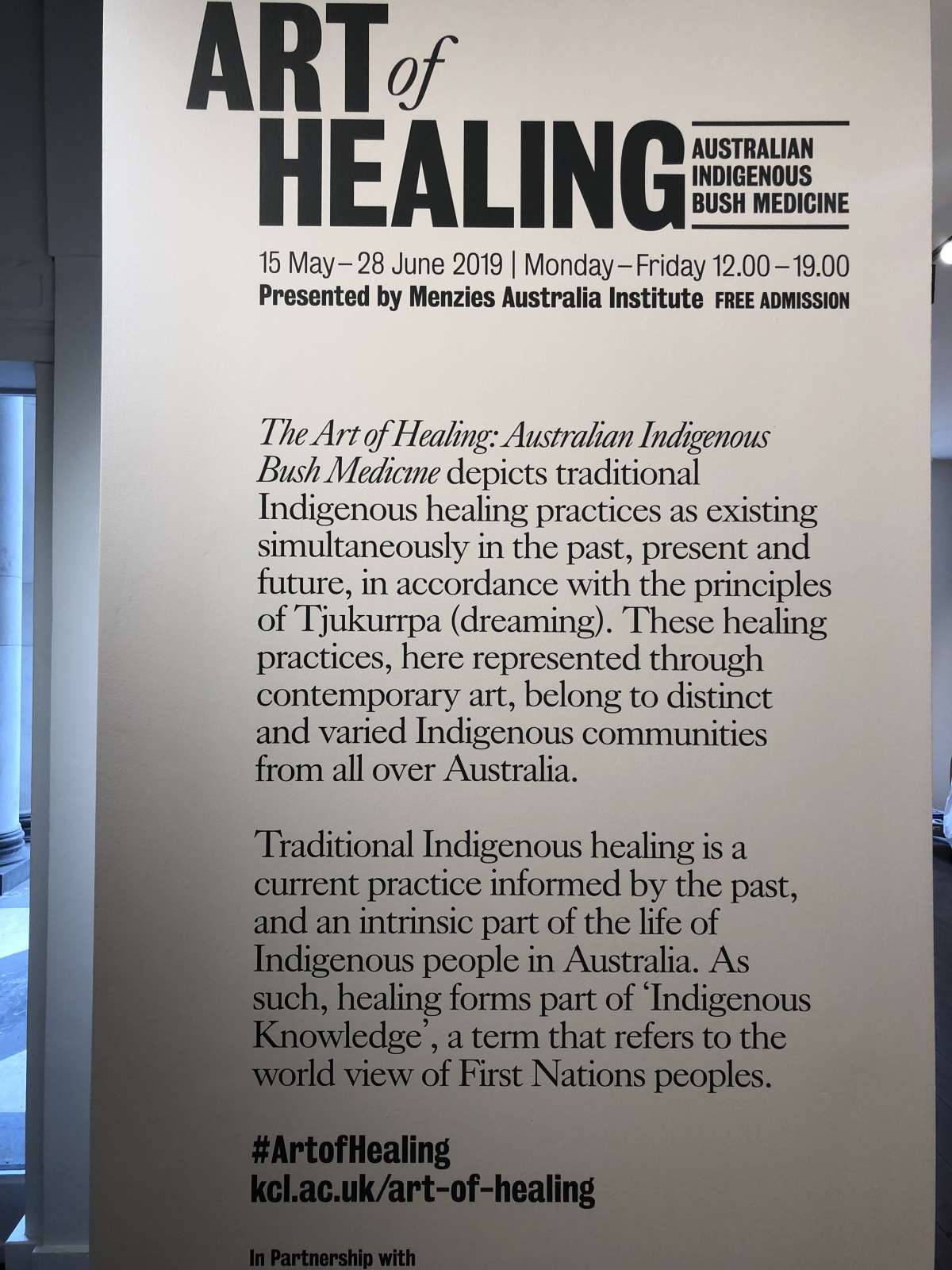
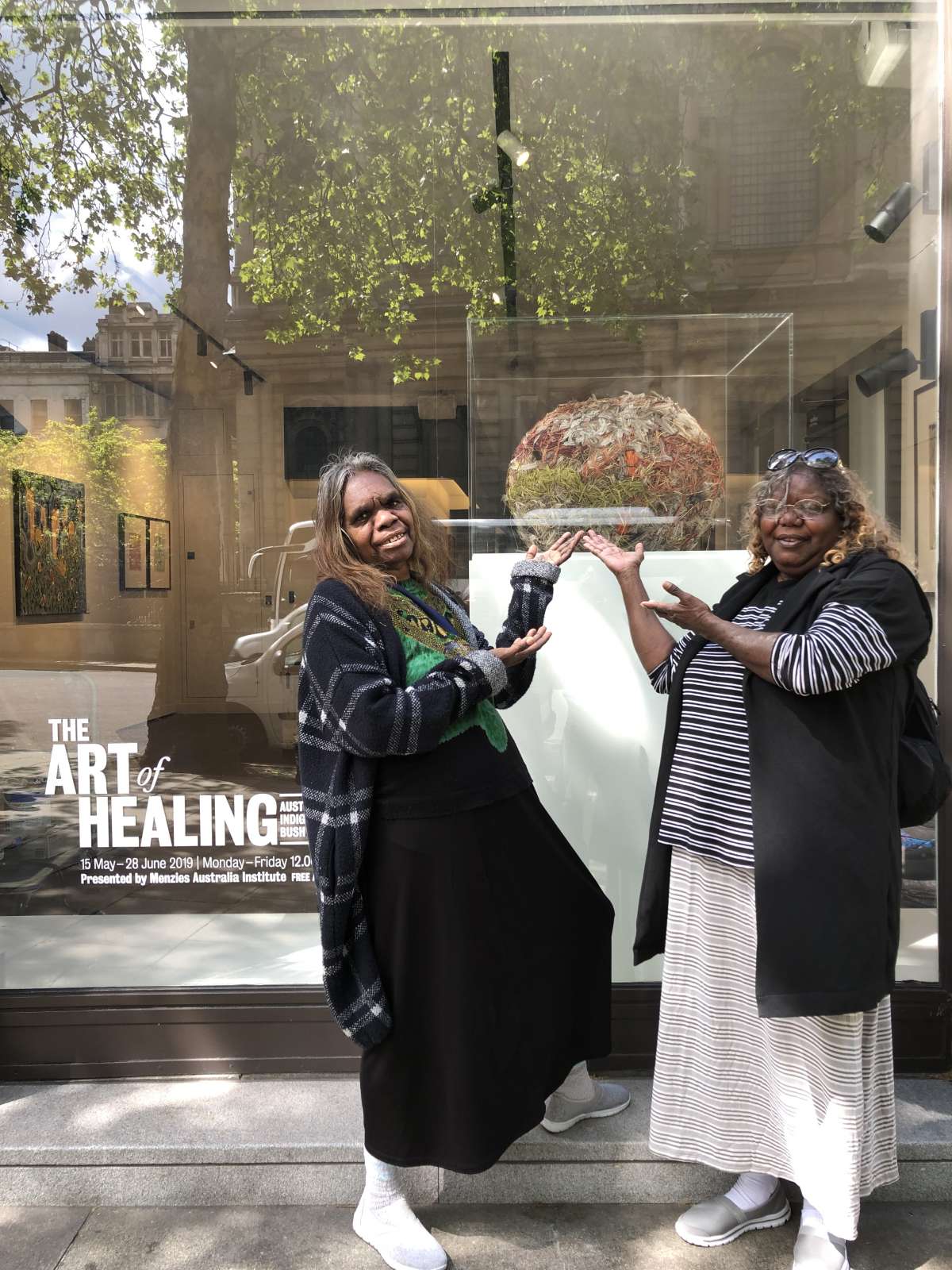
Senior artist Rene Kulitja and Ngangkari Pantjiti Lewis have return from their trip to London. Rene and Pantjiti along with Ngangkari Program Manager Angela Lynch, travelled to the UK to attend the opening of The Art of Healing: Australian Indigenous Bush Medicine a touring exhibition currently housed at the prestigious King’s College in London.
Rene and Pantjiti were honoured guests and presented lectures explaining Anangu healing practices, mental health and ngangkari traditions.
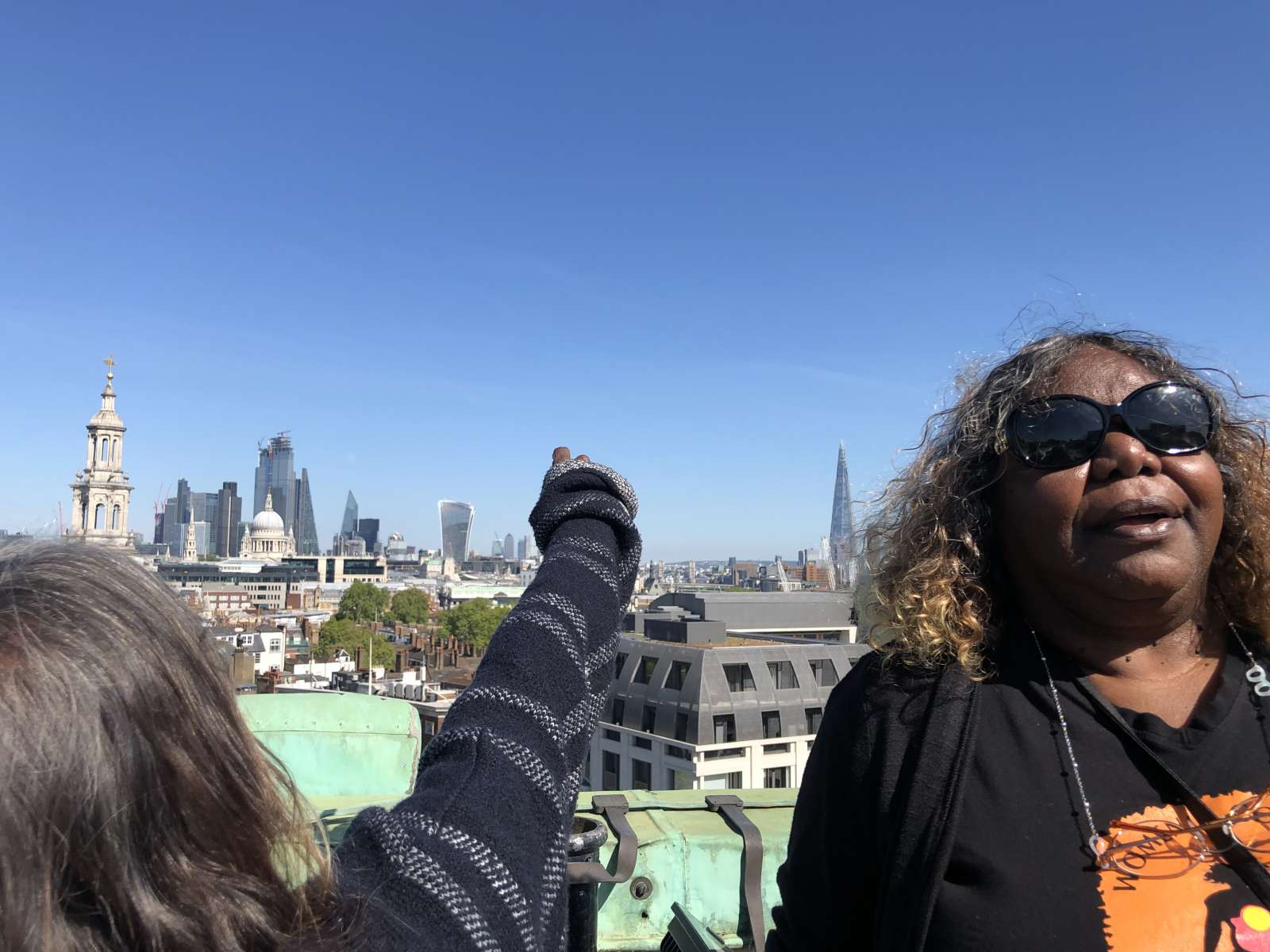
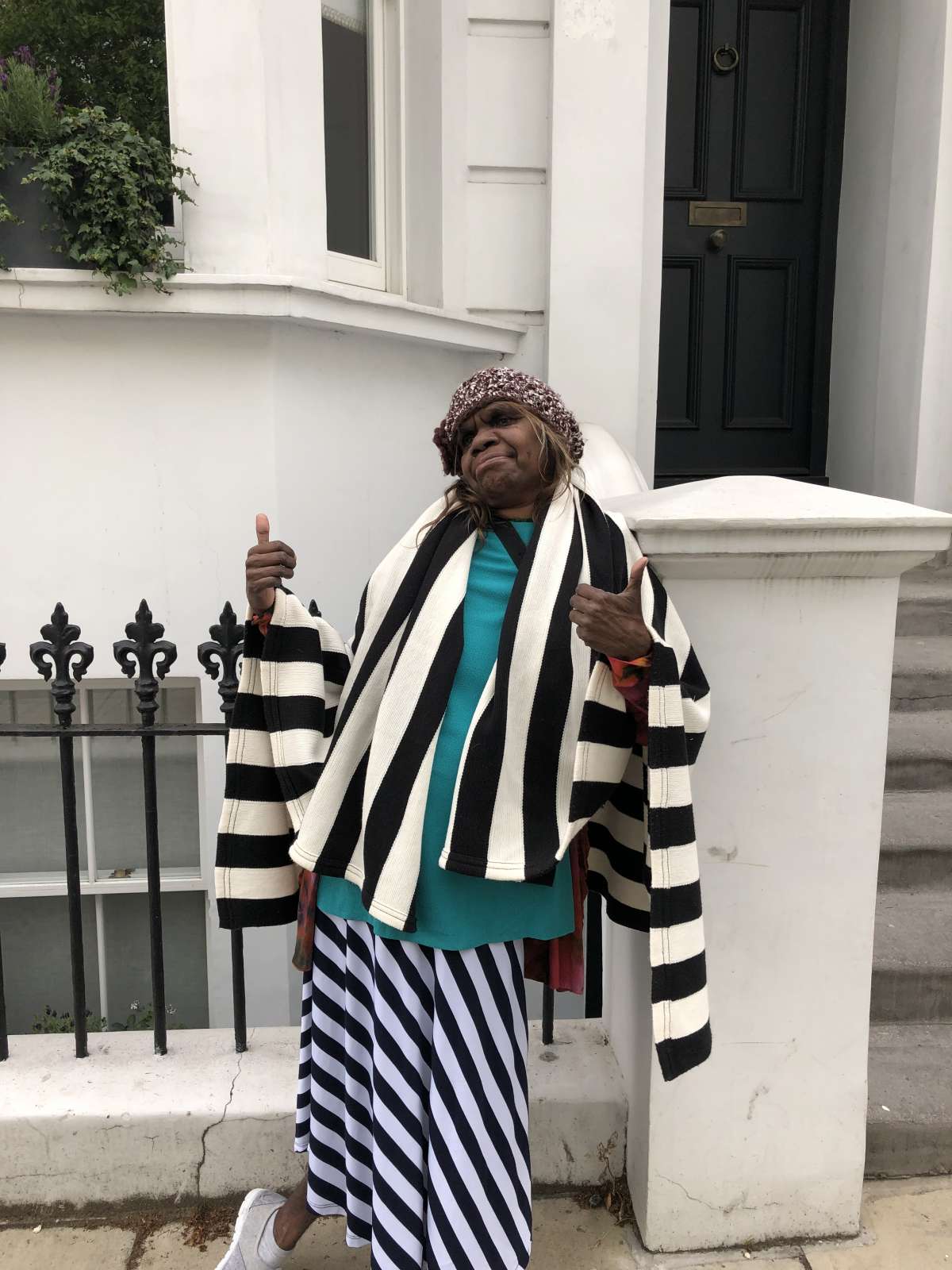
Between formal appointments Rene and Pantjiti managed to also visit Australia House, the British Museum, and lots and lots of art galleries!
NPY Women’s Council is very proud of Rene and Pantjiti as well as the Ngangkari program – who once again have highlighted the importance of traditional healing practices not just for Anangu but throughout the world!
The Art of Healing is open until the 28th of June at Bush House Arcade, London
ALPIRI series launched on ICTV!
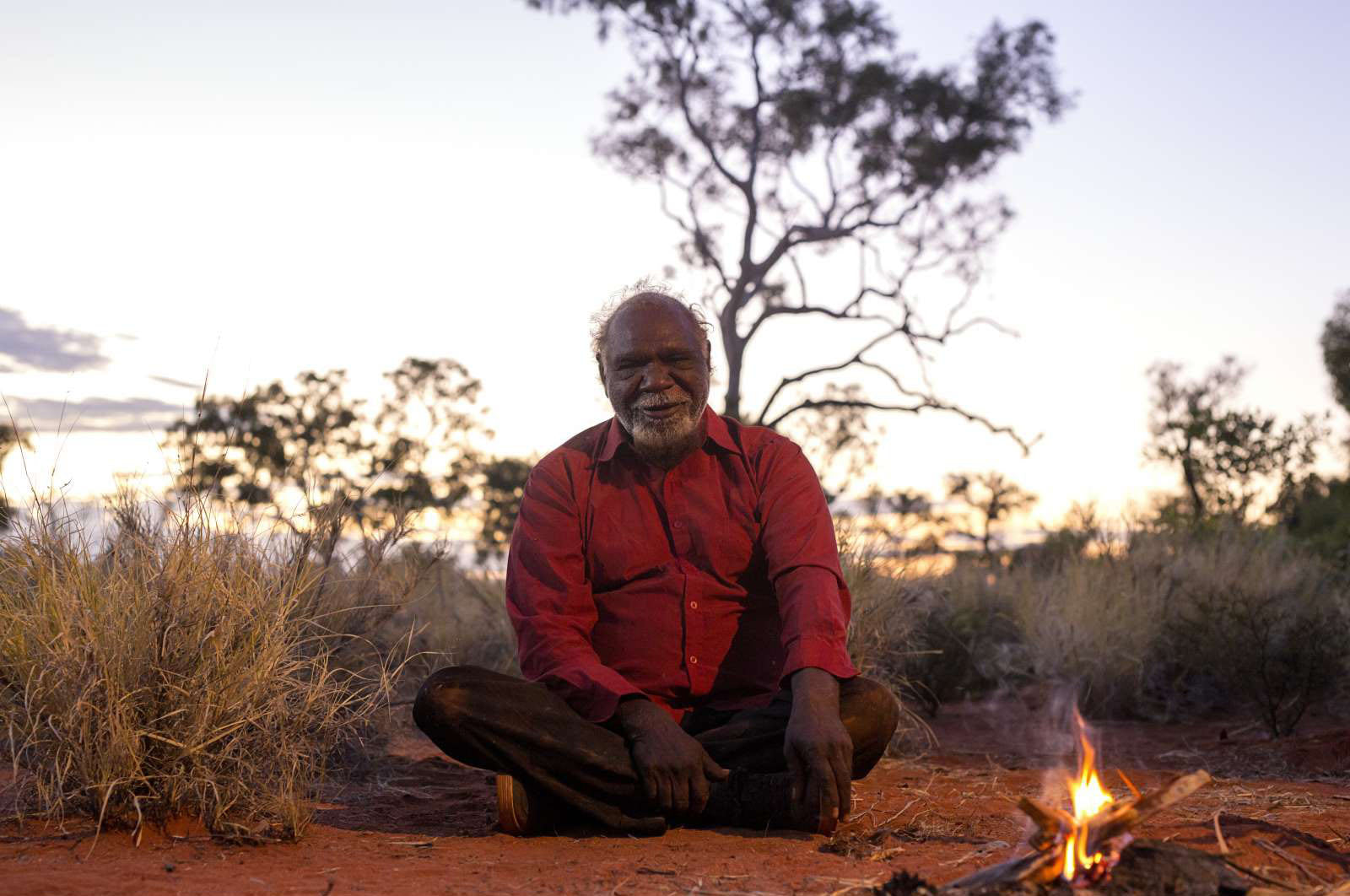
‘Alpiri’ is a form of motivational or instructional speech traditionally used in the early morning in Anangu camps. Usually an elder would get up early to broadcast a message to people waking in the camp. In the Alpiri video series, we have produced short videos in which senior Anangu leaders send messages out to viewers. Produced over several days at Eagle Valley outside of Docker River, this project was brought together at the request of Pantjiti McKenzie in an effort to highlight the importance of this traditional practice.
This project was made possible with funding from the Community Broadcasting Foundation and features Rene Kulitja, Roy Yaltjangki, Simon Butler, Peter Mitchell, Maringka Burton, Nininka Lewis and Ilawanti Ken.
NPY Women’s Council is very thankful to ICTV for hosting and broadcasting the collection of videos which can be found at the link below:
Congratulations Pantjiti Unkari McKenzie OAM
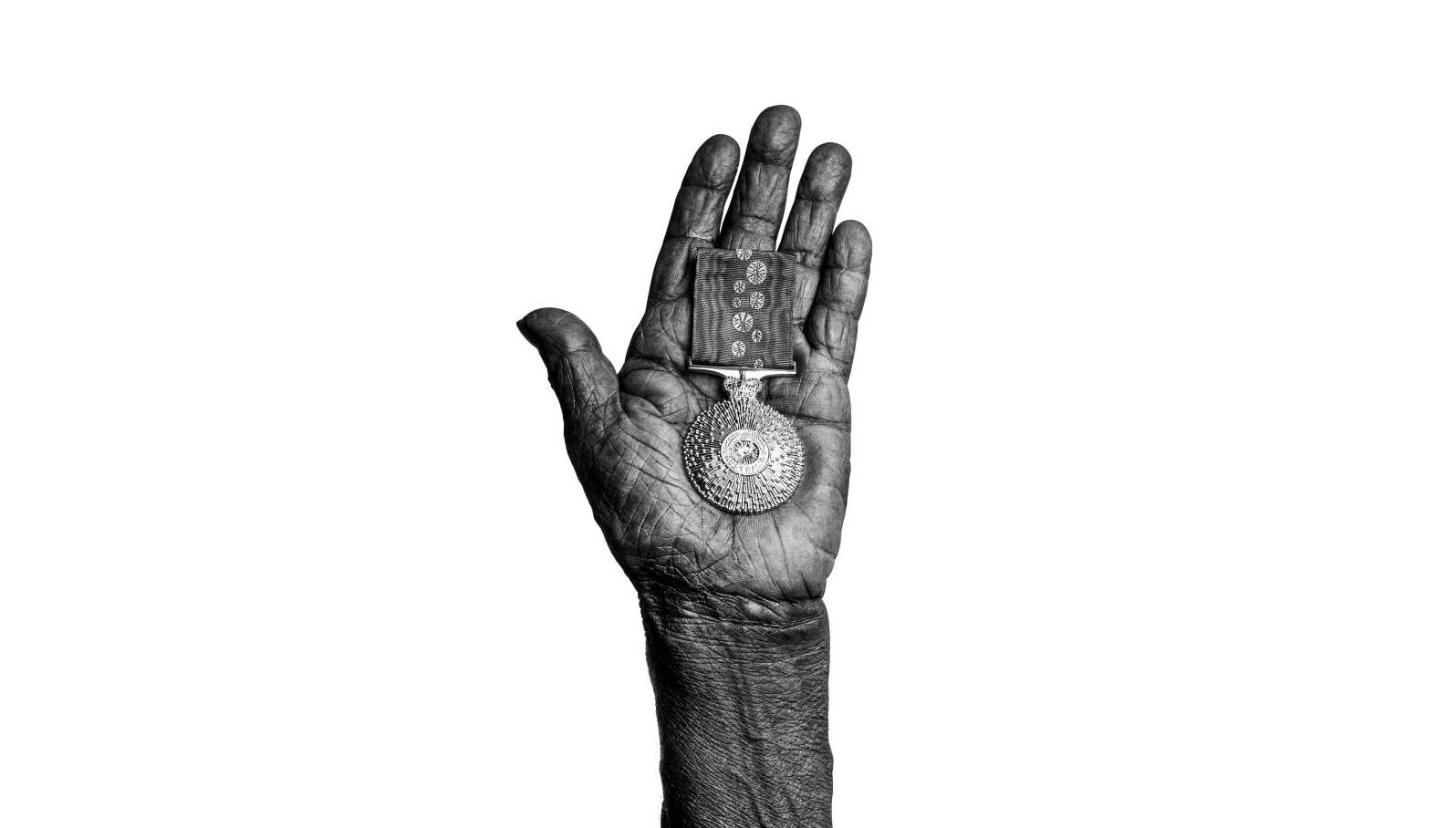
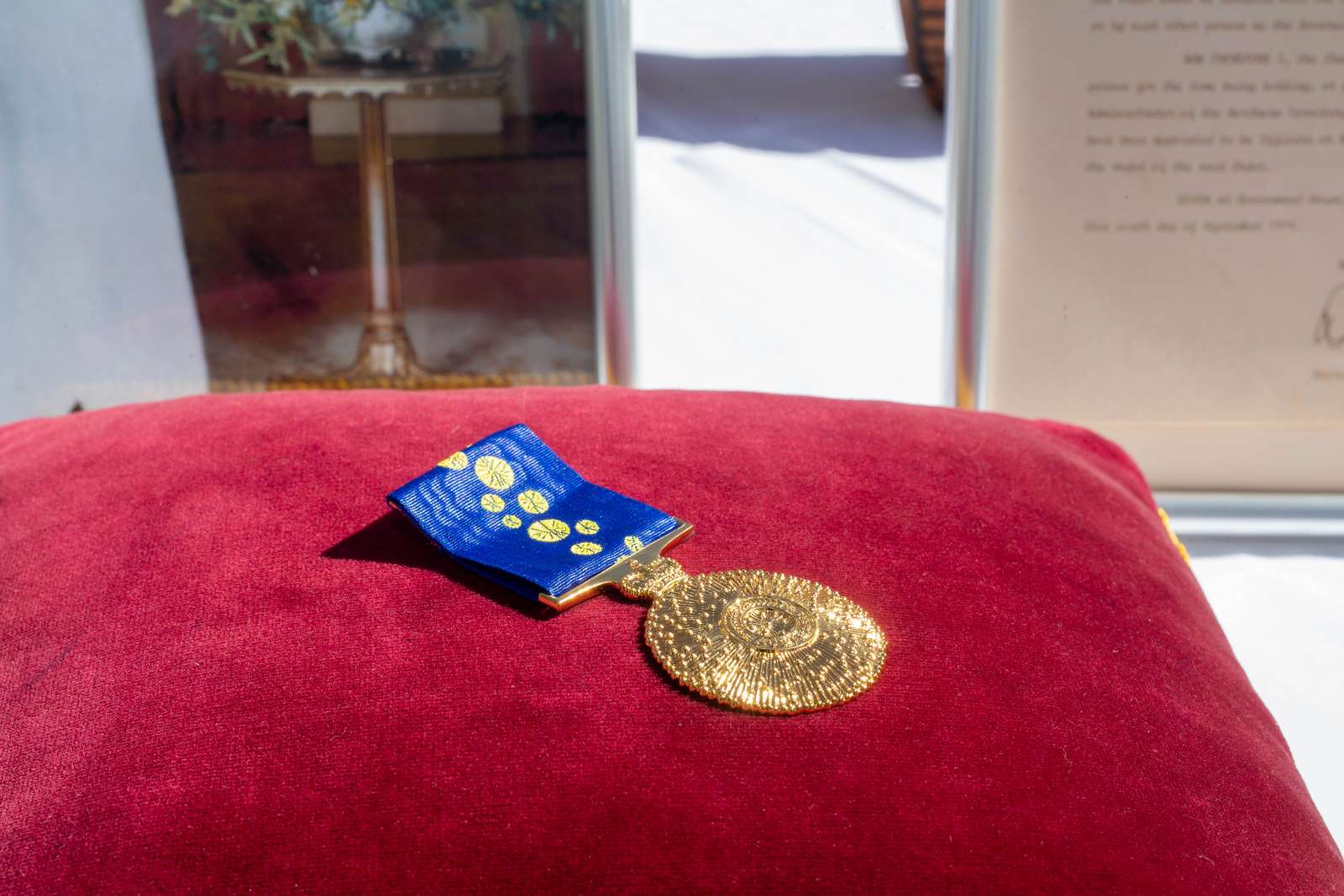
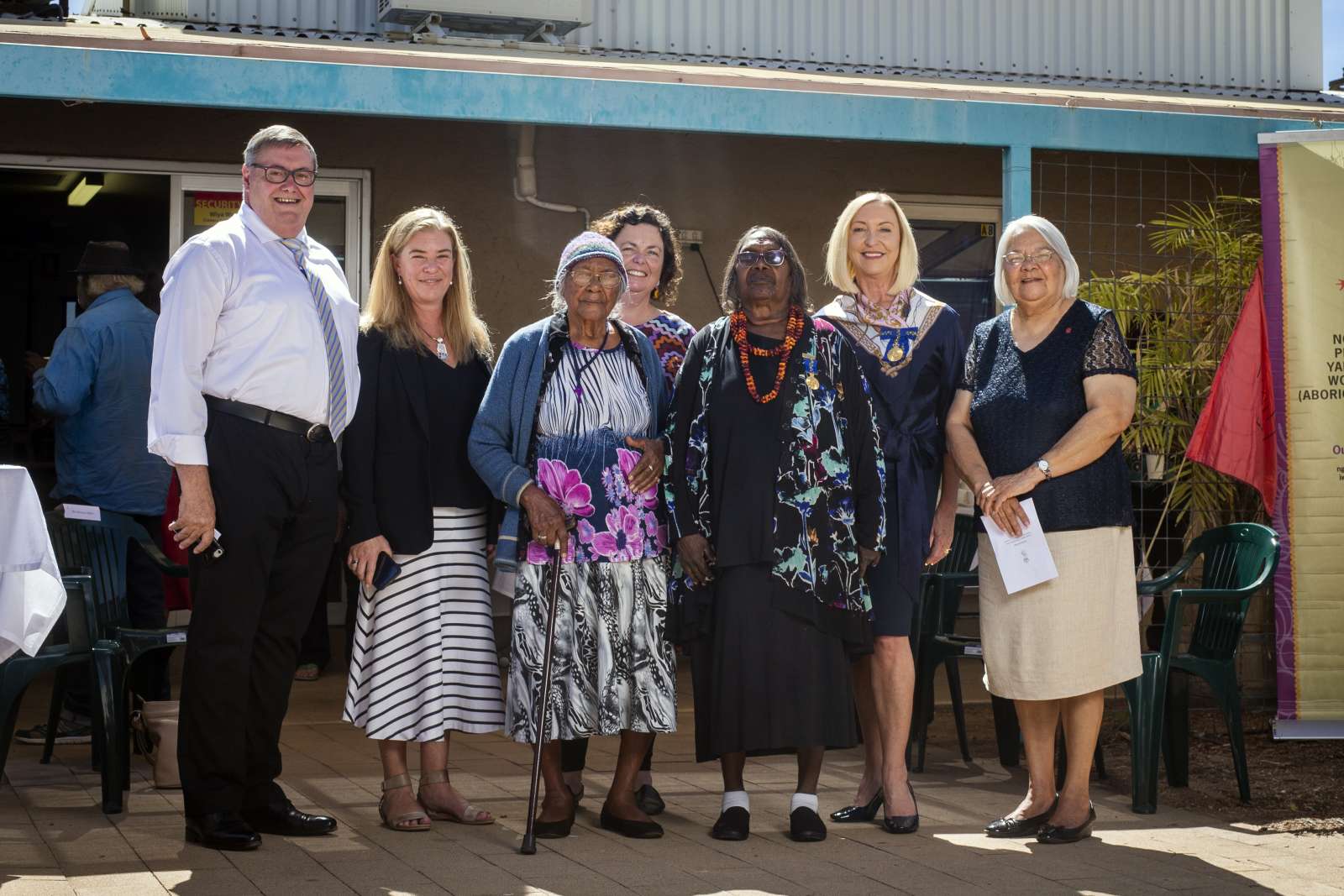
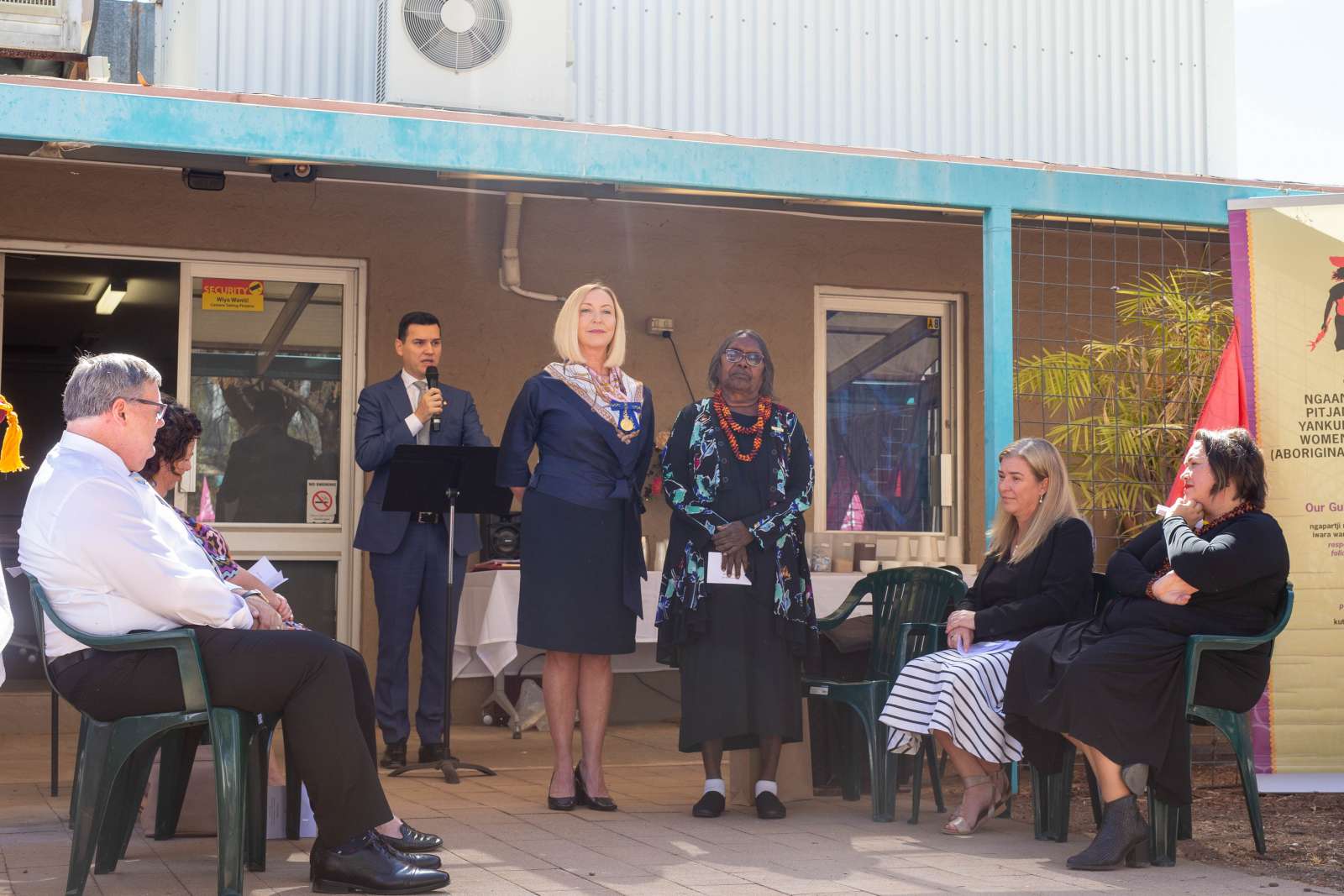
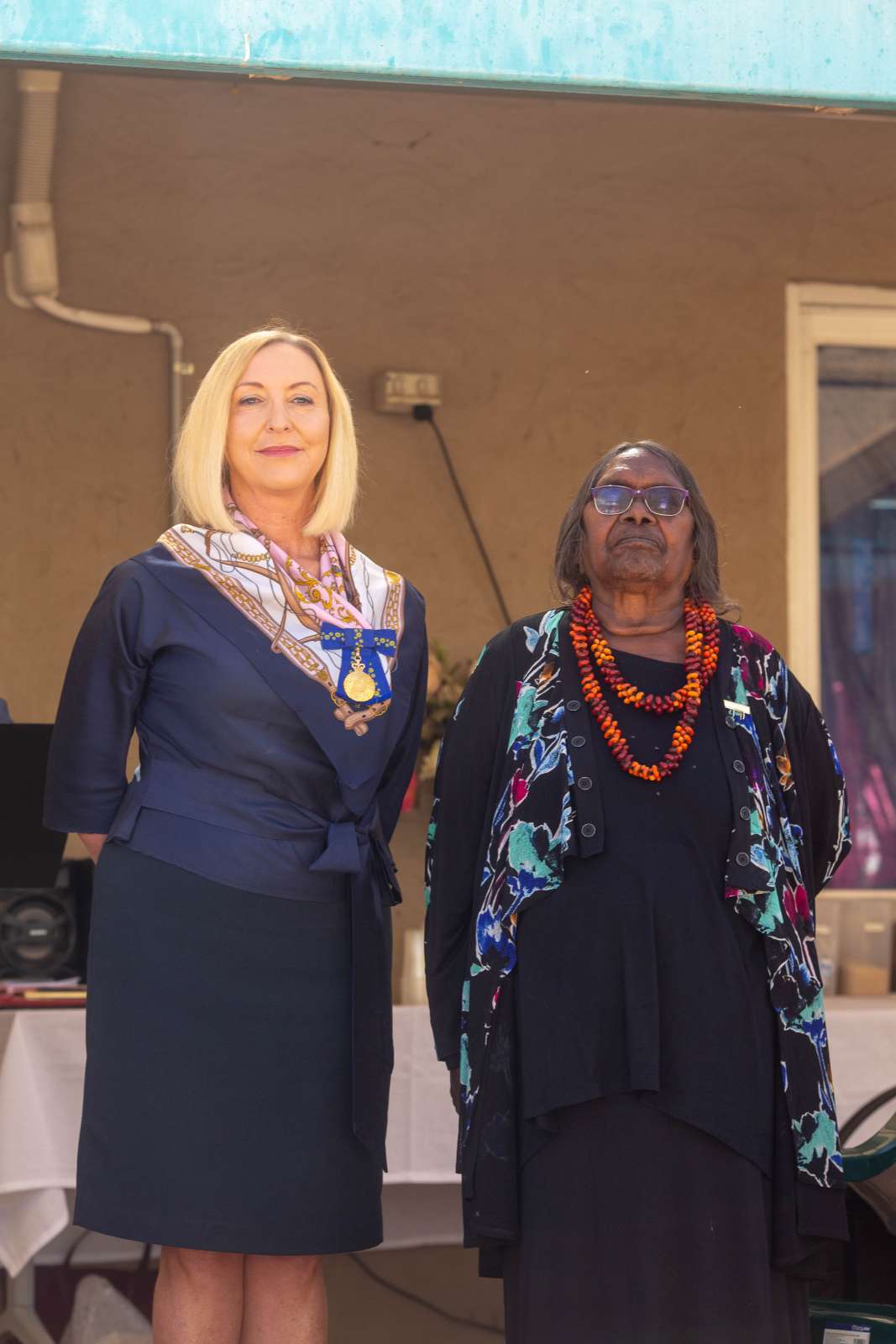
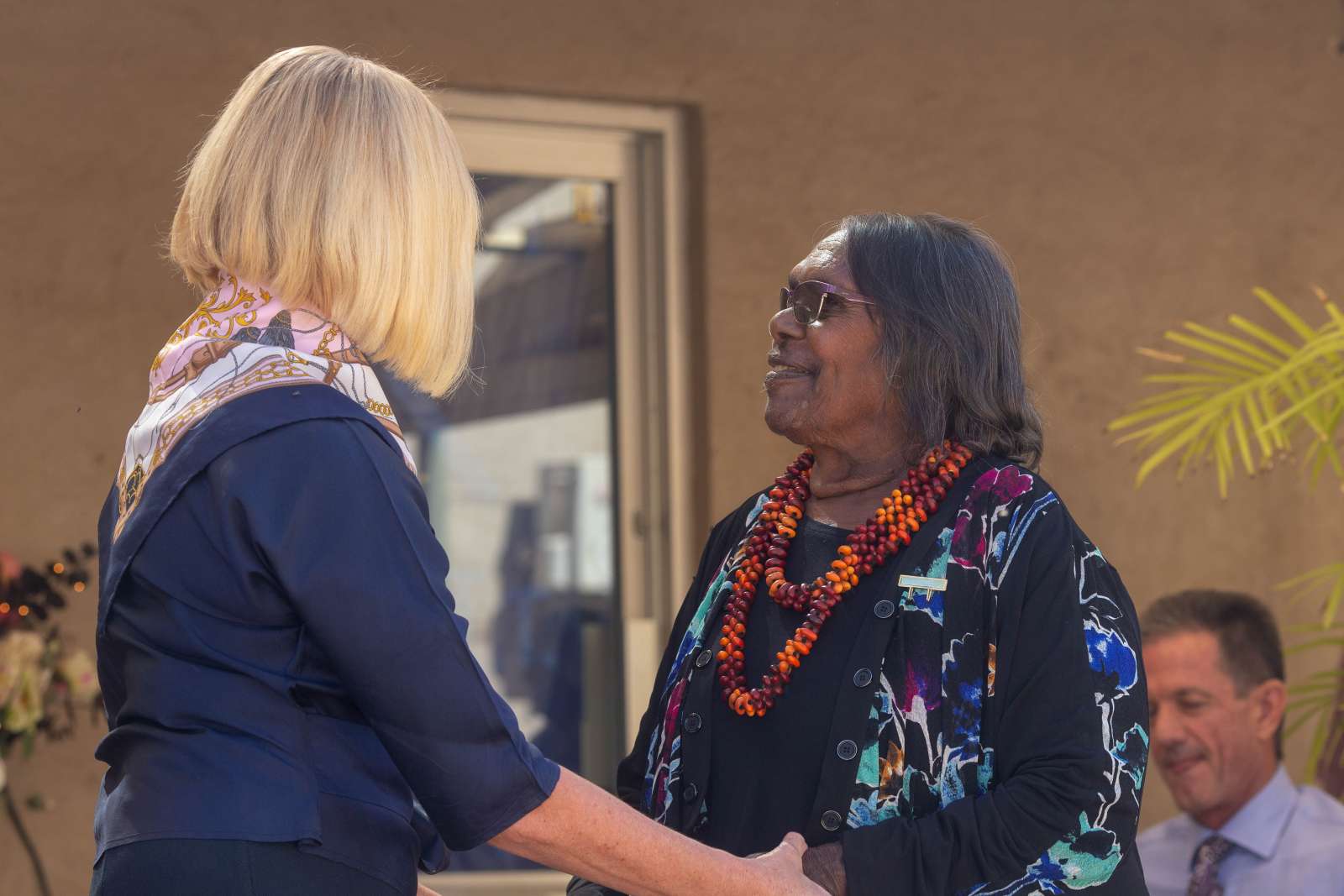
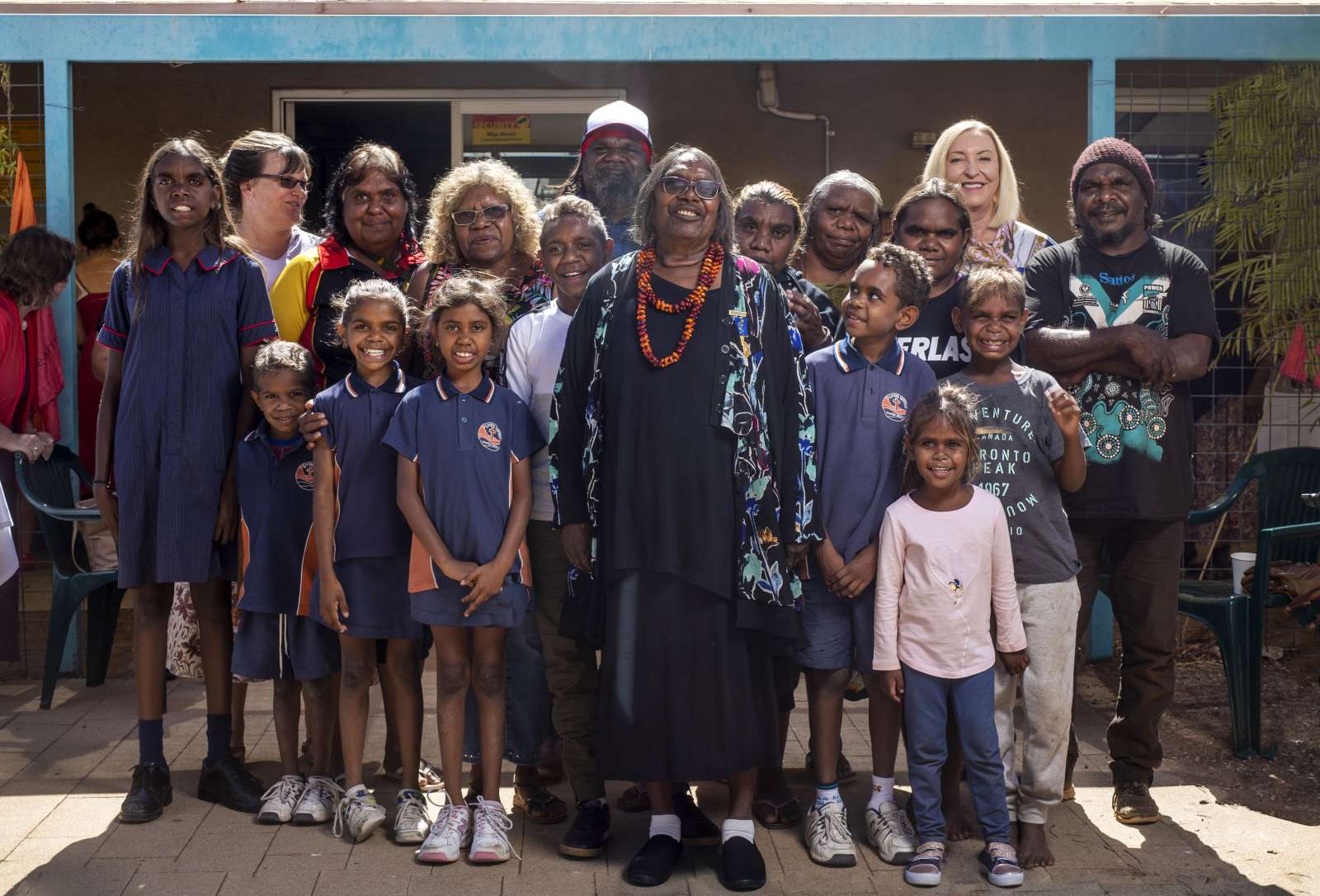
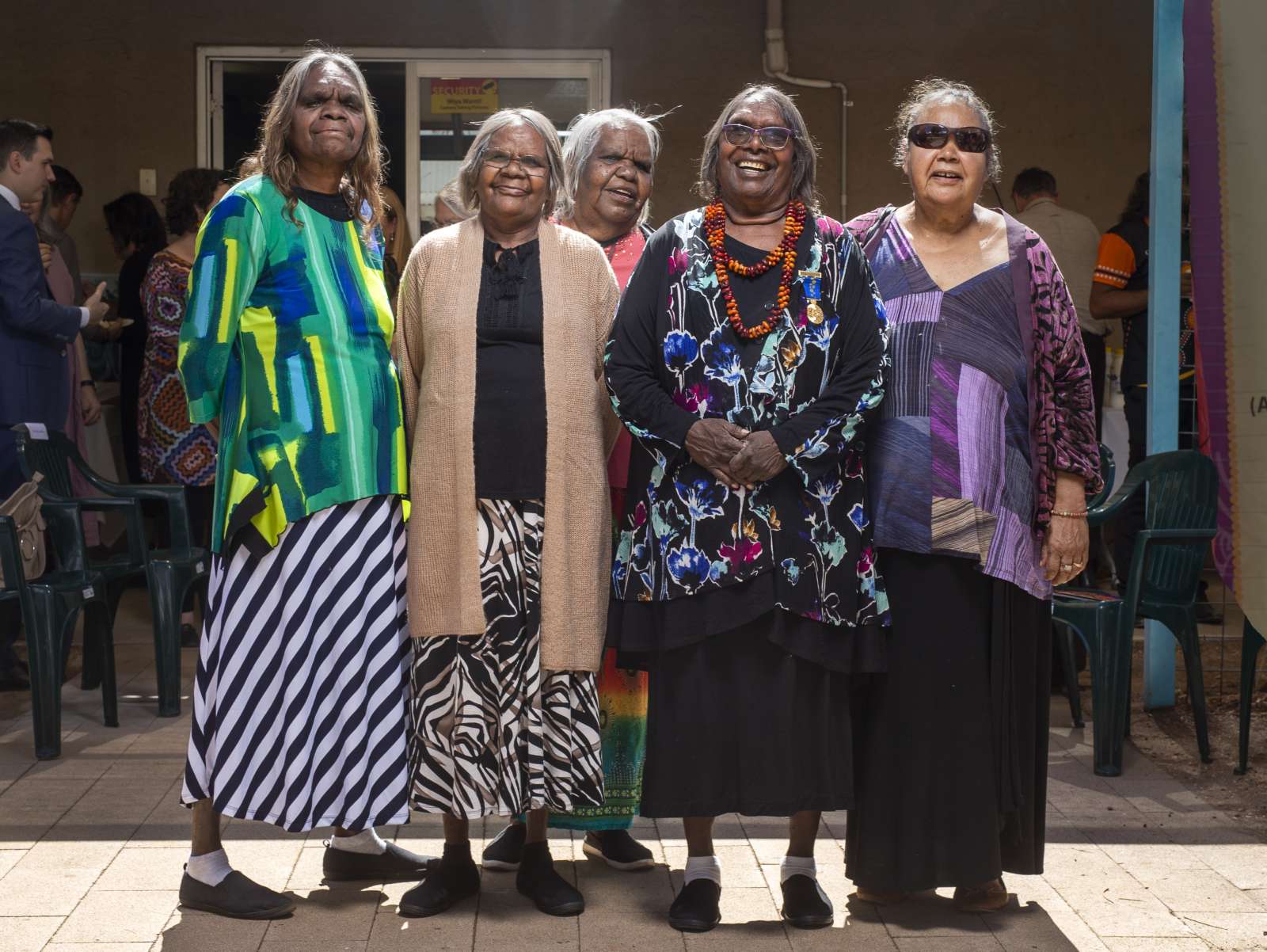
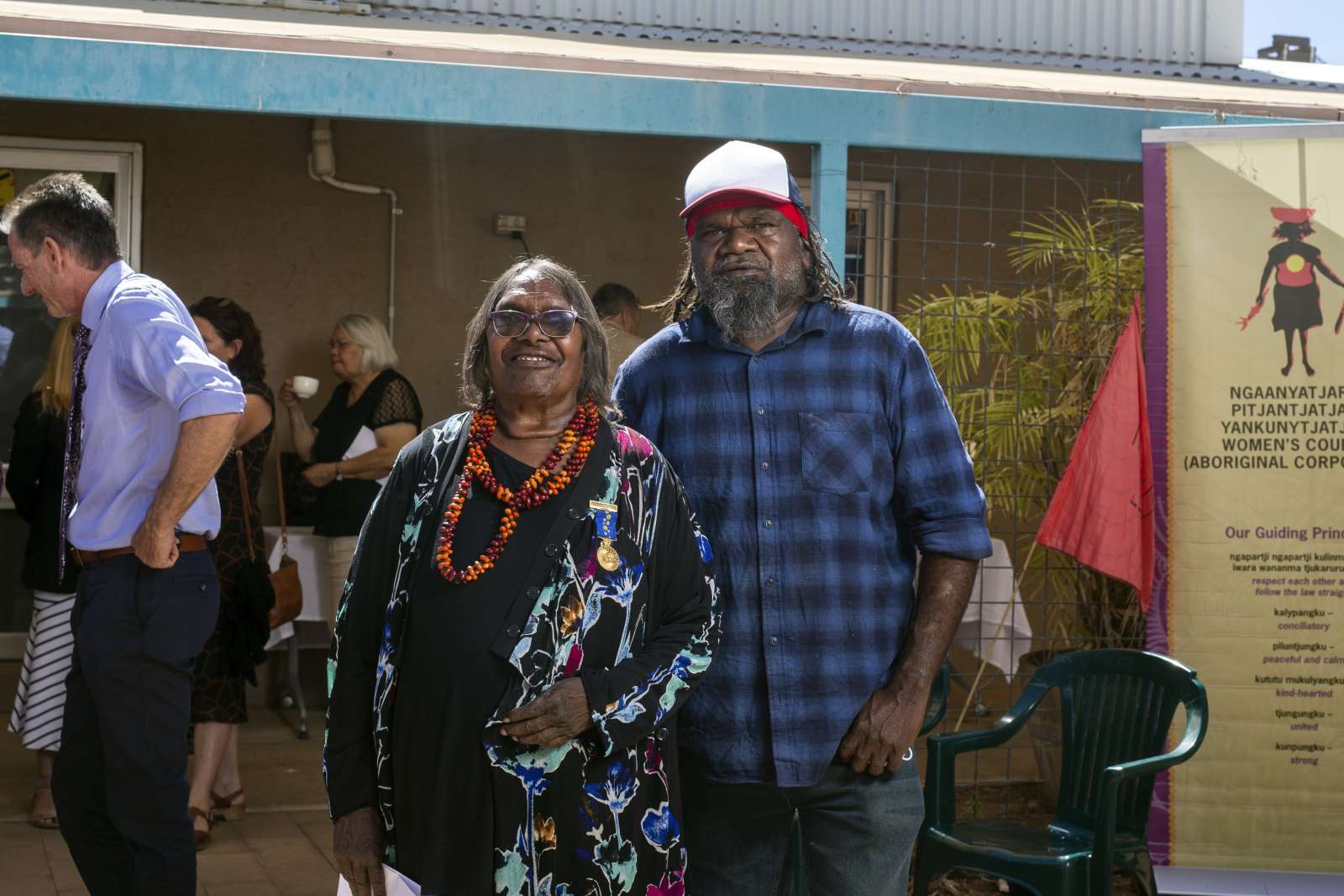
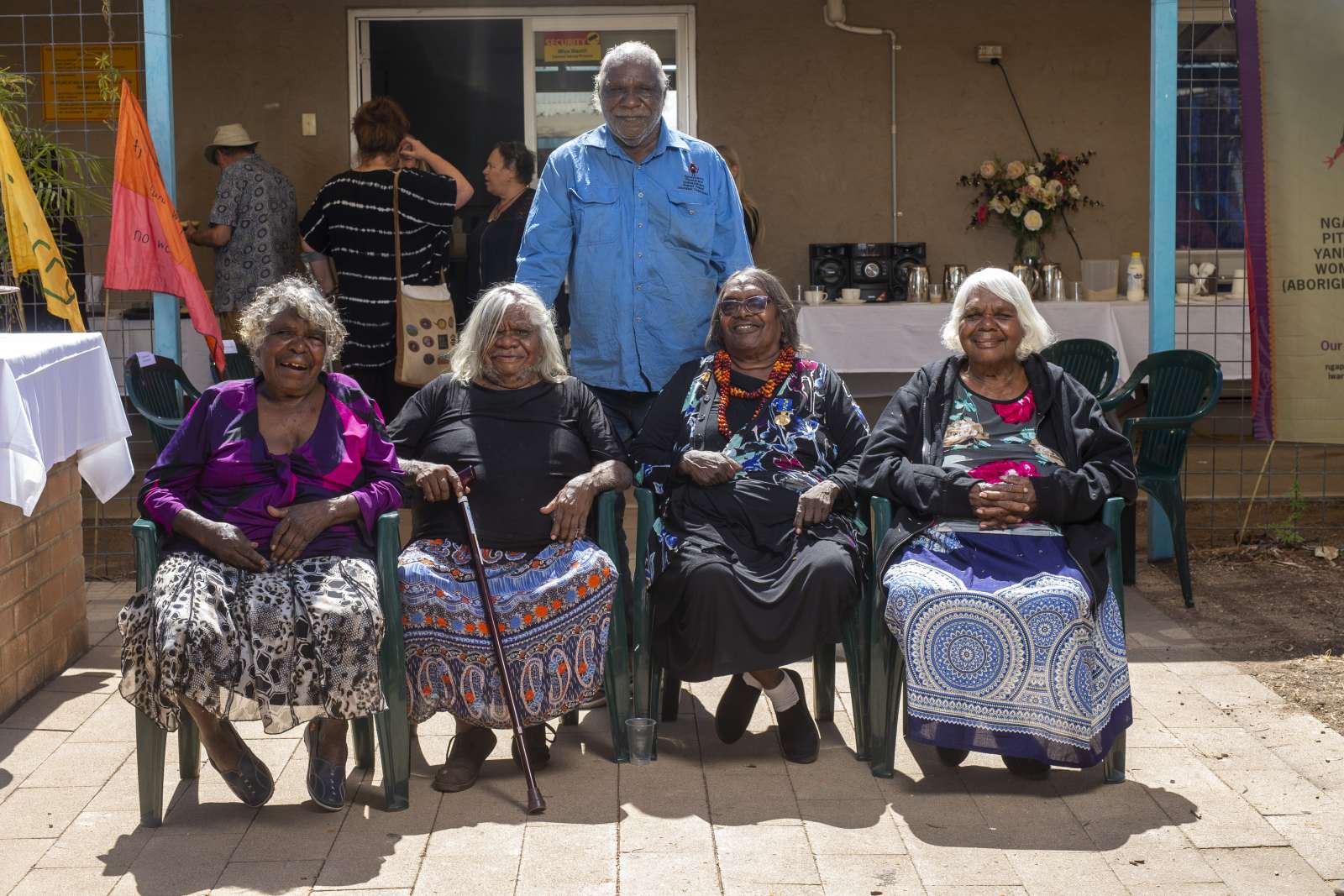
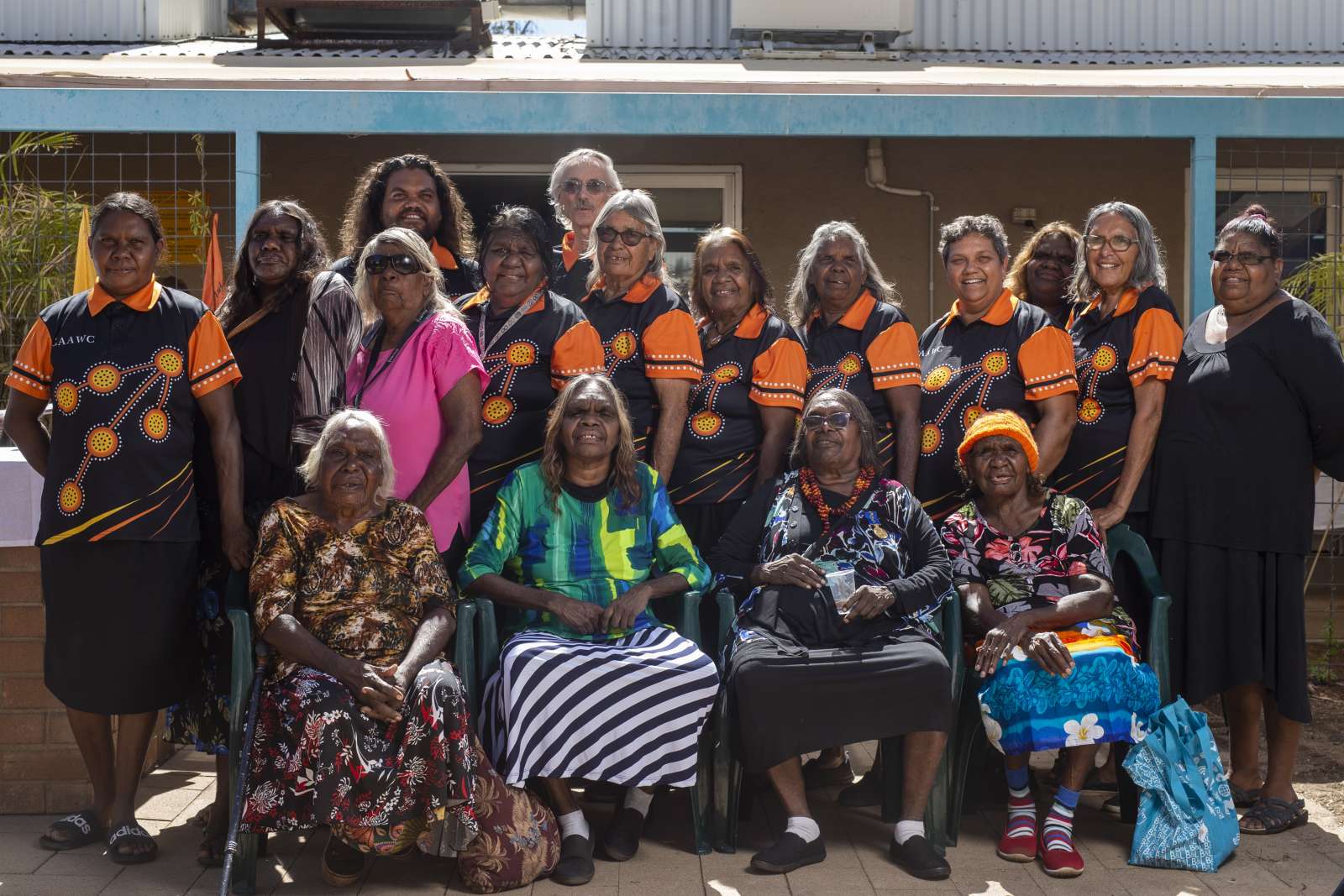
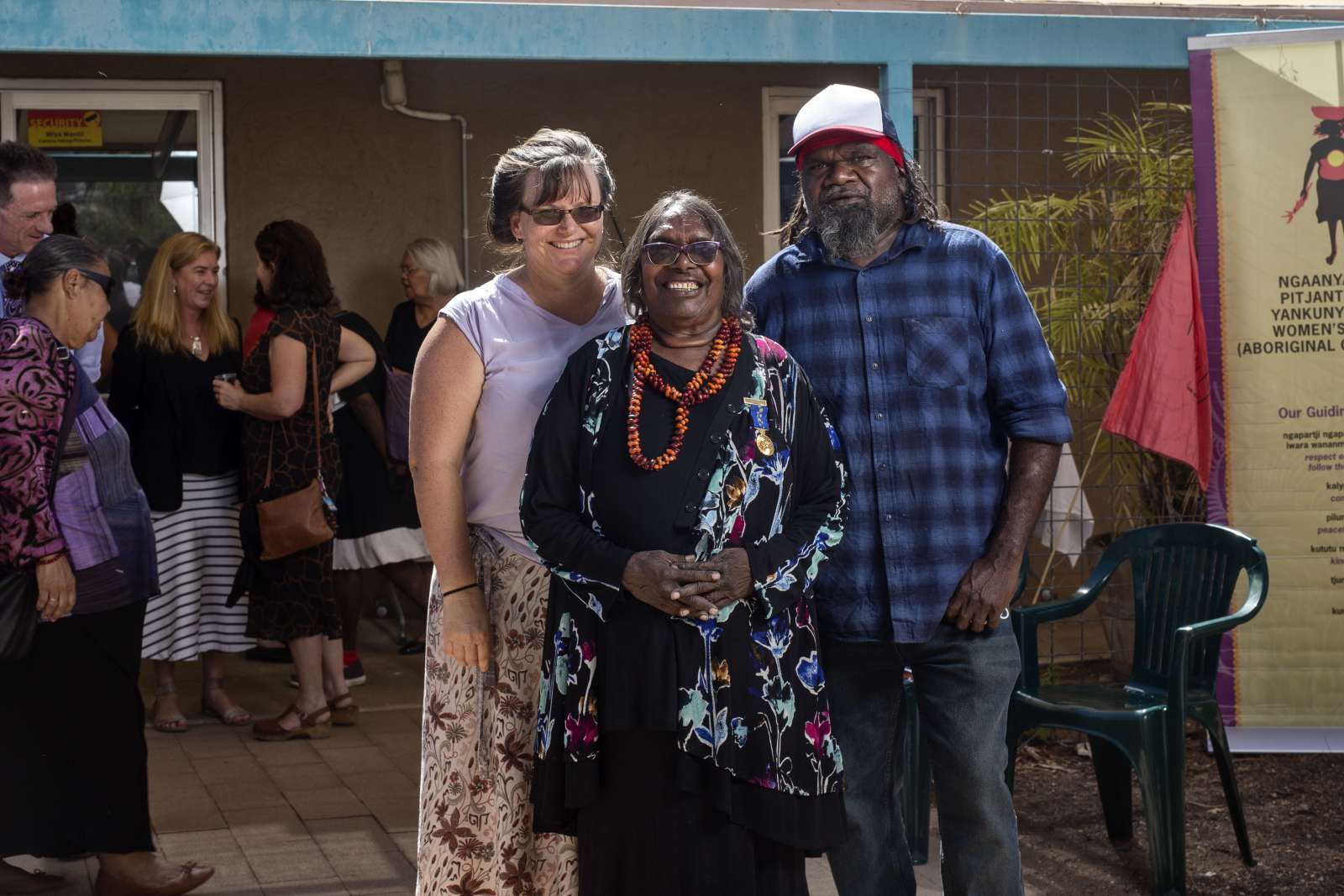
Pantjiti Unkari Mckenzie was awarded the Order of Australia Medal on the 26th of January for “service to the Indigenous community of the Northern Territory”, on Friday the 5th of April NPY Women’s Council hosted the official ceremony to celebrate this amazing achievement.
Pantjiti has spent much of her life living in the Ernabella Community. Pantjiti and her husband set up EVTV which made films on many subjects. She estimates that they made over a thousand films. They also worked for PY Media on the Broadcasting for Remote Aboriginal Community Services program (BRACS). Pantjiti enjoys acting. She has appeared in films about bush tucker, bush medicine, the Seven Sisters and she also performed in the stage play, Ngapartji Ngapartji.
A skilled artist in paint, batik and weaving tjanpi (grass) baskets and a teacher of the Pitjantjatjara language, Pantjiti is also a traditional healer or ngangkari, specialising in treating women’s problems. Her work in archiving and sharing knowledge around cultural heritage are renowned. Recently Pantjiti worked on the Smiling Mind Meditation app with the Uti Kulintjaku team.
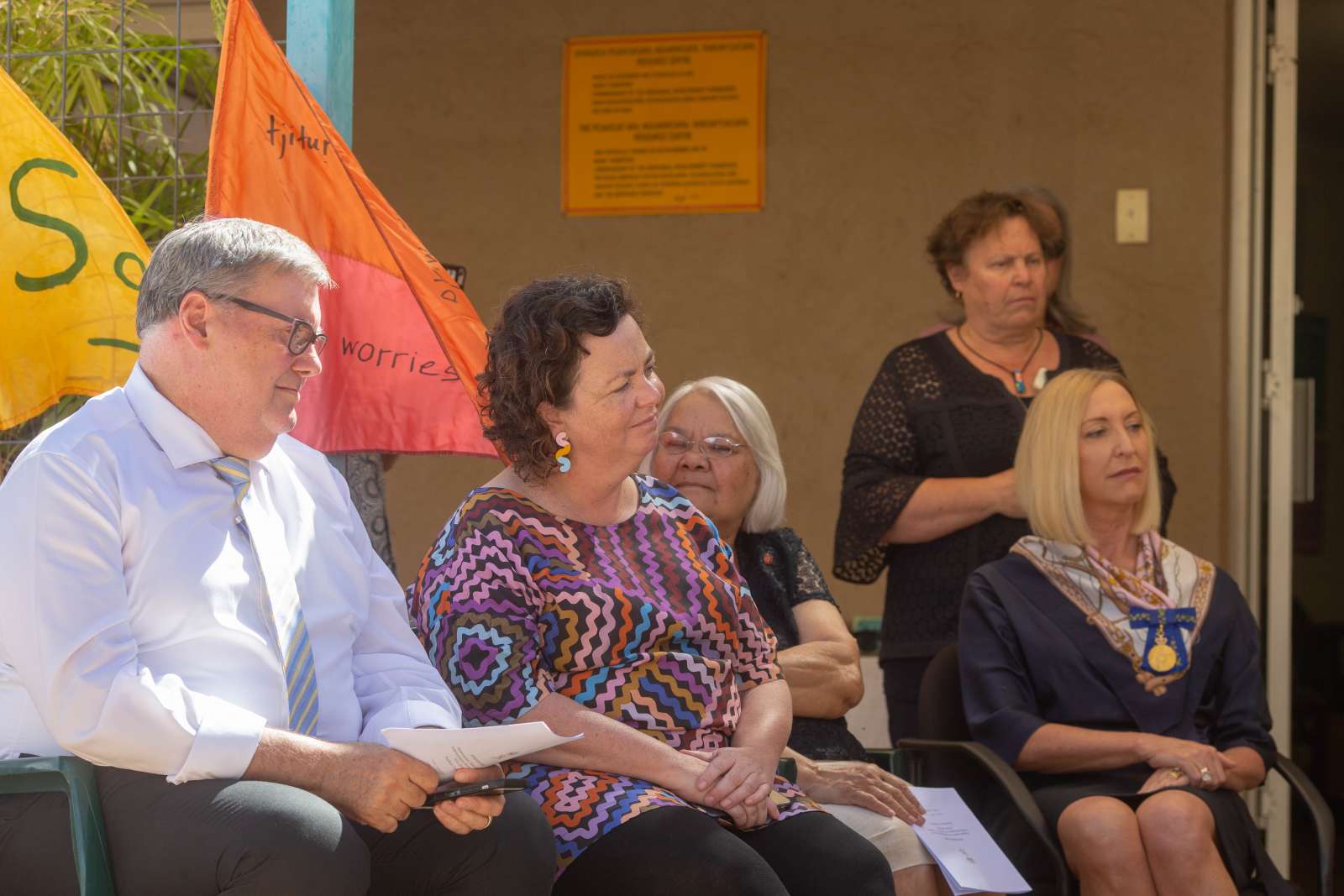
Pantjiti was presented with her OAM medal by the Administrator of the Northern Territory, Her Honour the Honourable Vicki O’Halloran AM.
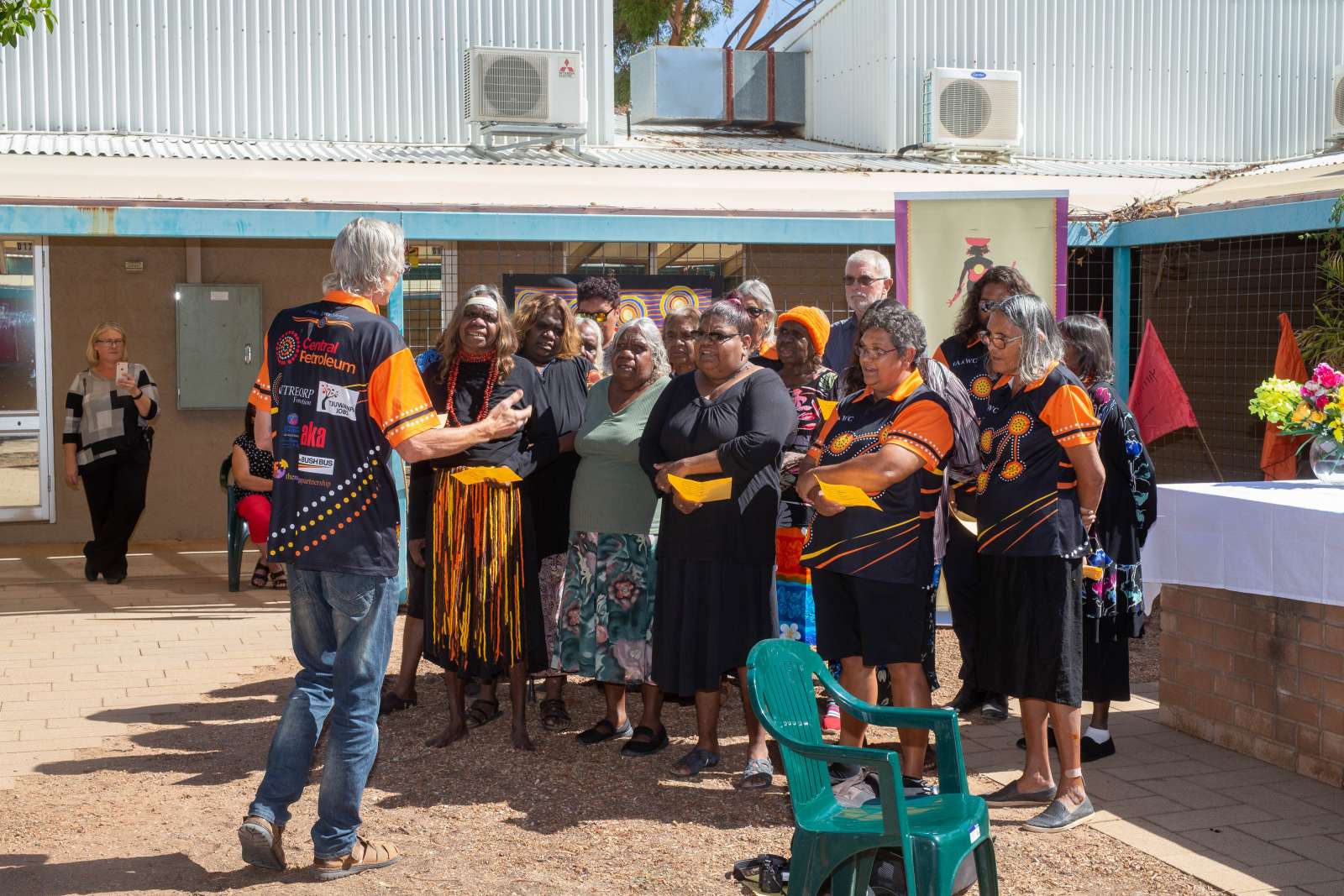
The official ceremony was followed by performances from the Central Australian Aboriginal Women’s Choir and and inma lead by Rene Kulitja and _____
NPY Women’s Council is very proud to have such a long and close relationship with Pantjiti and was extremely happy to host such a prestigious occasion recognising such a vital strong woman!
Thanks to everyone who attended and staff who worked behind the scenes!

Minyma Tjuta Kunpu Mulapa! Happy 2019 International Women's Day!
NPY Women’s Council has proudly advocated for Anangu women throughout the Central Desert Region since 1980. Since NPY Women’s Councils inception 38 years ago, our organisation has been lead by women with a strong vision to address issues directly effecting women in the Ngaanyatjarra, Pitjantjatjara and Yankunytjatjara region. Awareness of the importance of women’s voices in governance and decision making has always been priority for our organisation. We are continually guided by our values, to deliver on our purpose and ensure we deliver for and to our community, more and better choices; a good life for all Anangu.
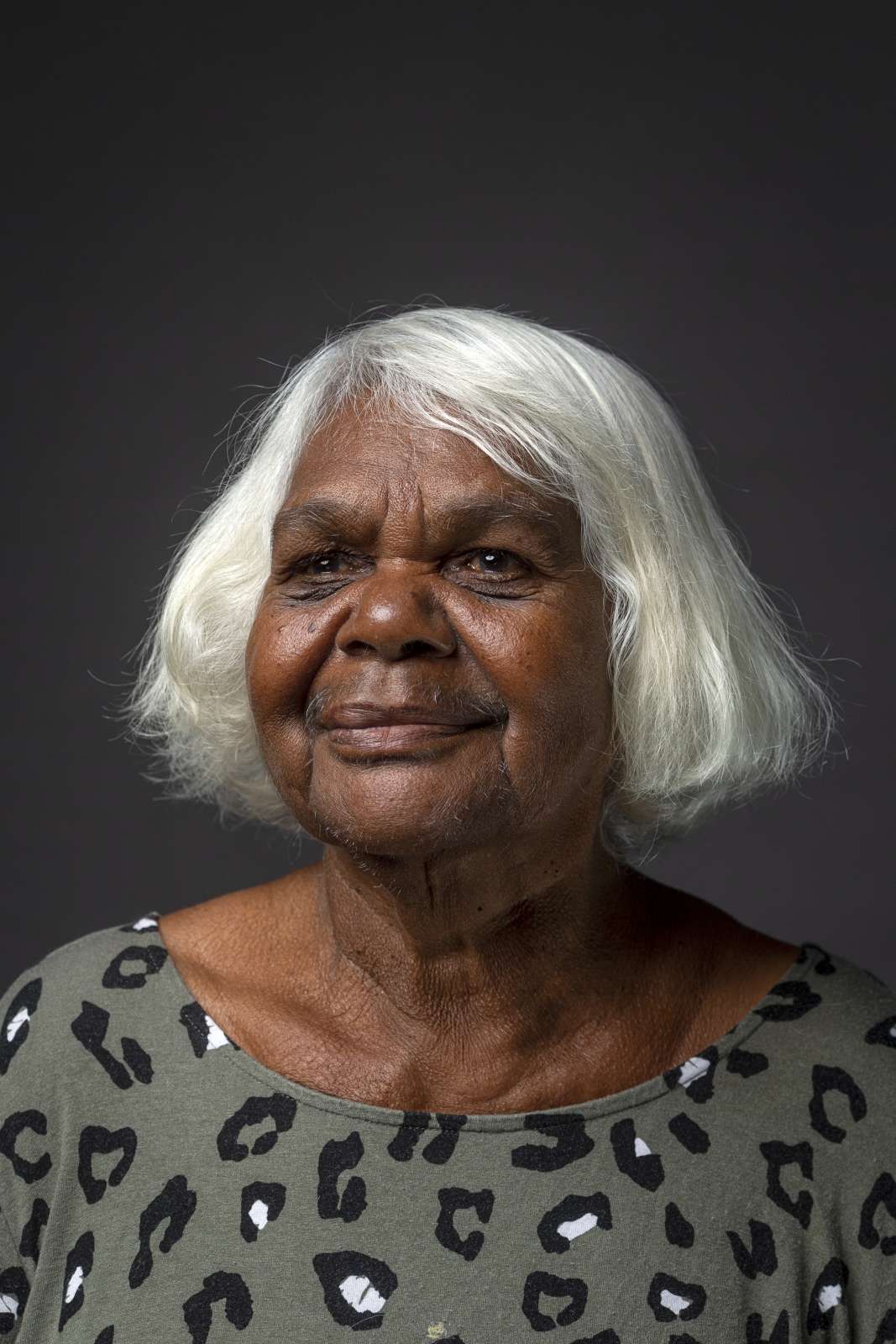
For International Women’s Day 2019 our directors and staff would like to highlight the tireless work of Naomi Kantjurinyi, a key member of our Ngangkari team:
Naomi is a prolific artist, hunter, basket maker and wood carver, represented in many public art collections. She is also well known for her extensive knowledge of the Tjukurpa of her country, as well a highly regarded ngangkari (traditional healer). She is a devoted grandmother and has a special interest in the health and wellbeing of children. She is a long time member of NPY Women’s Council Ngangkari team and her story features in the book ‘Traditional Healers of Central Australia: Ngangkari’. She paints for Tjala Arts and her fibre art can be purchased at Tjanpi Desert Weavers.
NPY Women's Council Strategic Plan 2019-2023 Launched!
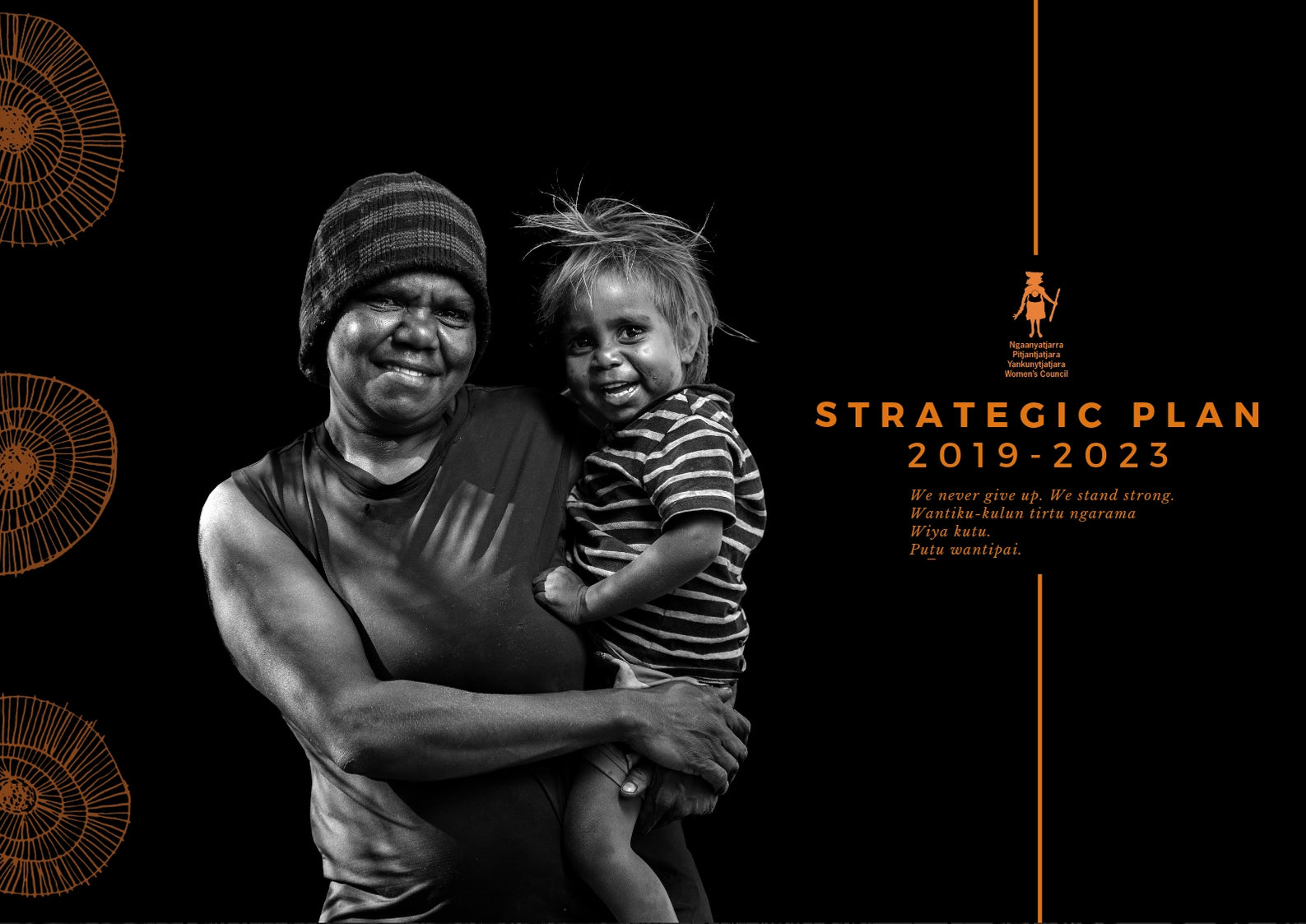
Last week NPY Women’s Council launched the new Strategic Plan that covers the period from 2019-2023.
This document outlines the critical guidelines that define the intentions of our organisation to progress and grow into the future and to deliver services that will best serve Anangu women and children in our region.
The digital document is freely available to download in the link below.
This version is intended to be viewed on devices as a digital representation of the plan and is not intended to be printed as it would require a substantial amount of printer ink.
A printable version will be accessible in the PUBLICATIONS>KEY DOCUMENTS section of our website.
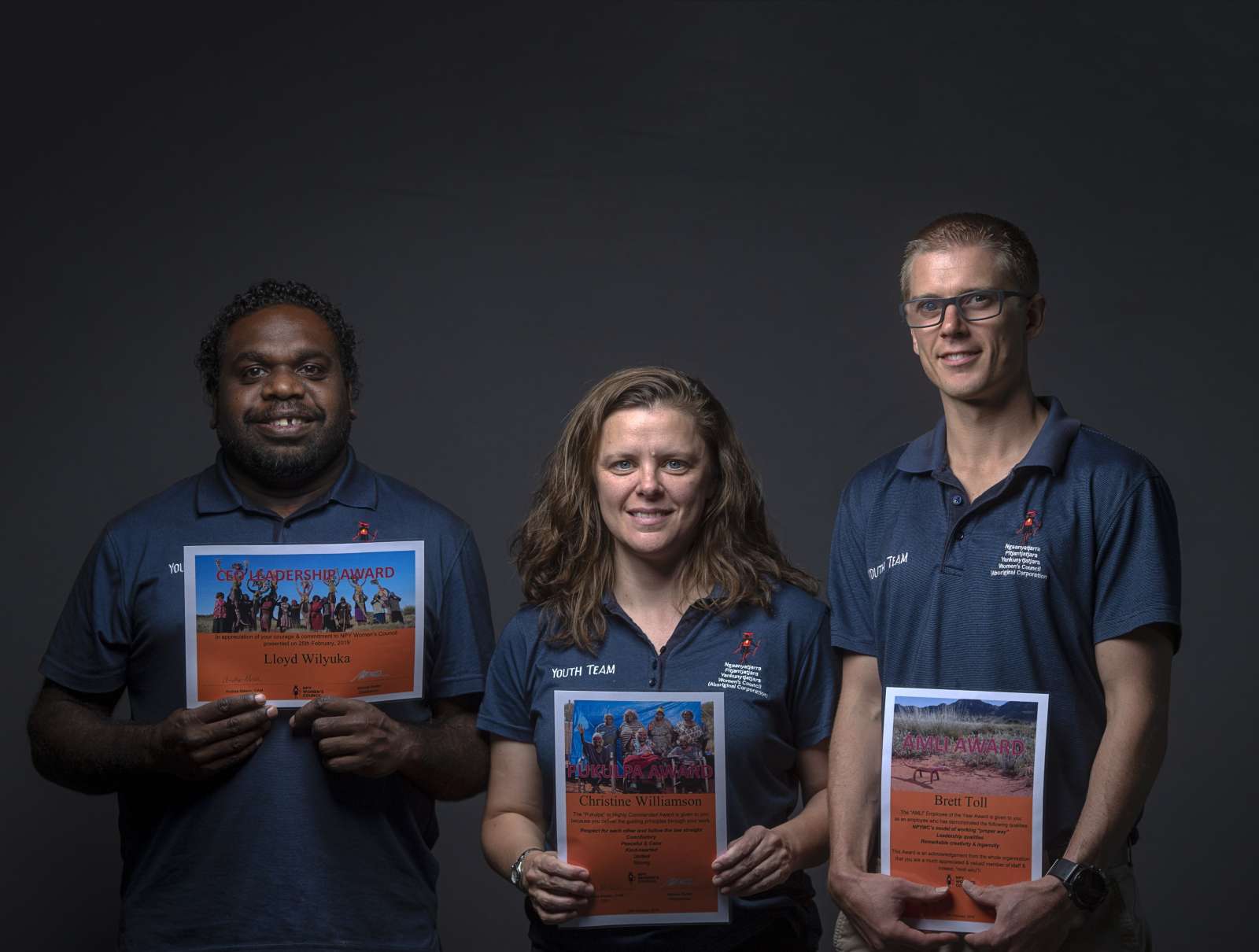
Congratulations to all award recipients at the NPY Women's Council 2019 Symposium!
NPY Women’s Council would like to extend warm congratulations to the staff members that received awards at this year’s Symposium acknowledging their hard work and dedication to NPY Women’s Councils guiding principles. Rikina!
Brett Toll
The “AMLI” Employee of the Year Award is given to you as an employee who has demonstrated the following qualities:
- NPYWC’s model of working “proper way”
- Leadership qualities
- Remarkable creativity & ingenuity
This Award is an acknowledgement from the whole organisation that you are a much appreciated and valued member of staff and indeed, “ninti wiru”!
Christine Williamson
The “Pukulpa” or Highly Commended Award is given to you because you deliver the guiding principles through your work:
- Respect for each other and follow the law straight
- Conciliatory
- Peaceful & Calm
- Kind-hearted
- United
- Strong
CEO Award Recipients:
Sharon Austin (DV), Jade Brockley (Tjanpi), Lloyd Wilyuka (Youth), Louise O’Connor (DV), Darrin Kean (Administration)
In appreciation of your courage and commitment to NPY Women’s Council!
Congratulations to all!
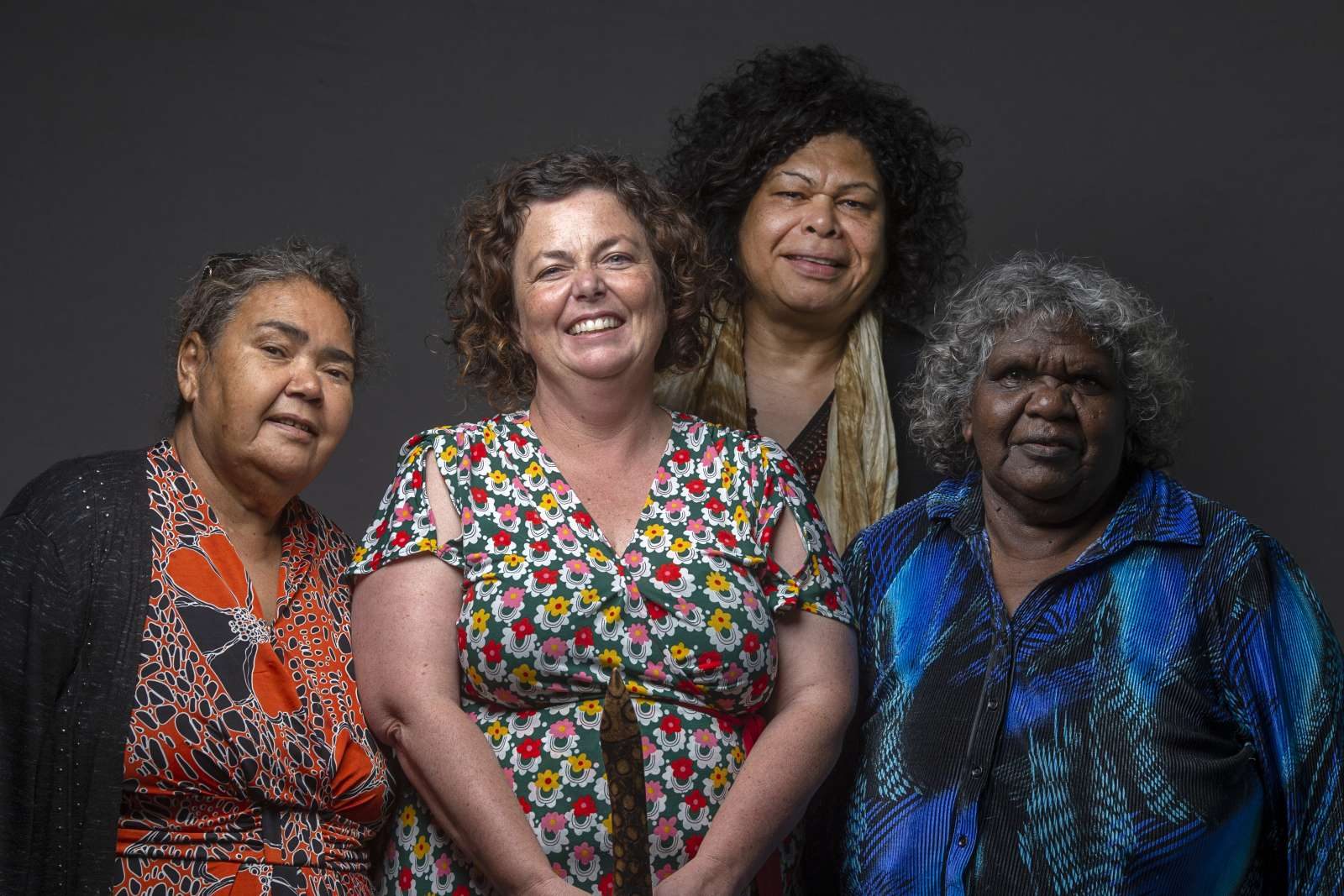
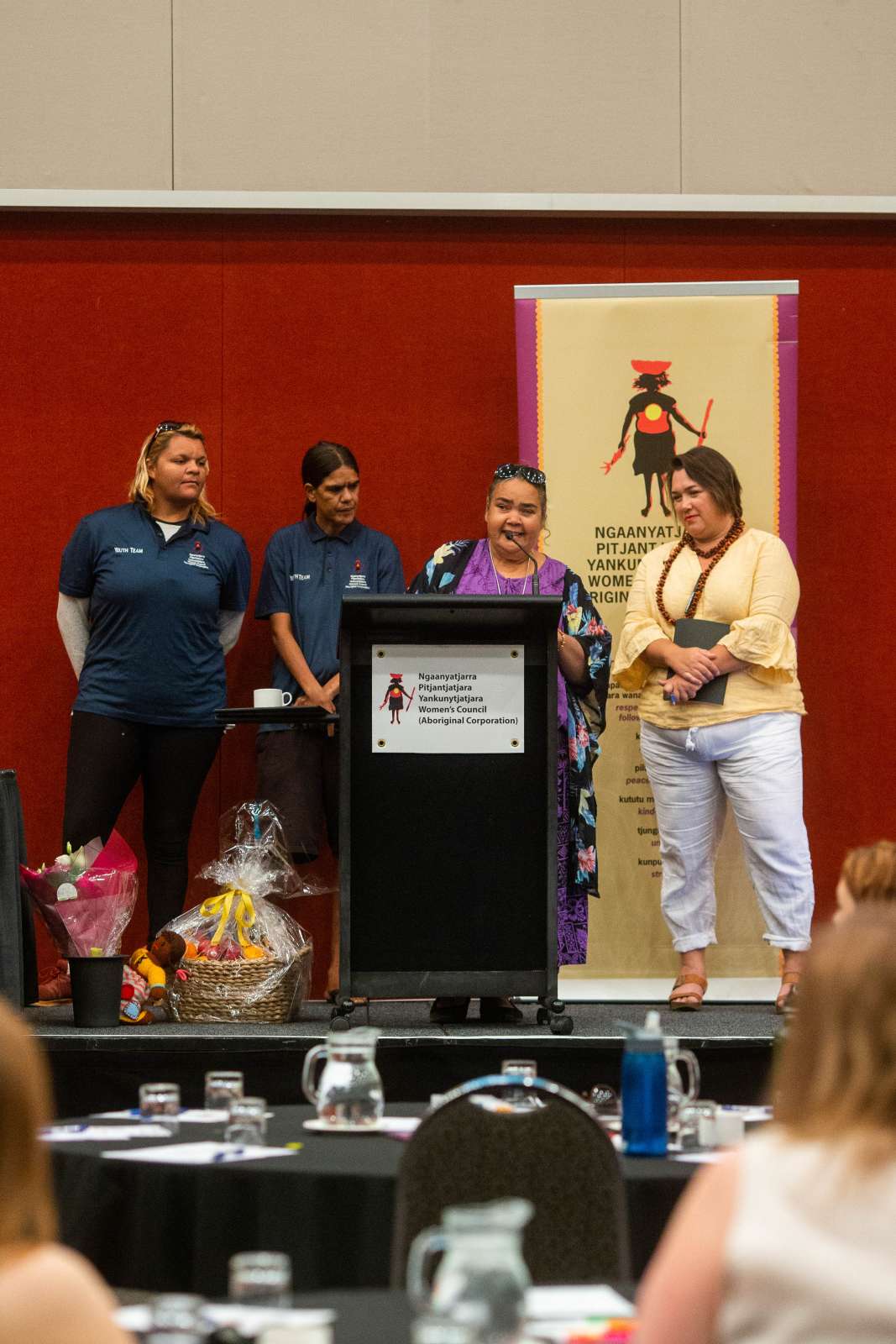
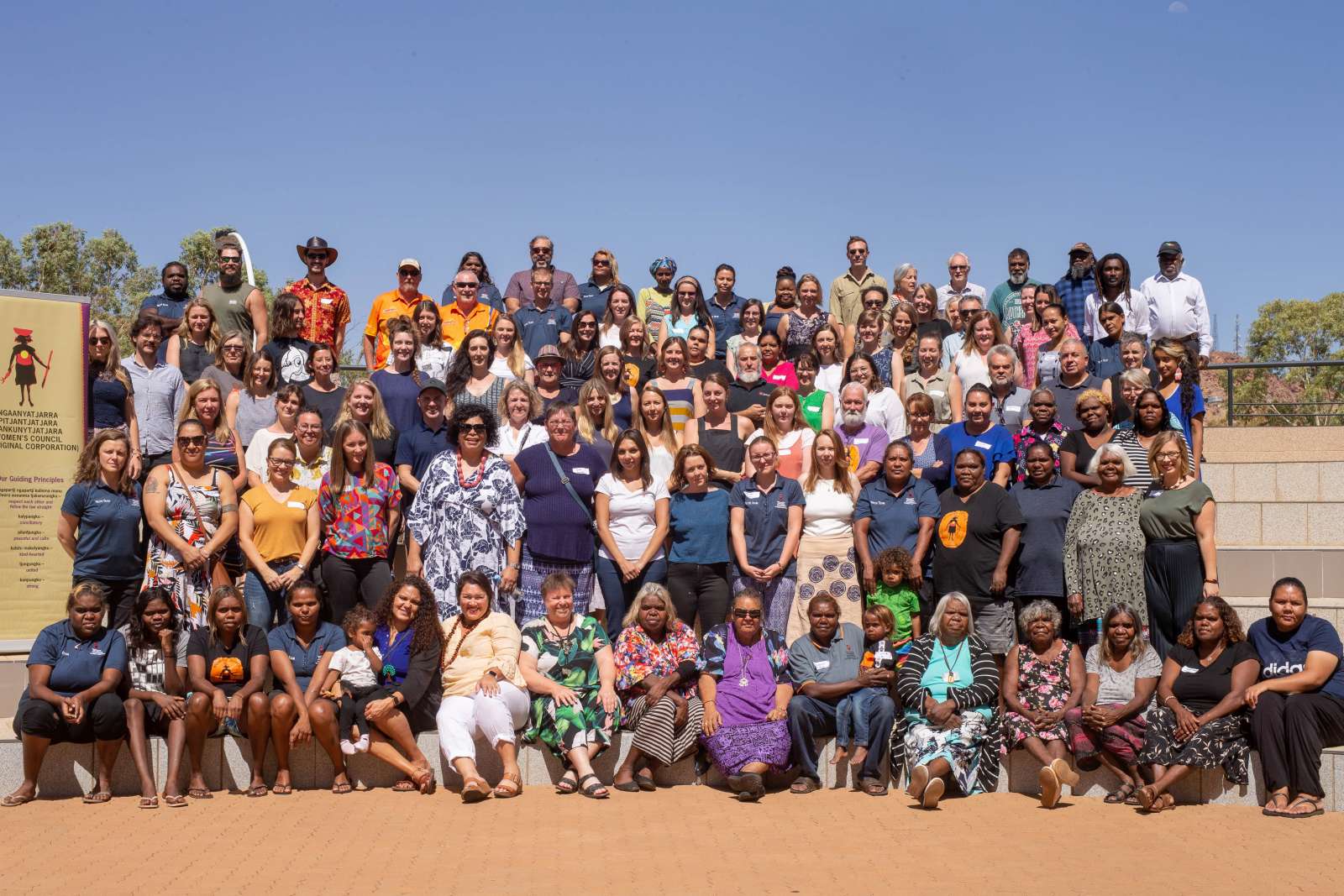
2019 NPY Women's Council Symposium a gathering of big ideas
Wangka kutjunguru pukulapringula Symposium nganampa wirunya nganana palyantja!
“It makes us happy to gather together at the symposium and share great ideas!”
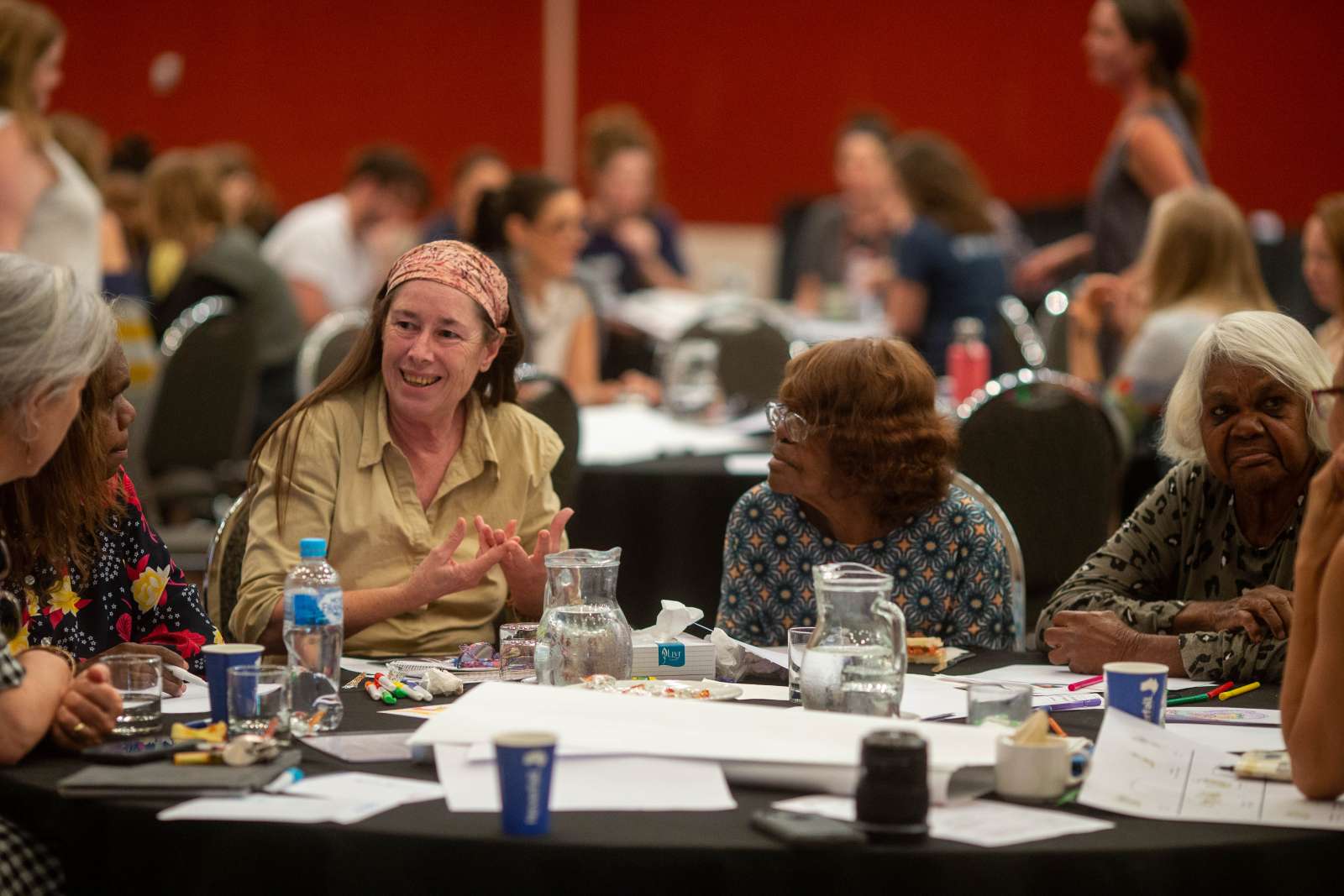
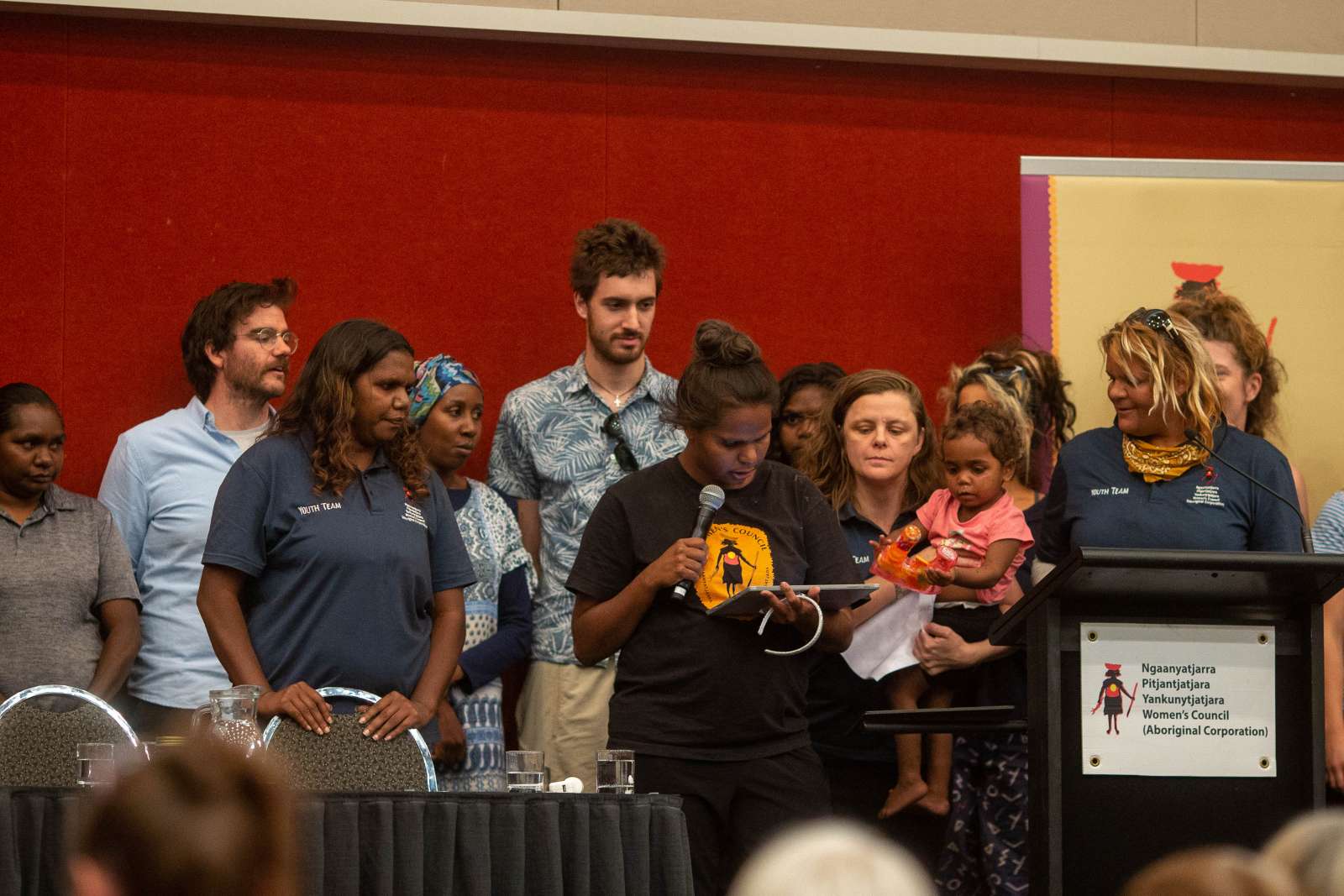
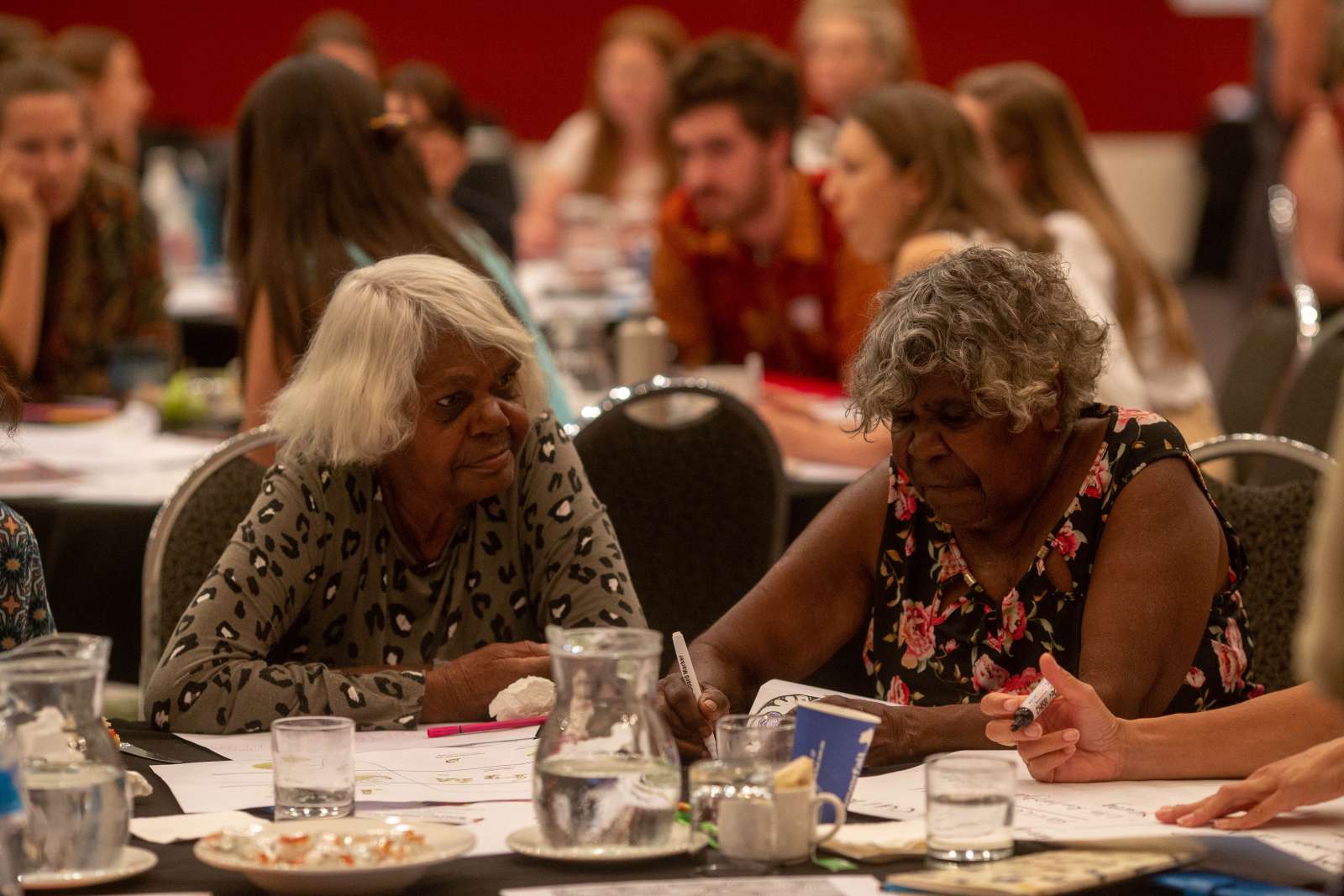
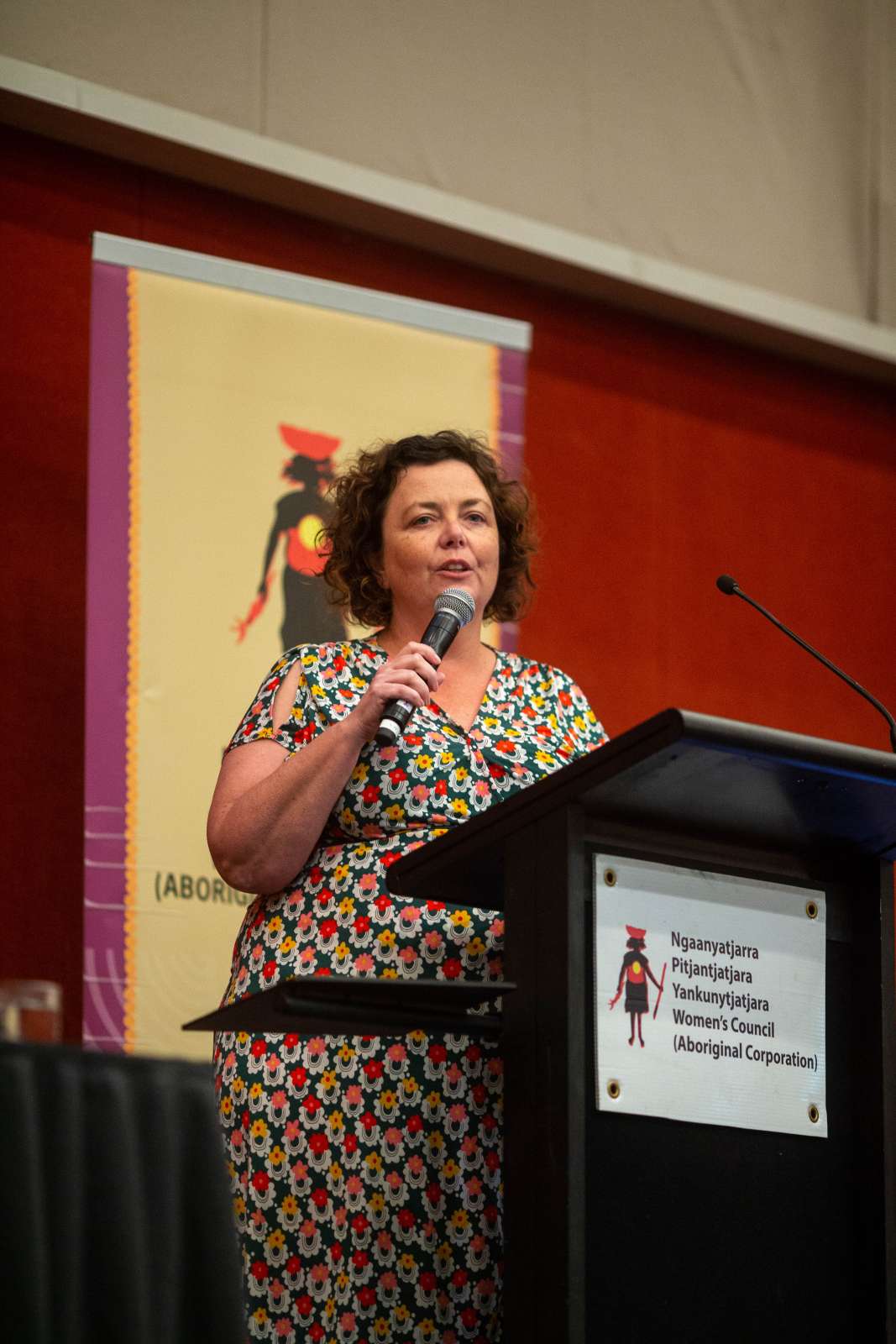
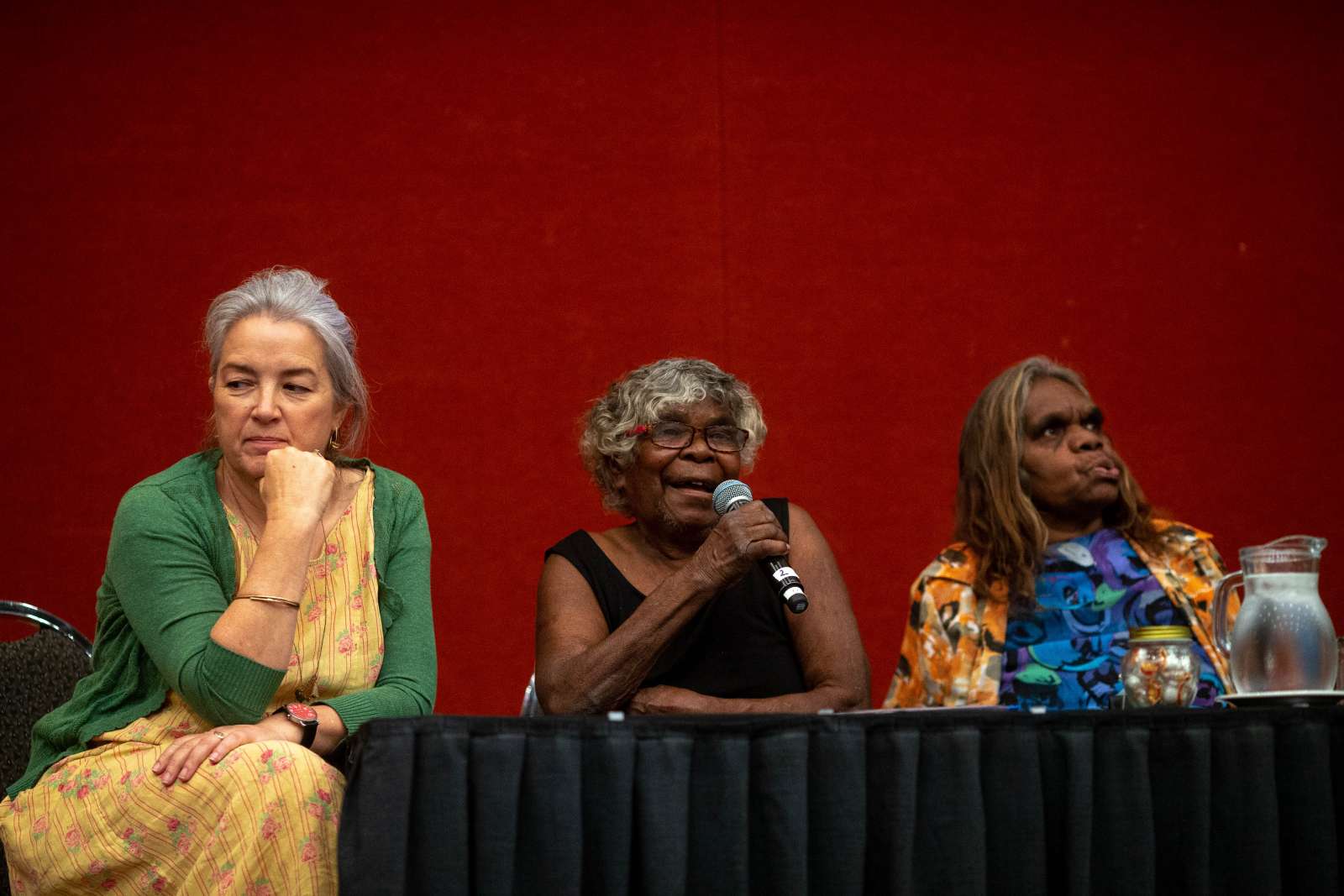
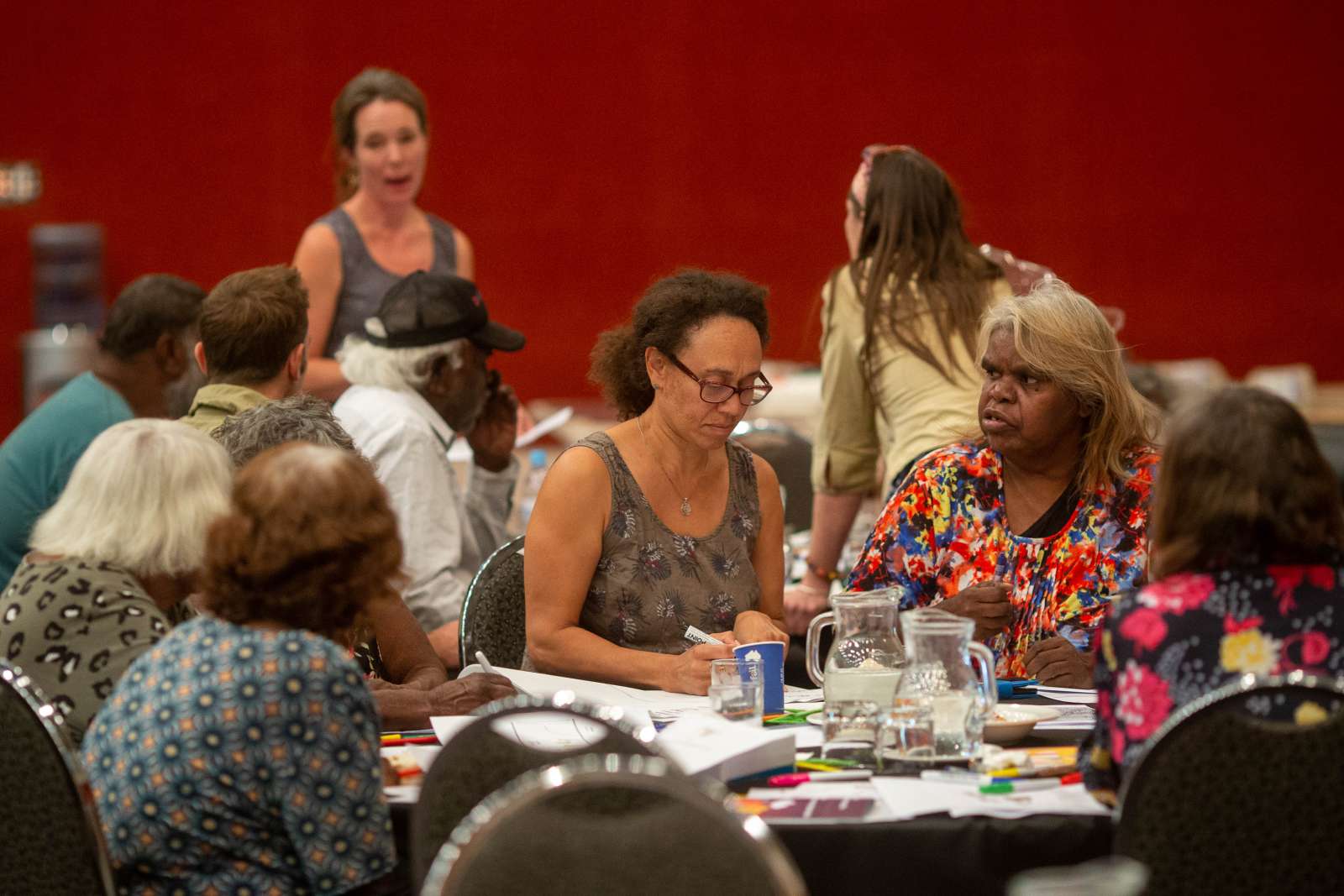
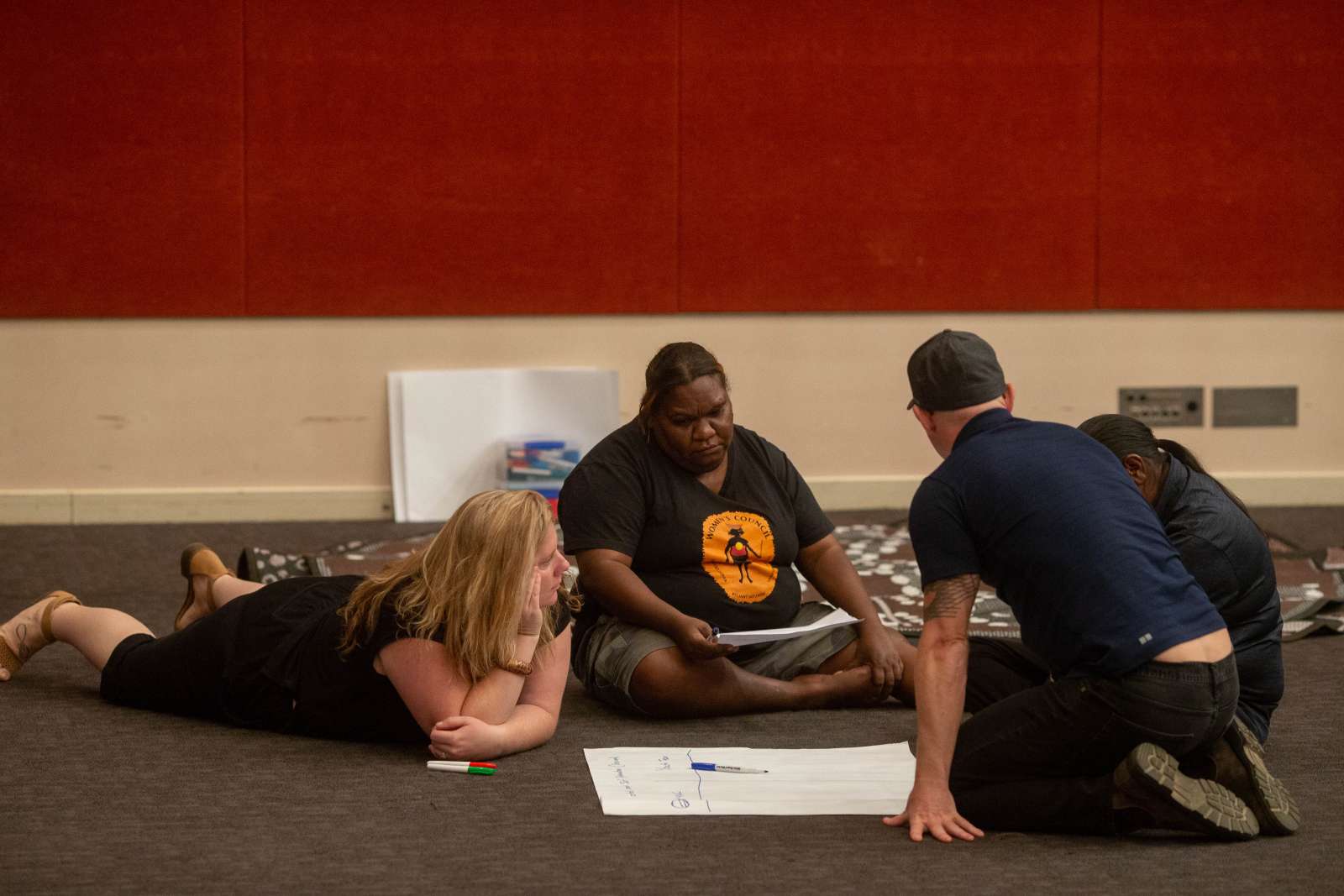
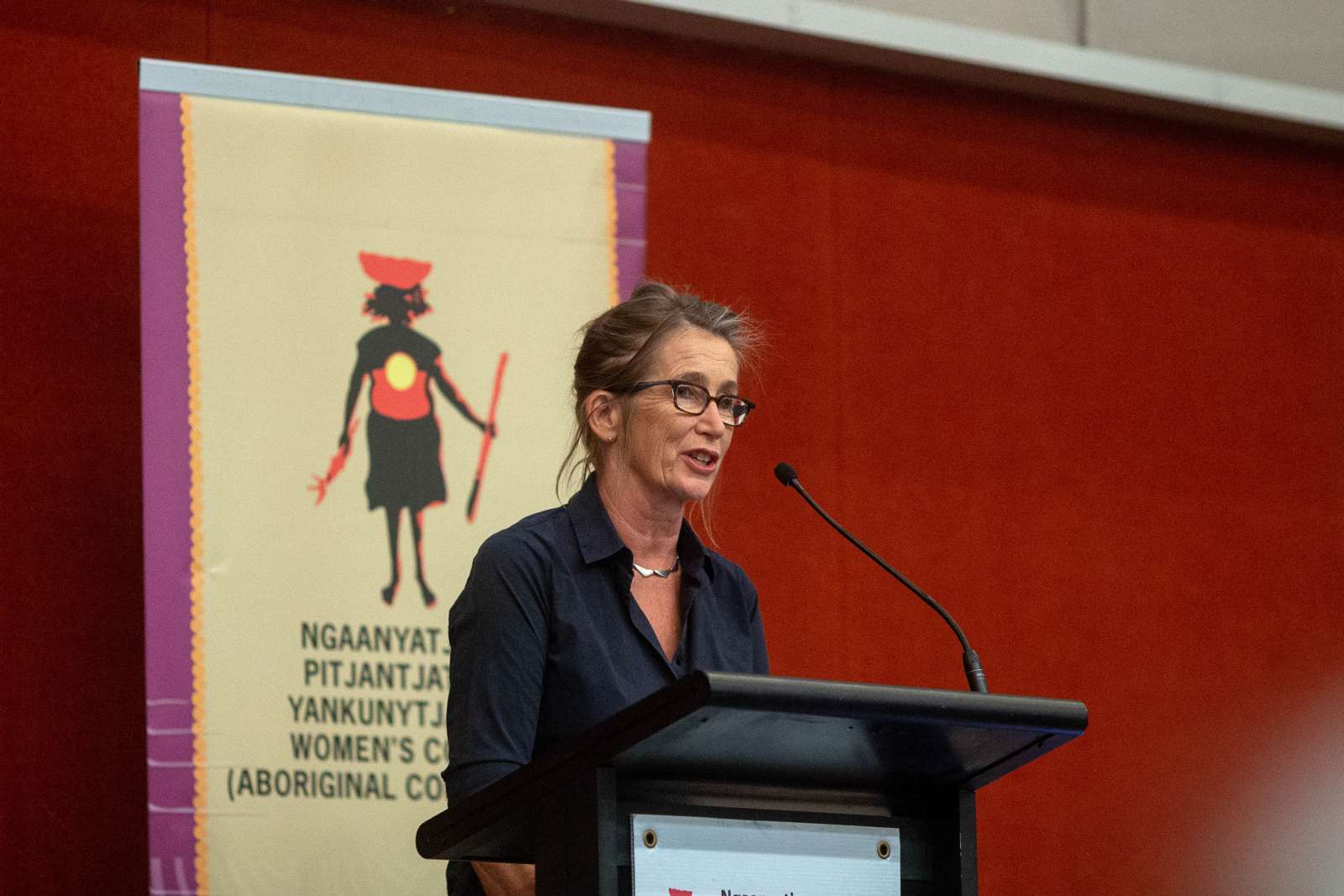
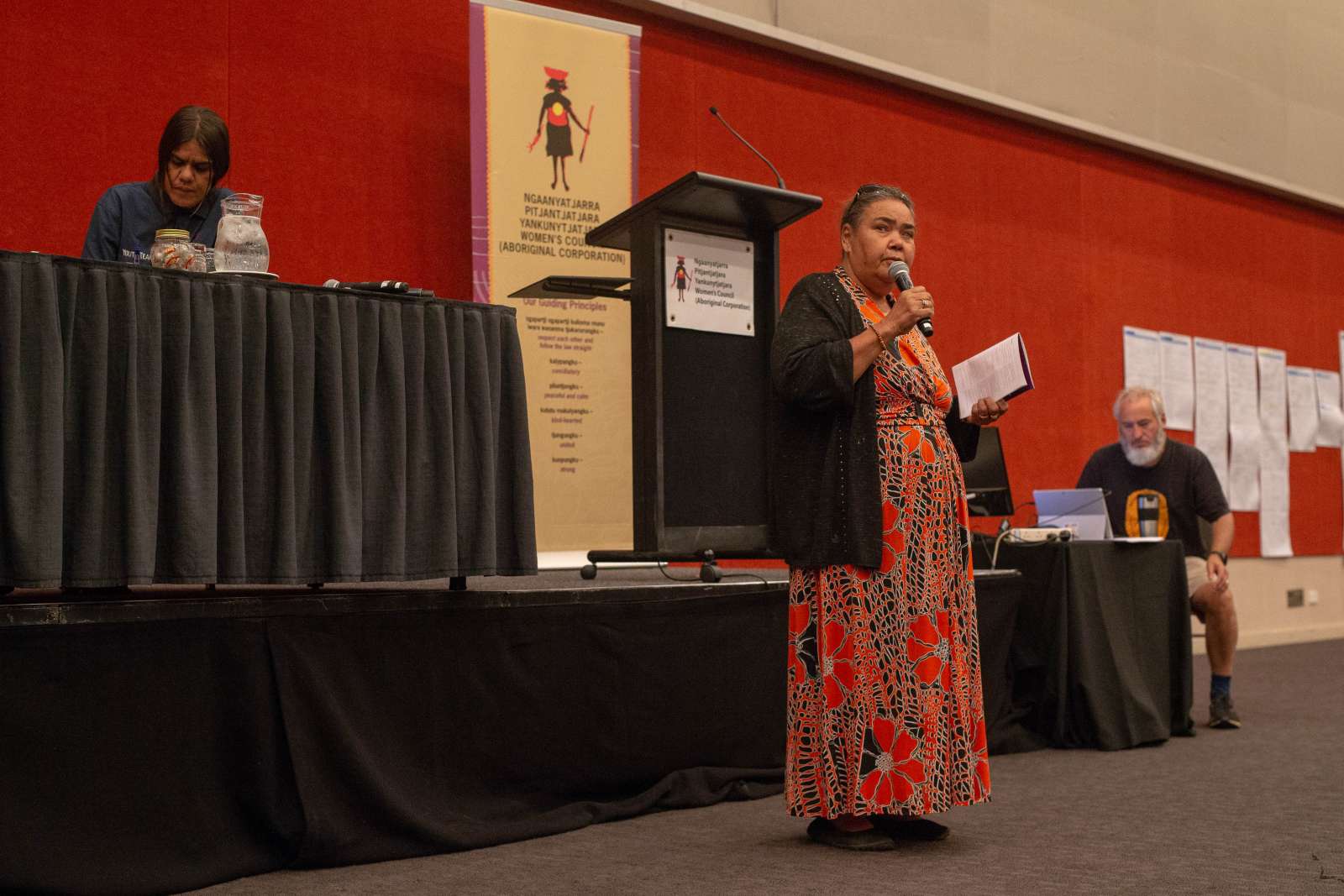
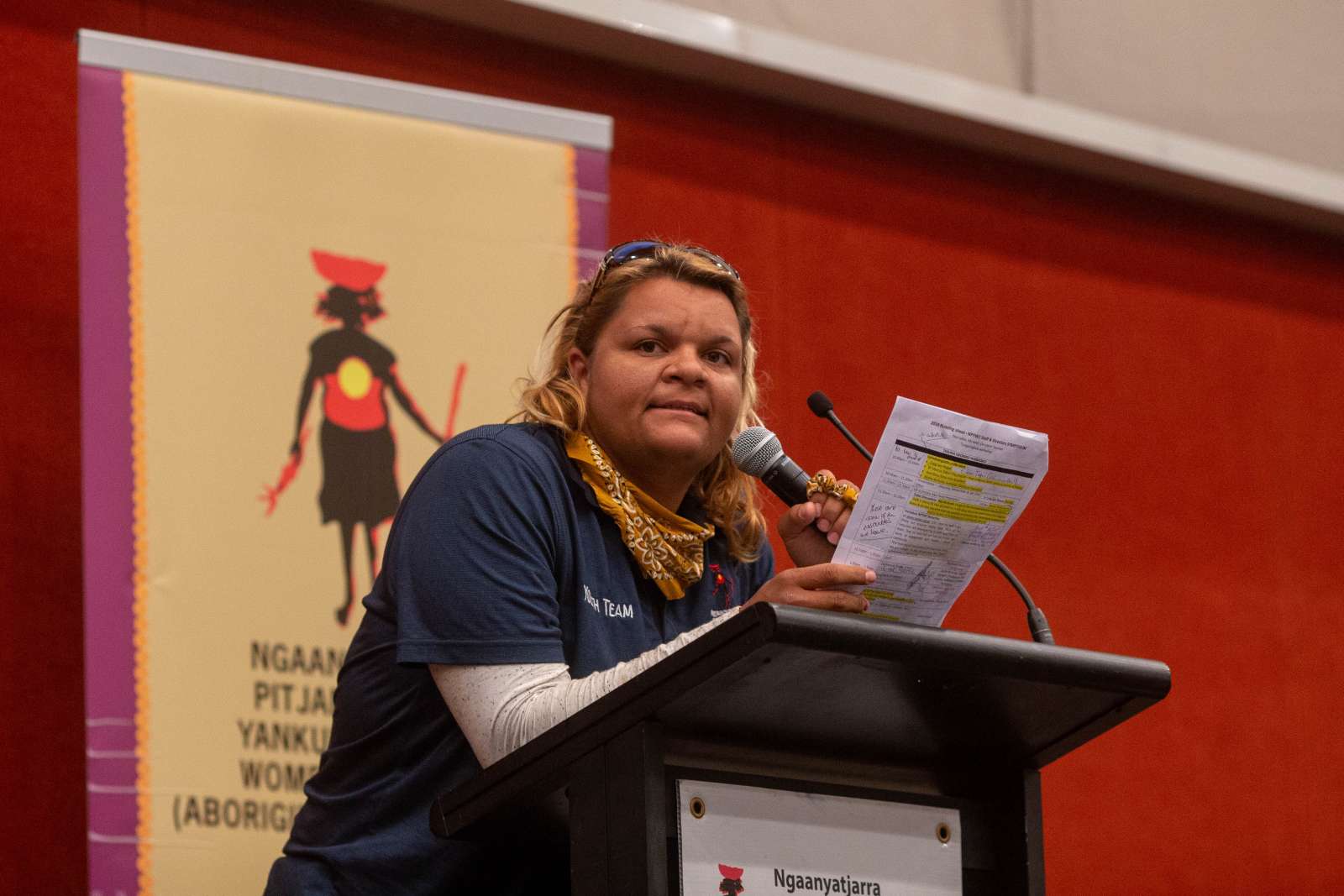
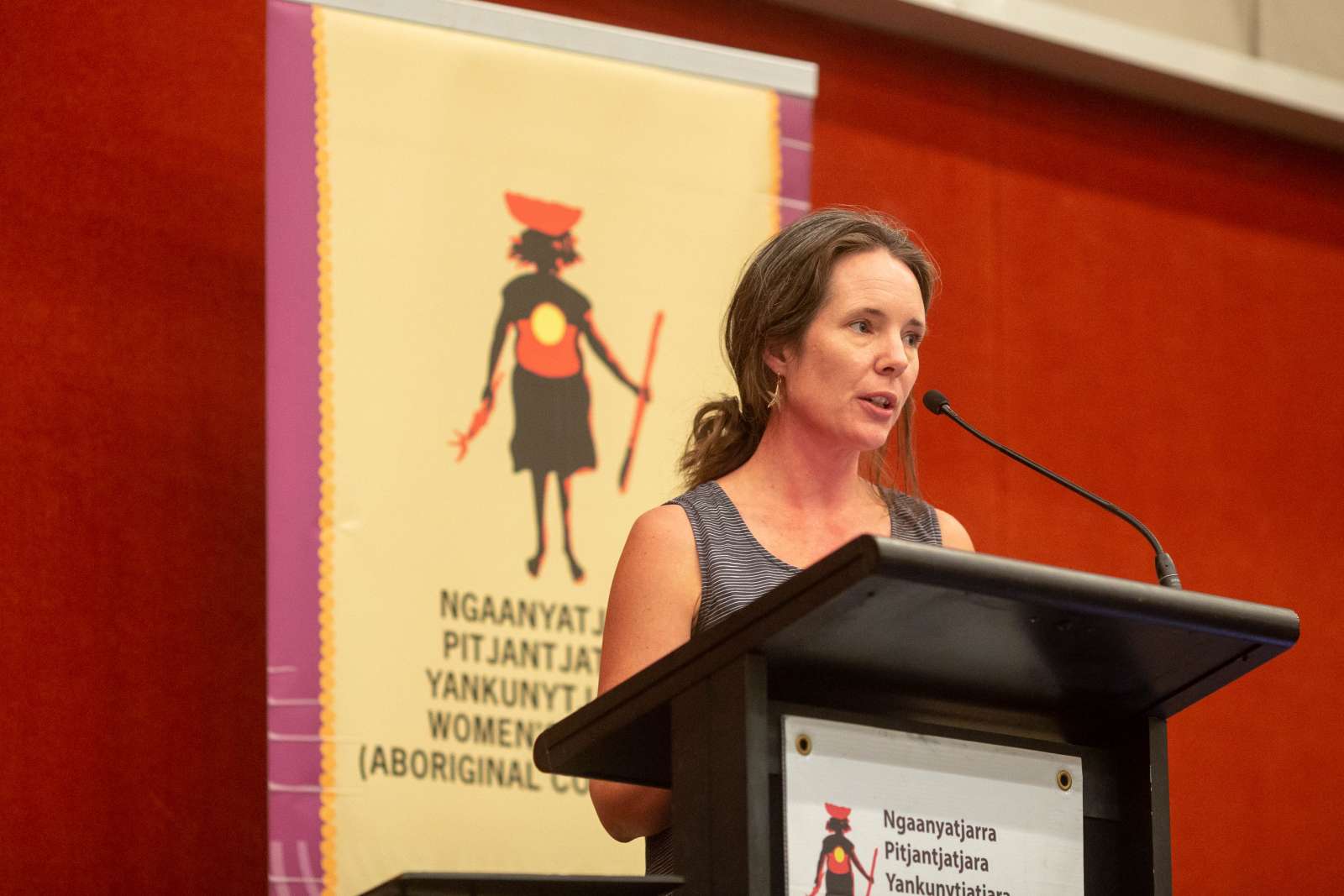
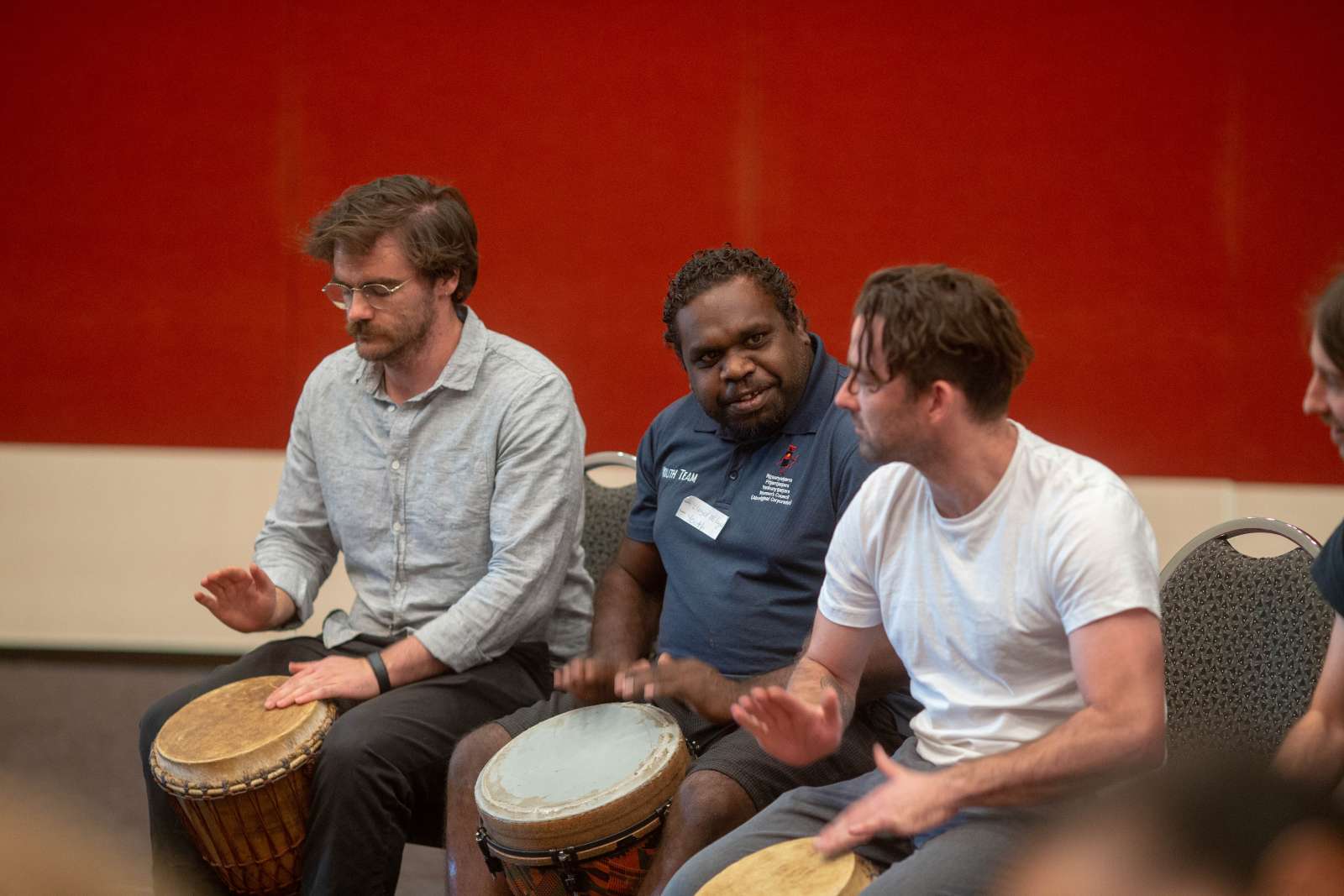
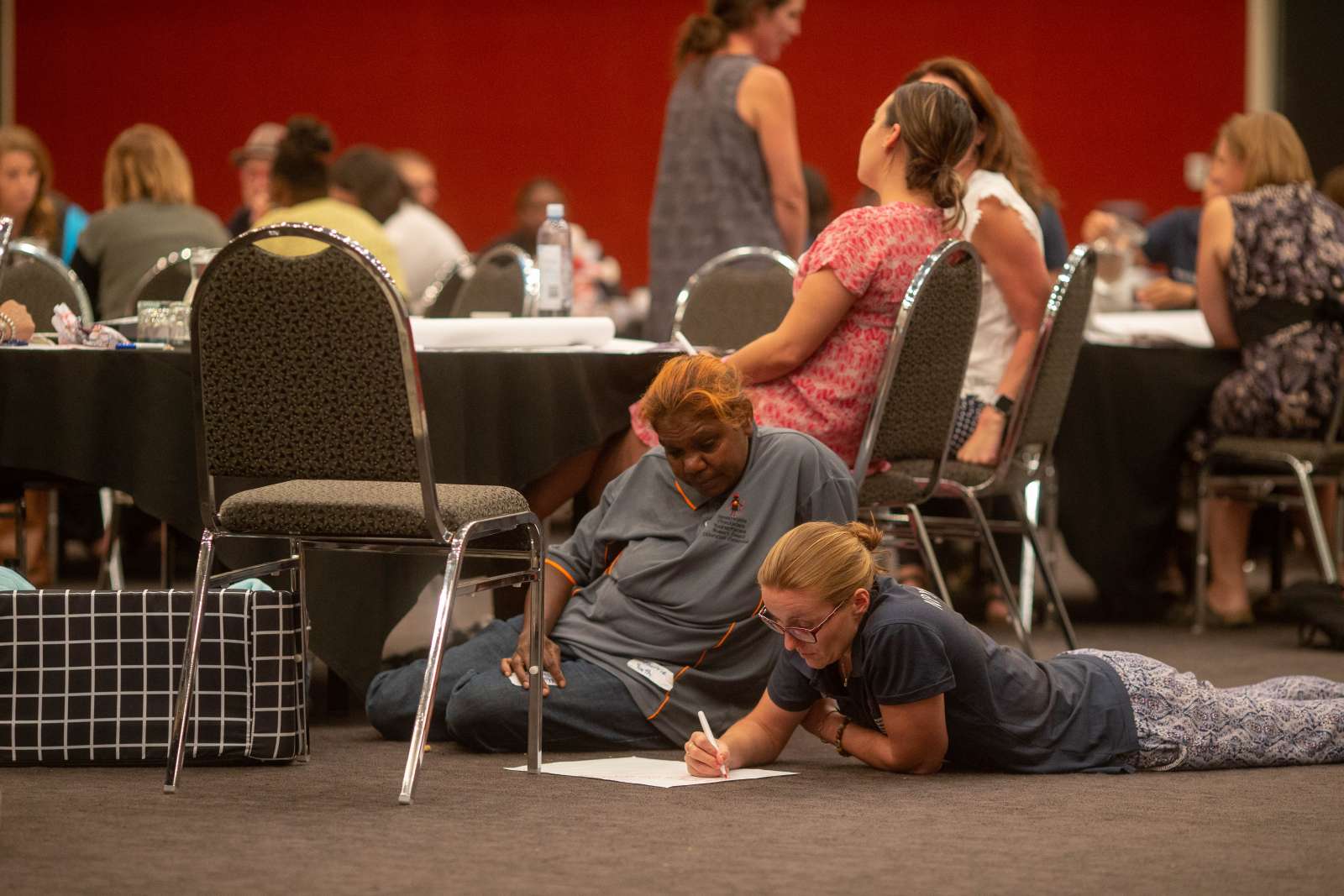
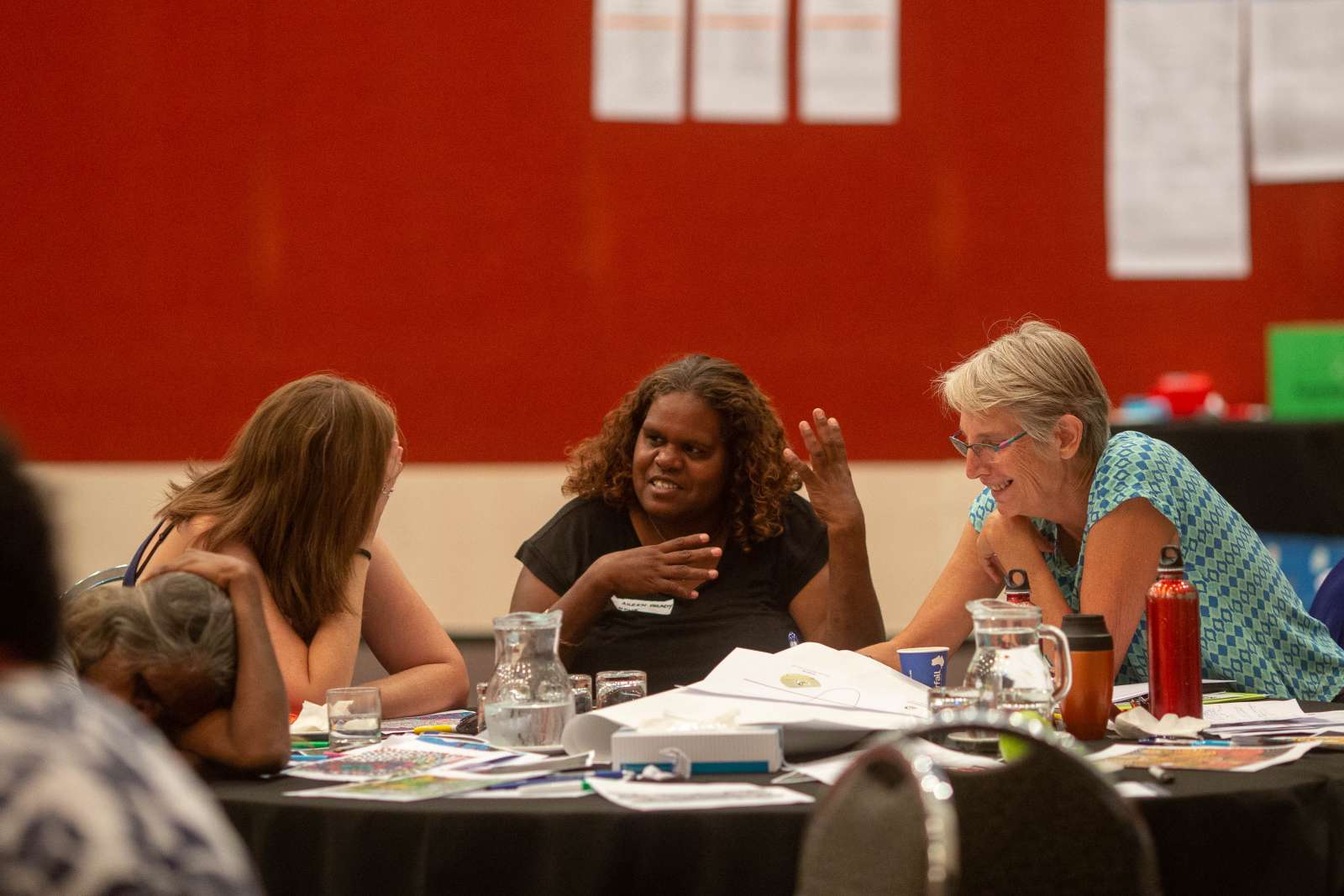
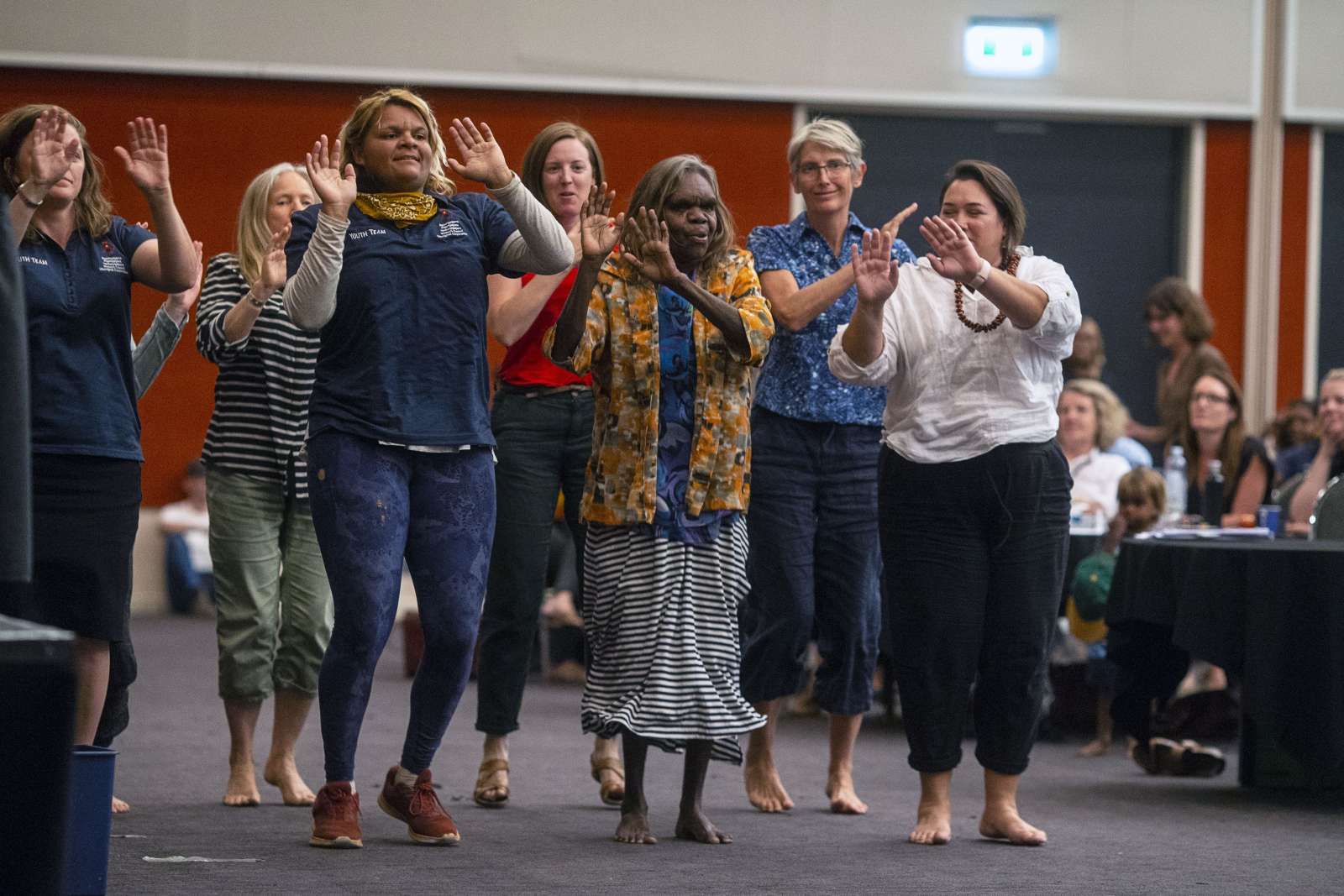
This year’s NPYWC Symposium was a celebration of the achievements of all departments over the last 12 months and an important forum to discuss NPY Women’s Council’s vision for the future.
The theme of this year’s symposium was “Your Value, My Value, Our Value Together” which was evident in the various presentations and workshops throughout the two days.
NPY Women’s Council’s commitment to becoming a trauma informed workplace has been a critical discussion between both Anangu staff and clients as well as piranpa (non-Anangu) staff allowing a structure of care, understanding and compassion to become a firm priority across the organisation. The Uti Kulintjaku mens group discussed in depth the ground breaking work they have been doing to encourage engagement between senior men and young men around all aspects of trauma and healing. The Uti Kulintjaku ladies presented their strategies for self care – including a guided meditation session.
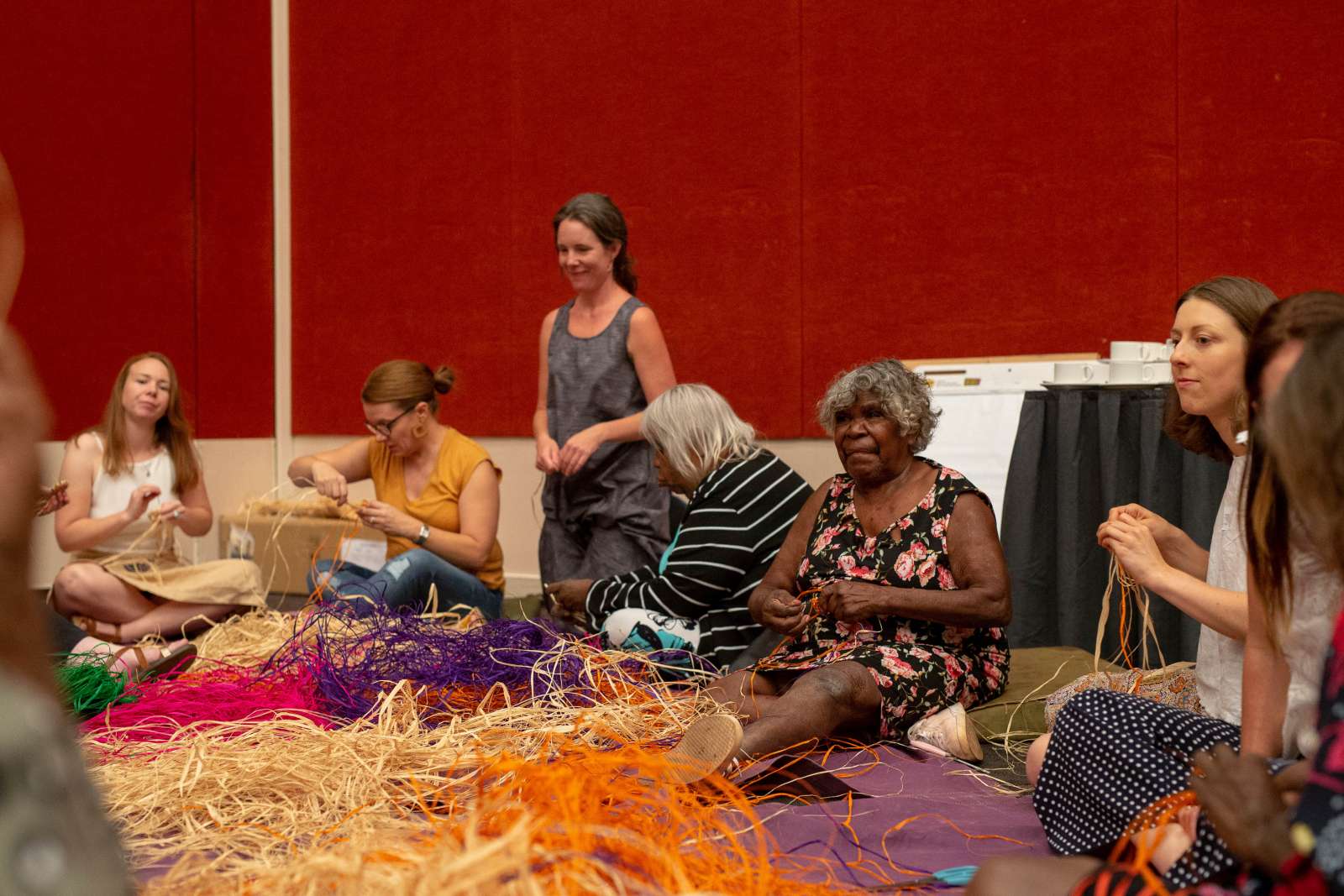
The Symposium displayed NPY Women’s Council’s dedication to language and culture with many activities based around piranpa (non-Anangu) staff expanding their vocabulary in Pitjantjatjara – guided by Director’s and translators.
NPY Women’s Council is very grateful for all guest speakers who attended including:
Dr Craig San Roque PhD
Dr Marcus Talbart (Psychiatrist – head of mental health service in Central Australia)
Rod Moss (local artist & author)
Blythe McAuley, Program Manager, Therapeutic Care Program, Australian Childhood Foundation
Hon. Dale Wakefield MLA (NT Minister for Territory Families, Minister for Renewables, Energy & Essential Services)
Robyn Shaw from Tangentyere Design Architects
Tony Messenger and Kevin Johnson from the Larapinta Extreme Walk fundraising project



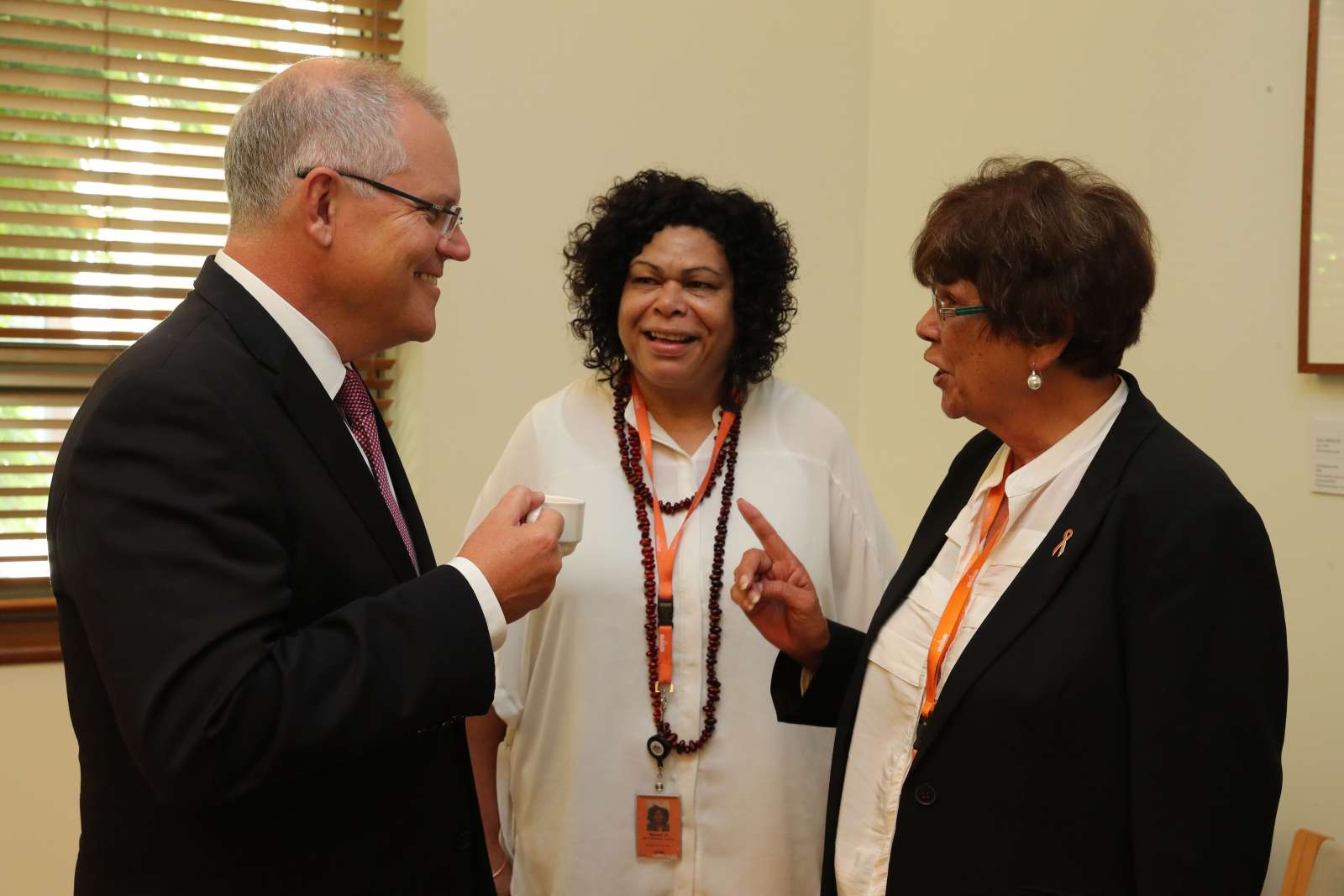
CEO Andrea Mason attends IAC meetings and Closing the Gap events in Canberra
Last week NPY Women’s Council CEO Andrea Mason attended a series of events at Parliament House in Canberra to continue high level discussions around the future framework of the Closing the Gap initiative.
Discussions were centred around the key areas of indigenous health, education, employment, families, children and youth, as well as economic development.
Andrea was an essential presence representing NPYWC’s long history of prioritising and advocating for these causes throughout the NPY region.
Prime Minister Scott Morrison was in attendance for a morning tea, attended by the Indigenous Advisory Council (IAC) and leaders from national peak indigenous organisations. Minister Nigel Scullion, special envoy to indigenous affairs Mr Tony Abbott and Minister Ken Wyatt were also present.
Andrea was also invited to the unveiling of Labor MP Linda Burney’s official portrait. The portrait honours Linda Burney’s many achievements as well as her status as the first Aboriginal woman to be elected to the house of representatives.

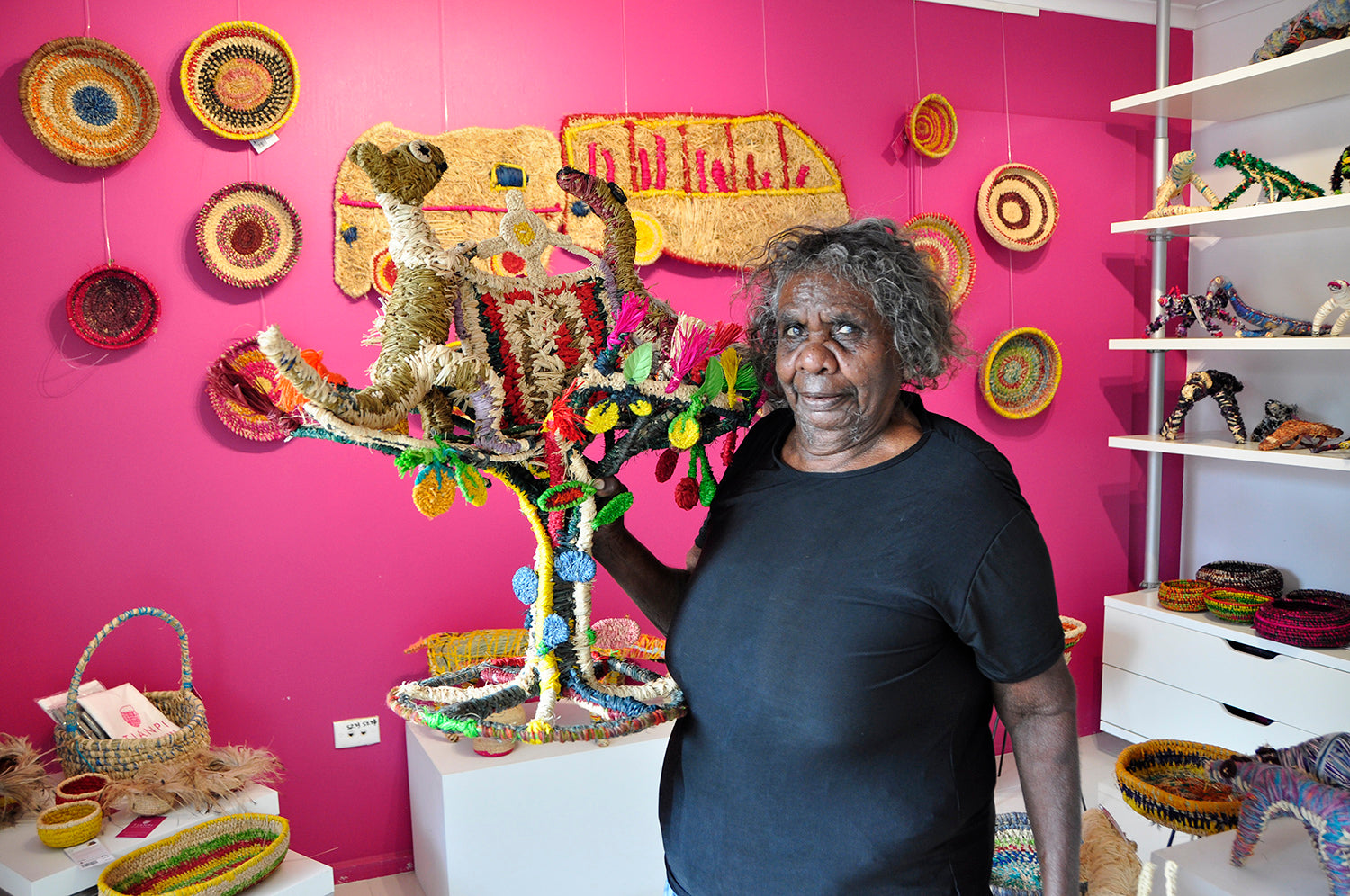
Ninginka Lewis’ Coat of Arms acquired by Australian Parliament House
NPY Women’s Council and Tjanpi Desert Weavers are proud to announce the acquisition by Australian Parliament House of Niningka Lewis’ artwork Australian Coat of Arms: We were there and we are here.
The artwork, which was recently on display at Museum and Art Gallery of the Northern Territory in Darwin as a finalist in the 2018 Telstra National Aboriginal and Torres Strait Islander Art Awards, will now become part of the Parliament House Art Collection in Canberra.
Ms Lewis is a senior artist from Pukatja (Ernabella) on the Anangu Pitjantjatjara Yankunytjatjara (APY) Lands of South Australia. Since Tjanpi’s inception in 1995 she has been a pioneering weaver and sculptor and is also an acclaimed punu (wood carving) artist and painter.
Ms Lewis said: “This work represents Tjukurpa (the foundation of Anangu life and society) and Nguraritja (sovereignty and traditional ownership), strength of culture, and the abundance of landscape which has nurtured and sustained us since ancient times. It also reflects on Anangu youth experiencing jail brutality, and demands that we, the original people of this land, be treated with respect.”
Acting Director, Parliament House Art Collection, Ms Samantha Pollock, said Parliament House was proud to welcome the artwork Australian Coat of Arms into the national collection.
“It is a remarkable work by Niningka Lewis,” Ms Pollock said, “and an ideal addition to our collection that proudly showcases the best of Australian art and artists, including more than 600 works by Aboriginal and Torres Strait Islanders from every state or territory.”
The artwork is expected to go on public display at Parliament House, Canberra as part of the 2019 exhibition program.


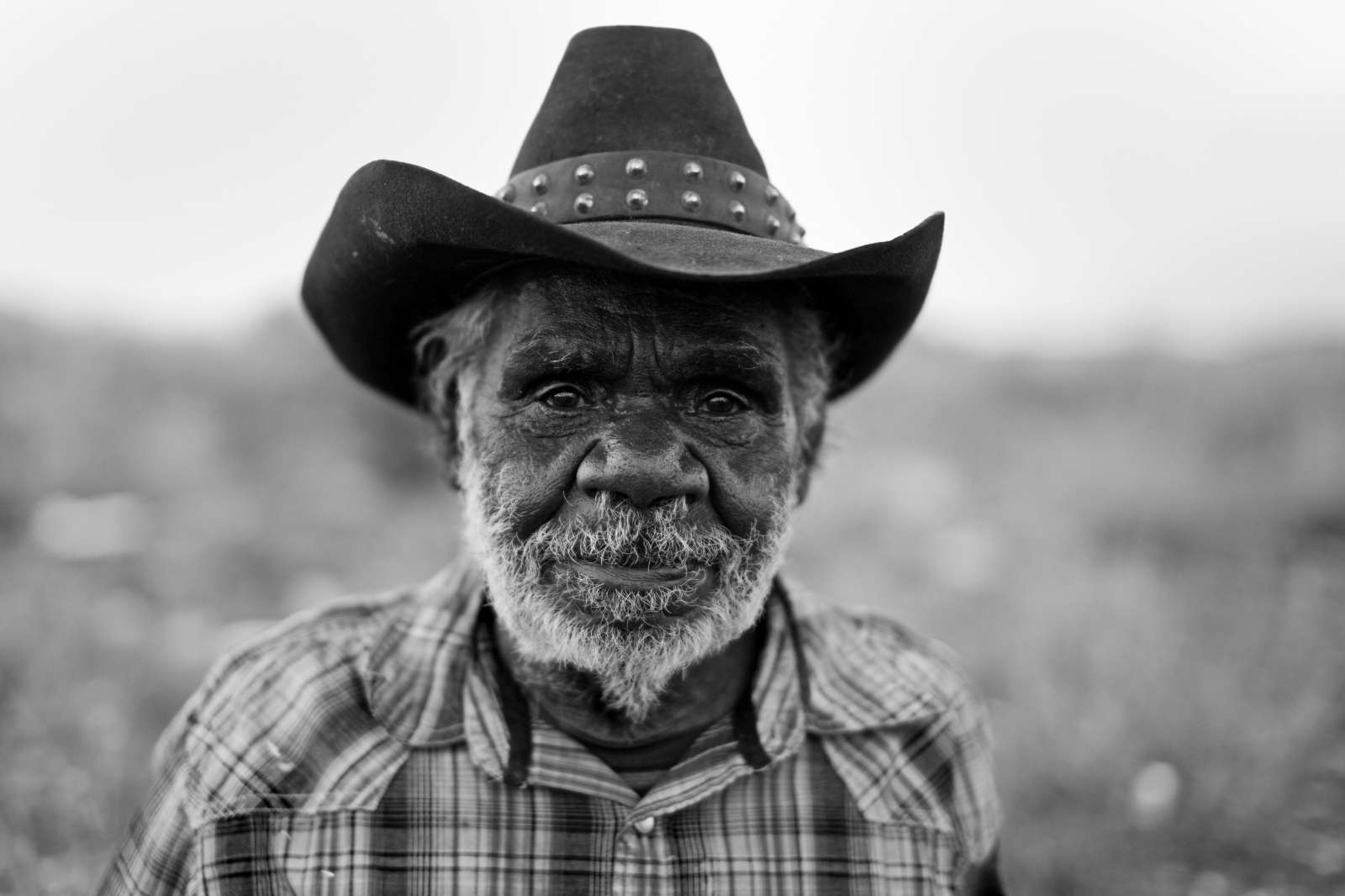
In loving Memory of Kunmanara Langka Peter
This week, NPY Women’s Council remembers and celebrates the life of Kunmanara Langka Peter who passed away 7 years ago.
The life of Langka Peter
Mr Peter was born around 1940 in the bush, near Shirley Well, Kaltjiti or Fregon community. He spent most of his childhood there with his family. His mother was called Kunpirinyi and his father shared his name.
He was given ngangkari powers from his grandfather Peter, who worked as a stockman as well as a ngangkari. He learnt the skills of the ngangkari by studying the work of his three grandfathers, father and other family members who were ngangkari, as they healed people. He said “And I’ve held onto what my grandfather gave me, all through these years working as a ngangkari. It began by watching my grandfather work with sick people, watching in order to learn. He’d ask me ‘Are you watching this?’ and I’d say ‘Yes, I am’ and I’d watch carefully as he removed objects and things that were causing people to be sick. I watched a series of treatments in order to learn how to do it.”
Mr Peter began school at Ernabella mission as a nine or ten year old boy, returning to Shirley Well over summer to continue working with his grandfathers.
As a young man he worked as a stockman at Kenmore Park station. In the 1950’s Kenmore Park ran over 14,000 head of cattle, and Mr Peter’s work included keeping the water pumps operating and moving cattle to the train line in Finke. He travelled all over the region around this time. Mr Peter loved the life of the stockman and throughout his life was well known for his impressive cowboy shirts, boots and hats.
Mr Peter married Dulcie Mintji around this time and they had two sons, Winitja and Clive. Sadly, he lost his oldest son in a car accident in the 1990’s. Later his wife passed away while on dialysis in Alice Springs; with Mr Peter always close by in her last months in hospital. From his two sons he had many grandchildren – Kikiri, Sharon, Joseph and Walter, Nathanial, Rosemary and Loretta, and also great-grandchildren – Waylan, Eric, Jason, Debbie, Latoya and Tarisha.
As well as his large extended family in the APY lands and cross border area, Mr Peter had many relatives living to the south of the APY Lands, in Coober Pedy, Oodnadatta, Oak Valley, Yalata and Ceduna. Throughout his life he kept up contact with them through regular visits.
In the 1970’s and 80’s, in the time when Anangu were fighting to get the land back, Mr Peter was working hard to establish services at Kaltjiti Community. He was chairman of Irintata Homelands for many years, as well CDEP mayatja. He worked in the first store at Fregon, and also at the school, where he made sure all the kids turned up every day. He also worked on the large community gardens that grew grapes, oranges, melons and vegetables, near where the school is today. Throughout his life he continued his work as a ngangkari, and he had a long standing, strong relationship with Nganampa Health Council and the Fregon Clinic.
NPY Women’s Council directors and members have always acknowledged the importance and value of ngangkari and when they finally received funding to employ them, the directors sought Mr Peter as the number one ngangkari in the region. He began working for NPY Women’s Council as ngangkari in 1999, with his friend Mr.Tjilari. They were the first to work full time as ngangkari anywhere in Australia. They travelled together all over the region, from Warbuton in the west, across to Finke in the east, to Ceduna and Pt Lincoln in the south, wherever anyone asked them to go. They also visited Anangu in hospitals, jails, nursing homes, mental health units and hostels in Alice Springs, Pt Augusta, Adelaide and Kalgoorlie. Mr Peter was really proud to be a ngangkari and always worked openly in front of the staff. He was never too tired to help and always said he did this work because it made him happy to see sick people get better. Mr Peter helped many, many people not only with his powerful ngangkari ways, but by talking and listening to them as well. “We help people by talking to them and speaking to them straight, to help them move forward from their poor mental state, and we continue talking and talking to them to help them regain their equilibrium . . . We counsel people, yes we do.”
Mr Peter believed really strongly that the best way to help Anangu with health problems was by ngangkari and doctors and nurses working together. But he could see that most doctors and nurses didn’t understand how ngangkari worked, and the way they could help people. He set out to change this by educating them. He was really good at talking about his work and people loved to listen to him, and to learn about Anangu culture and ngangkari work. He talked to doctors and other health workers at conferences and workshops all over Australia. He made friends everywhere he went and people who met him always remembered him, and were often profoundly affected by his words.
Mr Peter developed a strong relationship over many years with the Australian Indigenous Doctors Association. He really enjoyed supporting indigenous doctors and medical students, and travelled with them to Canada, New Zealand and Hawaii, where he met indigenous doctors from other parts of the world. Mr Peter also travelled to Canada and Alaska to find out about petrol sniffing in other indigenous communities.
Mr Peter had a special interest in mental health, and worked closely with mental health workers in Alice Springs, and elsewhere. As their understanding of the work of ngangkari grew, so to did the respect and regard for his work and skills among mental health practitioners. As a result, Mr Peter and the NPYWC ngangkari project won many awards – in 2009 the Mark Sheldon Prize from the Royal Australian and New Zealand College of Psychiatrists, and also the Dr Margaret Tobin Award for excellence in mental health service delivery. In 2011 they were awarded the International Sigmund Freud Prize from City of Vienna, at the World Congress of Psychotherapy. He was very proud of these awards, which he saw as a great acknowledgment of the importance and value of ngangkari and Anangu culture.
“There is a really long tradition of ngangkari in the Anangu world. Well before my time, the old men and women ngangkari were responsible for looking after and the healing of and their people. And that is what they did – in the bush, in an environment where there were no hospitals. The ngangkari had the sole responsibility of caring for everyone and making sure they were OK. This was before my time. Today we work really confidently and together in the hospitals – it’s a new way of working. So we have seen that time of not having hospitals in that world and ngangkari having the sole responsibility, to coming closer and closer, until today where we see ourselves working really quite closely with people in hospitals. We do that through the Women’s Council work, a lot of meetings, talks, getting to know each other’s style and skills. This is something that has grown over time and we work really closely today.”
With his sparkling eyes and funny, playful ways, Mr Peter was a magnetic presence, loved by men, women and children of all cultures. But he was an especially important man for Anangu, with his vast knowledge of law and culture and for his role as a master of mediation and reconciliation – kalypalpai, – bringing people together. His loving spirit- kurunpa mukulya, his kindness, compassion and generosity spread out beyond his own family to cover every one he met.
Mr Peter not only made people better, he made people happy everywhere he went. This gift will keep him in our hearts forever.
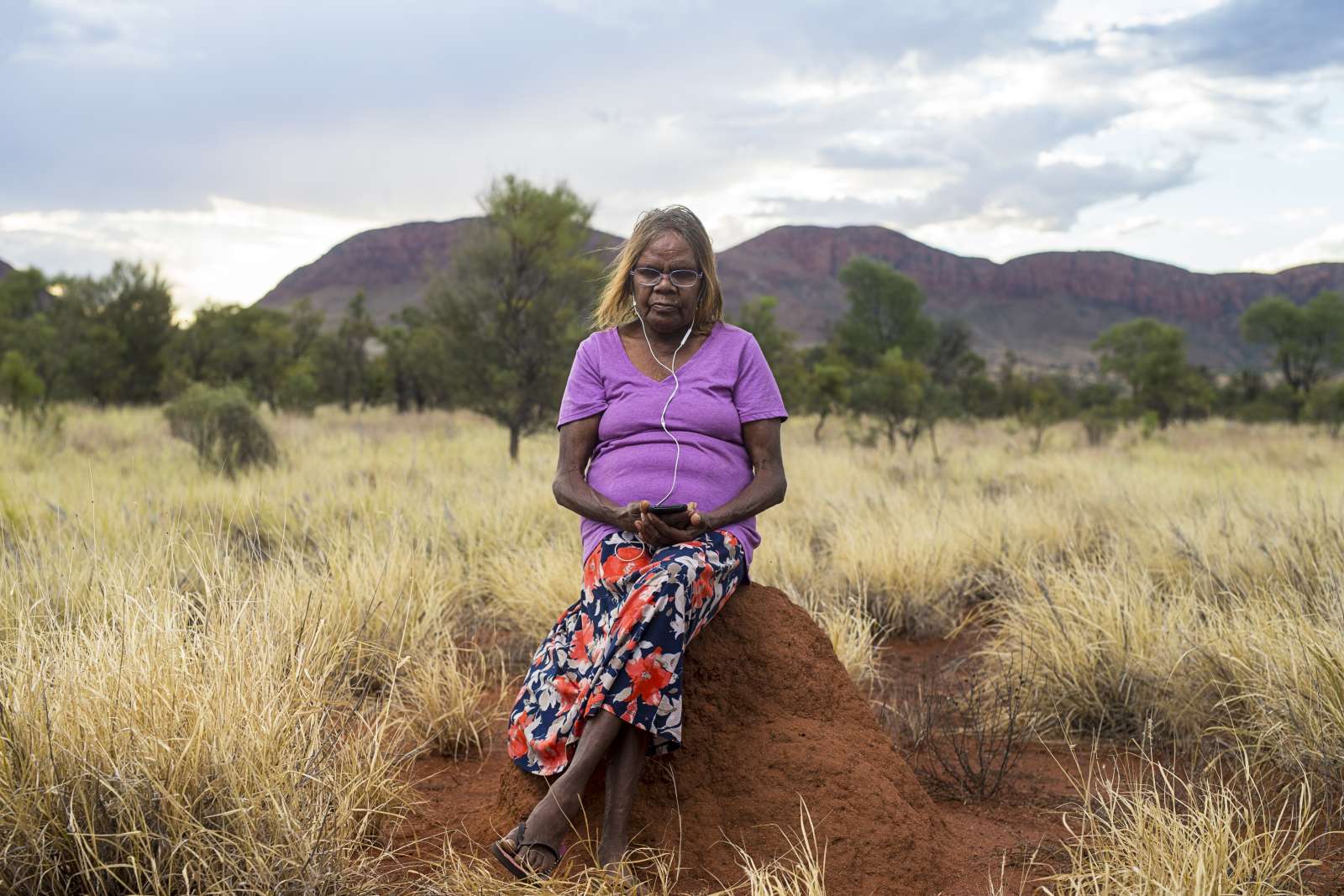
Uti Kulintjaku meditation app featured on Radio National's AWAYE program
The Uti Kulintjaku team were interviewed about the new meditation app produced with Smiling Mind. Listen to this amazing episode featuring ngangkaris Rene Kulitja, Wanatjura Lewis, Anawari Mitchell and Pantjiti McKenzie as well as Program Director Angela Lynch, CEO of Smiling Mind Addie Wooten and artist/ translator Beth Sometimes!
Thanks so much to Caddie Brain for her great work!
https://www.abc.net.au/radionational/programs/awaye/10750126
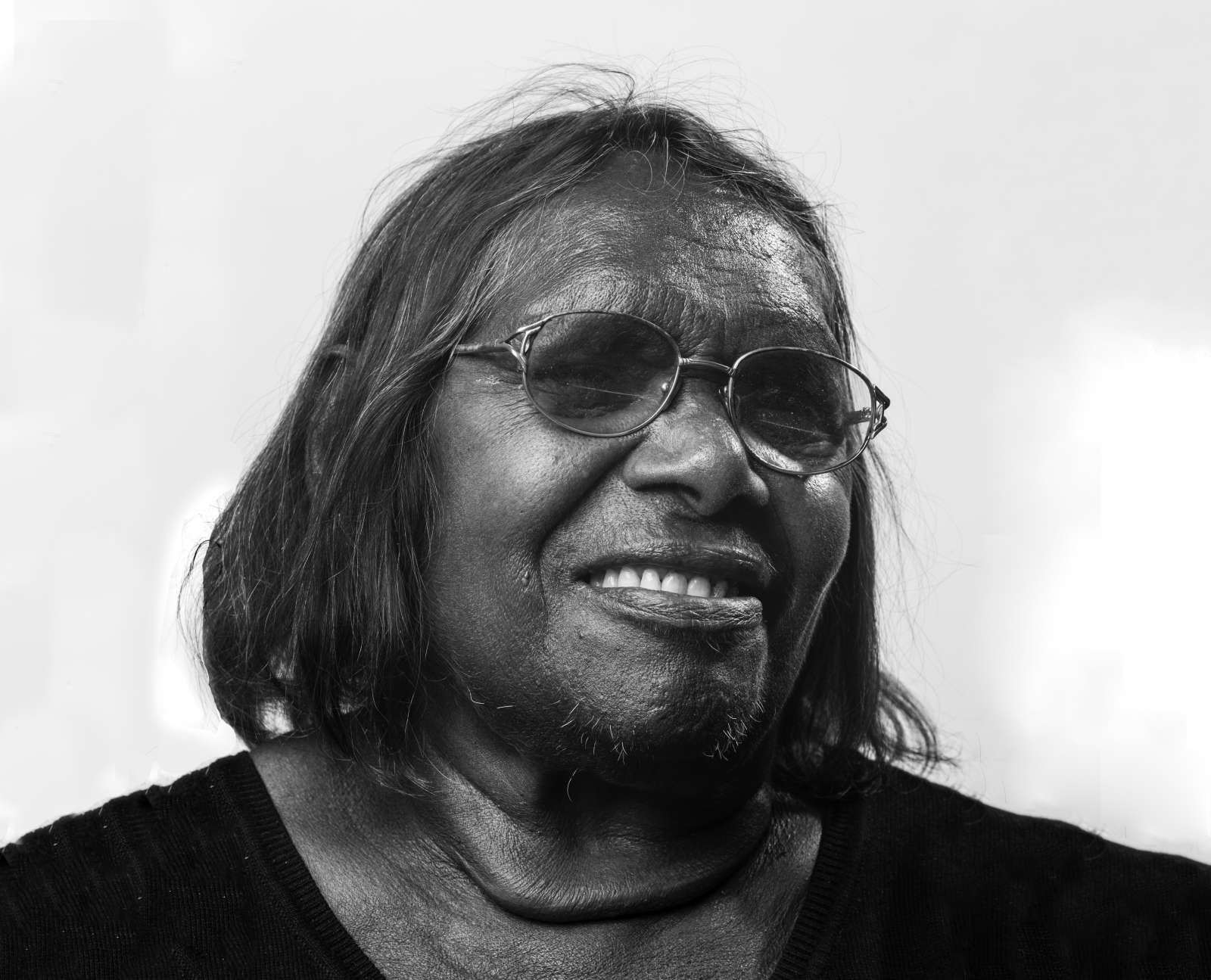
Congratulations Pantjiti Unkari McKenzie for being a recipient of the Order of Australia Medal
Pantjiti Unkari Mckenzie was awarded the Order of Australia Medal on the 26th of January for “service to the Indigenous community of the Northern Territory”.
Pantjiti has spent much of her life living in the Ernabella Community. Pantjiti and her husband set up EVTV which made films on many subjects. She estimates that they made over a thousand films. They also worked for PY Media on the Broadcasting for Remote Aboriginal Community Services program (BRACS). Pantjiti enjoys acting. She has appeared in films about bush tucker, bush medicine, the Seven Sisters and she also performed in the stage play, Ngapartji Ngapartji.
A skilled artist in paint, batik and weaving tjanpi (grass) baskets and a teacher of the Pitjantjatjara language, Pantjiti is also a traditional healer or ngangkari, specialising in treating women’s problems. Her work in archiving and sharing knowledge around cultural heritage are renowned. Recently Pantjiti worked on the Smiling Mind Meditation app with the Uti Kulintjaku team.
Pantjiti joins an important history of strong women associated with NPY Women’s Council that have received the OAM or AM awards:
Purki Edwards, OAM
For service to Nursing and to Aboriginal welfare (1979)
Nganyinytja, AM
For service to Aboriginal culture and welfare (1993)
Tjikalyi Collins, OAM
In recognition of Service to the Aboriginal Community (1994)
Barbara Tjikatu, OAM
For service to the Indigenous community of the Northern Territory as an Anangu Elder, and in the preservation and management of the Uluru-Kata Tjuta National Park (2006)
Andrea Mason, OAM
For Service to the Indigenous community of the Northern Territory (2018)


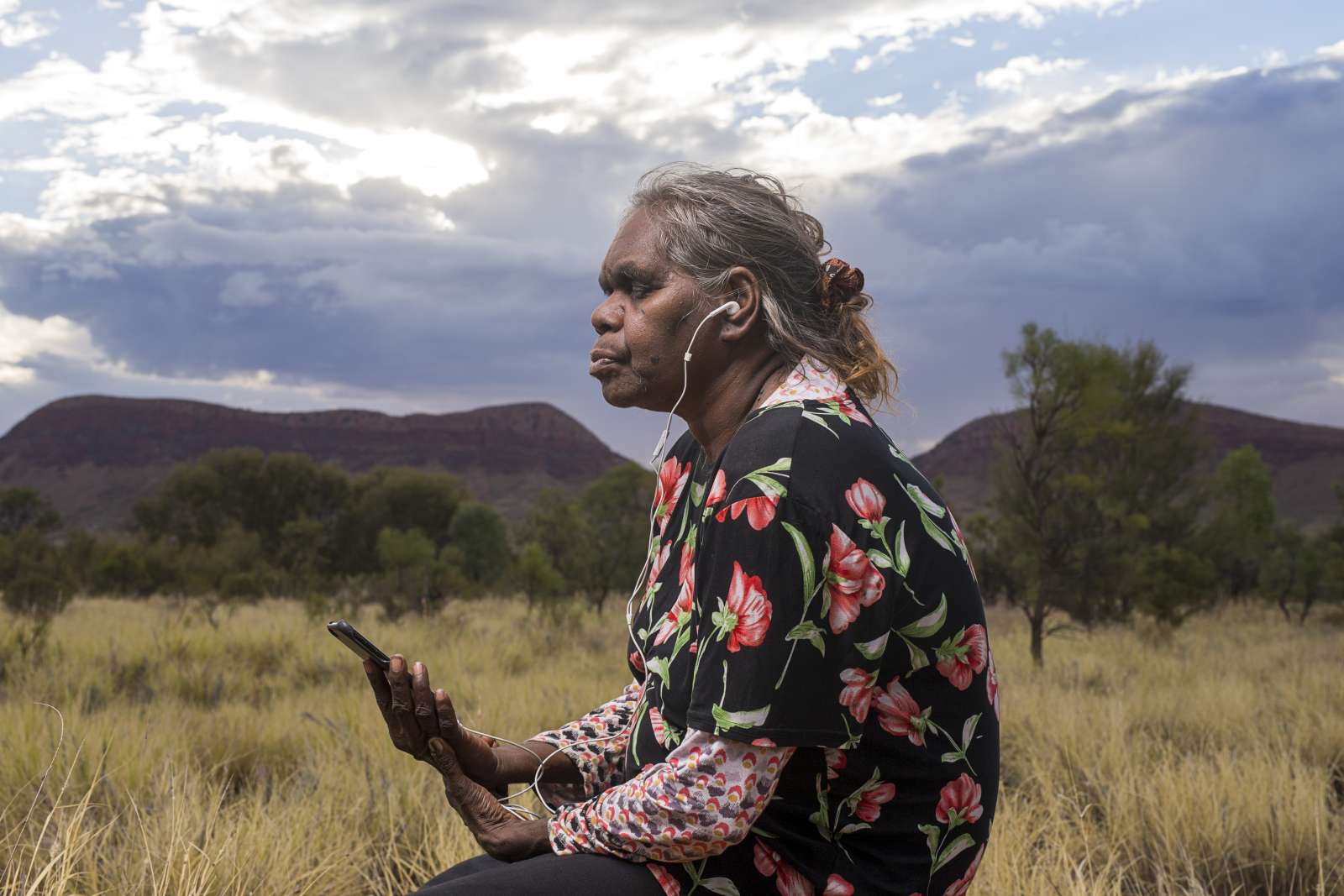
Uti Kulintjaku and Smiling Mind guided meditations launched!
NPY Women’s Council and Smiling Mind are excited about the launch of meditations developed by the Uti Kulintjaku team, launched on the 11th of December at the NPY offices.
Thanks so much to all that attended!
These mindful meditations have been created and recorded by Pitjantjatjara and Ngaanyatjarra speakers and piloted through schools in the APY Lands. Thanks to the support of the NIB foundation the project is available for free on the Smiling Mind app, these meditations are for adults and children alike.
https://www.smilingmind.com.au/
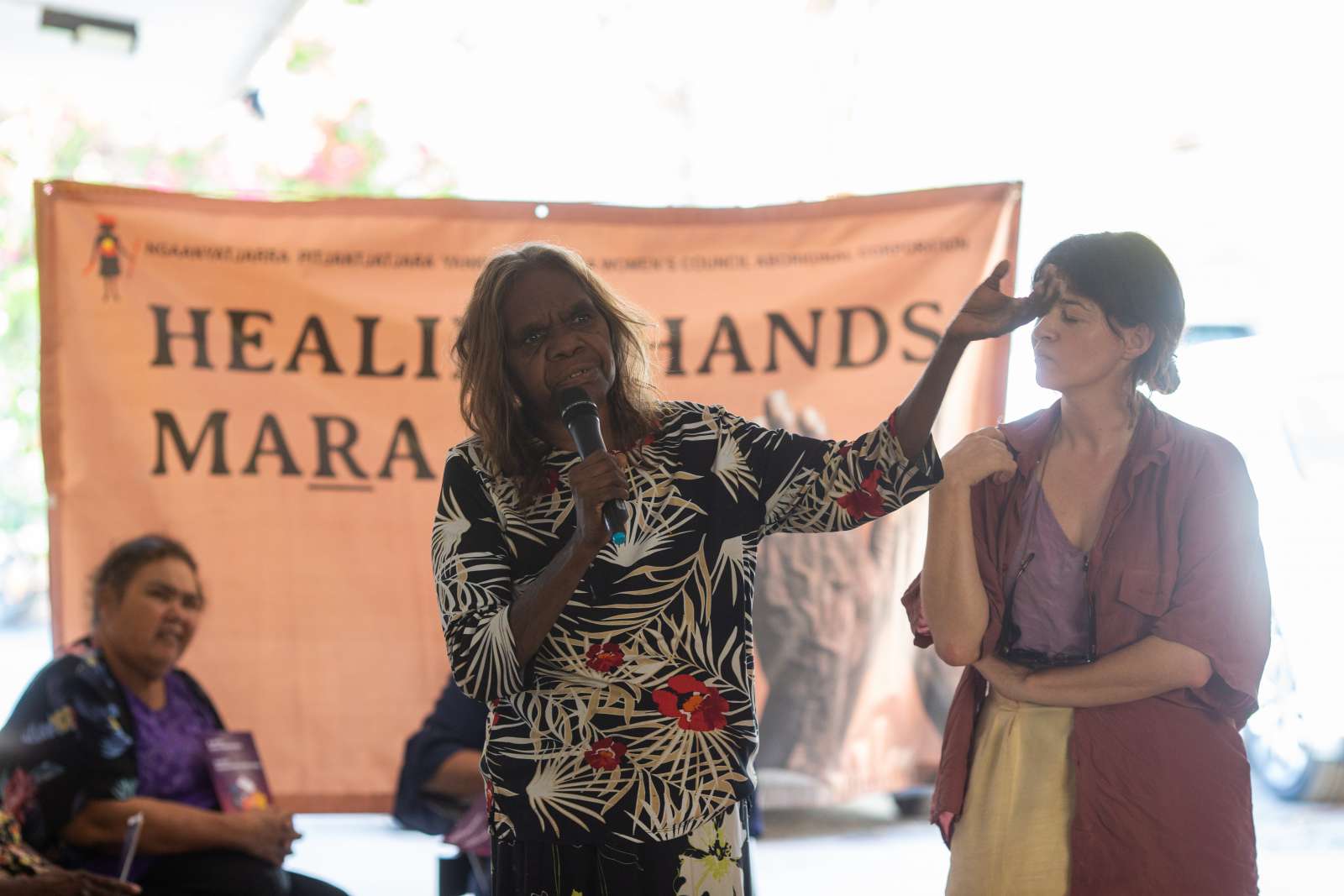
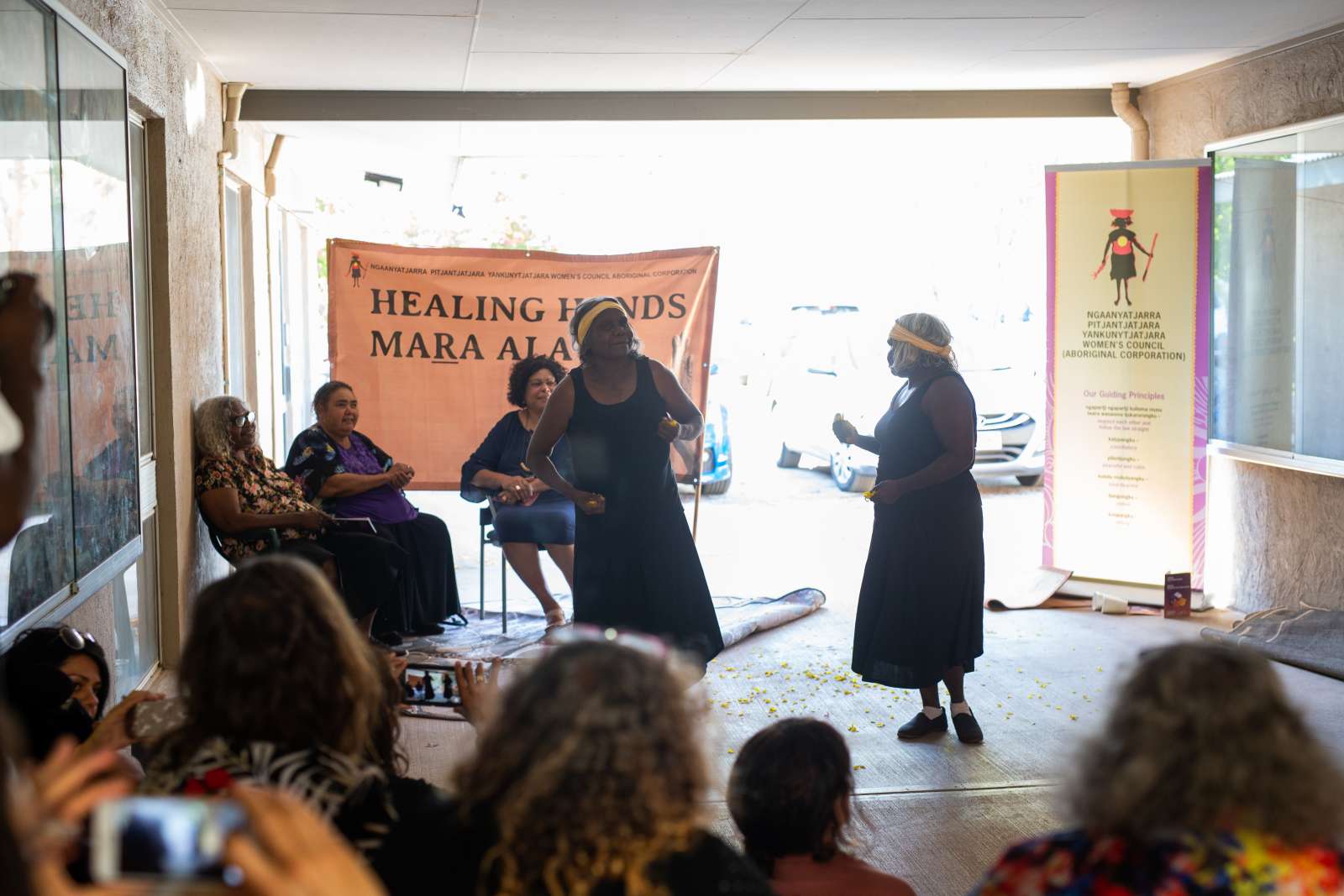
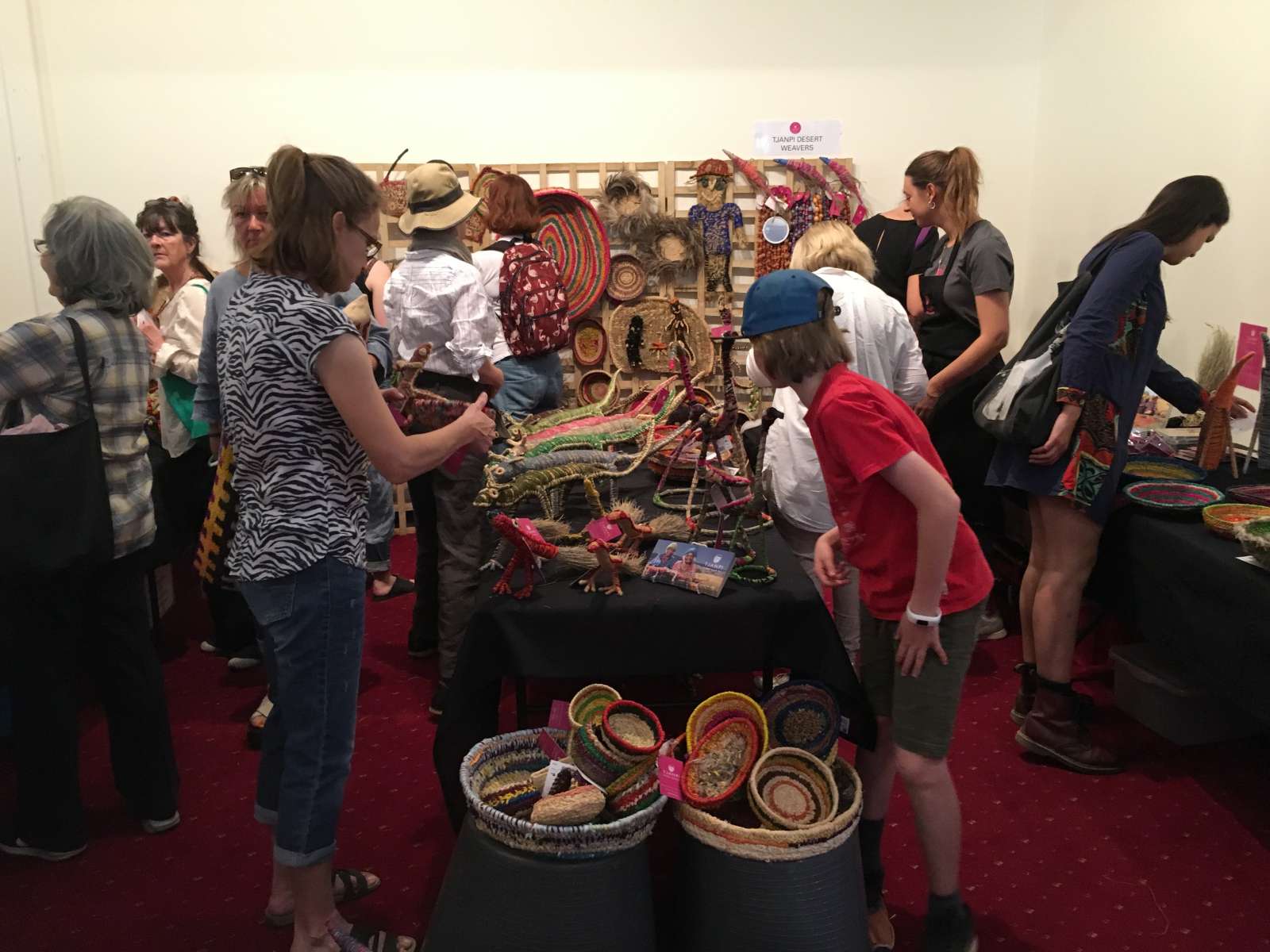
Tjanpi Desert Weavers at Desert Mob
Our social enterprise Tjanpi Desert Weavers helped kick off another successful Desert Mob – an annual event celebrating contemporary art from Aboriginal owned art centres in Central Australia.
NPY Women’s Council director and Tjanpi senior weaver, Rene Kulitja, officially opened the 2018 event in front of hundreds of people on Thursday evening. And on Friday, Tjanpi artist Cynthia Burke presented at the Desert Mob Symposium with animator Jonathan Daw on their project Ngayuku Papa (My Dog); an animation about Cynthia’s own papa, Tiny.
And on Saturday, Tjanpi work proved popular with the crowd at the Marketplace, with our staff recording a sales increase of 35% compared to last year.

But the talking point of Tjanpi’s involvement at Desert Mob was an artwork in the exhibition by our artists Nancy Nanana Jackson and Judith Yinyika Chambers titled Tutjurangara Massacre (Circus Water Rockhole Massacre).
The work tells the story of a massacre that happened at Tutjurangara (Circus Water) sometime prior to 1935. Both Nancy and Judith’s relatives were involved in the massacre and, in collaboration with key knowledge holder Bernard Newberry, they created this work.
The story is told all over the Ngaanyatjarra lands of Western Australia, but there is no written record of the massacre. In creating this artwork and telling the story of the Tutjurangara massacre, Nancy, Judith and Bernard hope to raise the profile of this significant event and share the often brutal reality of the early meetings between Aboriginal and non-Aboriginal people in Australia.
The work was purchased on opening night by Deborah Sims and Matt Dickson from the Sims Dickson Collection.
In a statement released, the pair said that “Judith and Nancy’s incredible Tjanpi work is beautiful, honest, brave and innovative.”
“It tells us a true story that we all need to know. We’ll be lending it for public exhibition as far and wide as we can.
“Without acknowledgement by non-Aboriginal Australians of past wrongs, there can be no moral foundation for Australia’s future. Tutjurangara Massacre is a hugely important step on that path.”
The work will be on display at Araluen Arts Centre until the Desert Mob exhibition closes on Friday 21 October.

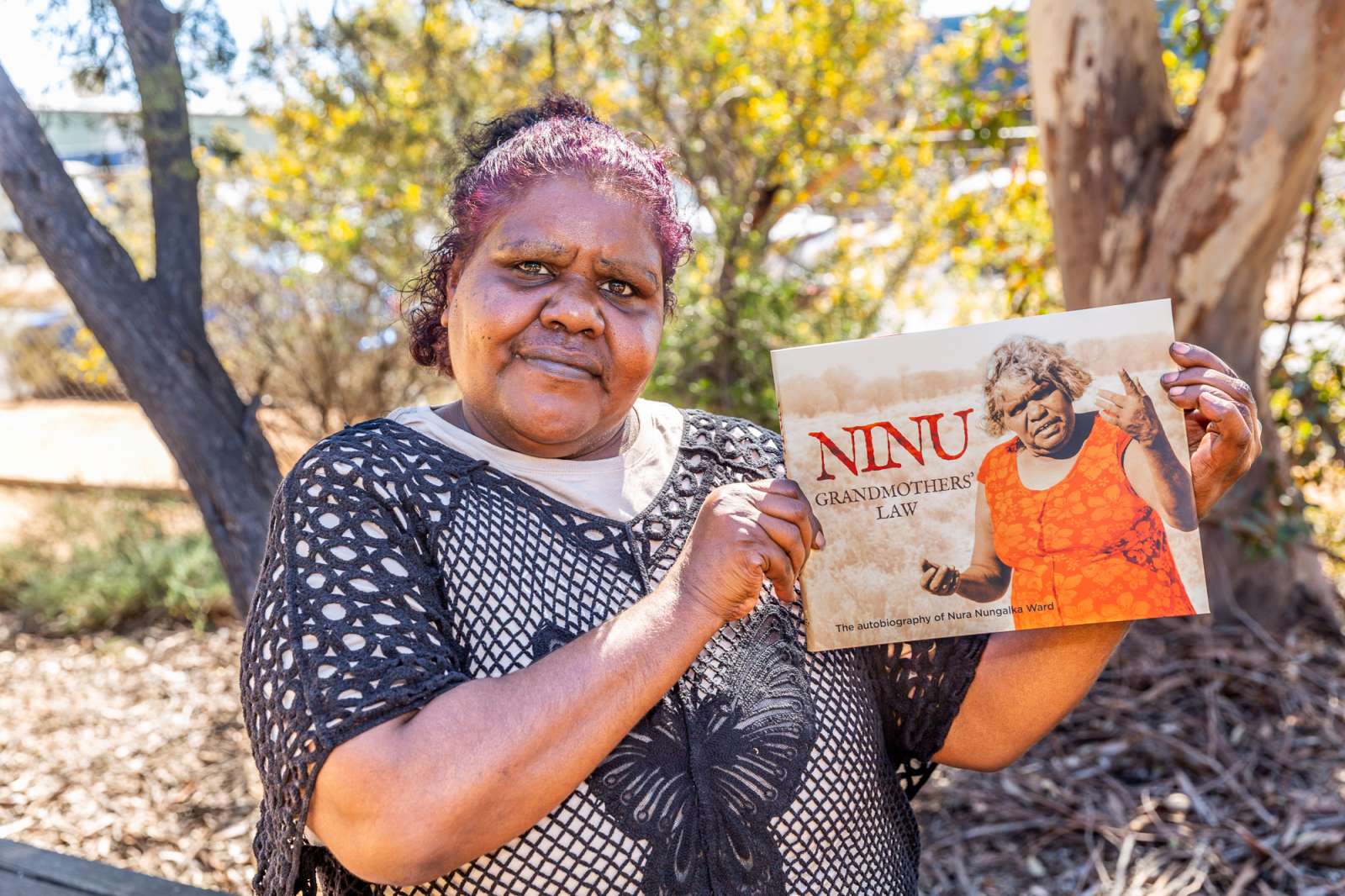
NINU Grandmother’s Law book launch
The life and teachings of the late Nura Ward are now available to everyone through her autobiography Ninu: Grandmother’s Law, which was launched last week.
Mrs Ward, who passed away in 2013, was a true leader of the NPY region and is remembered as a generous cultural teacher and a relentless advocate for indigenous health.
Speaking at the launch last Thursday, Mrs Ward’s niece Melissa Thompson, who wrote the forward for the book, said she was proud to see the publication finished.


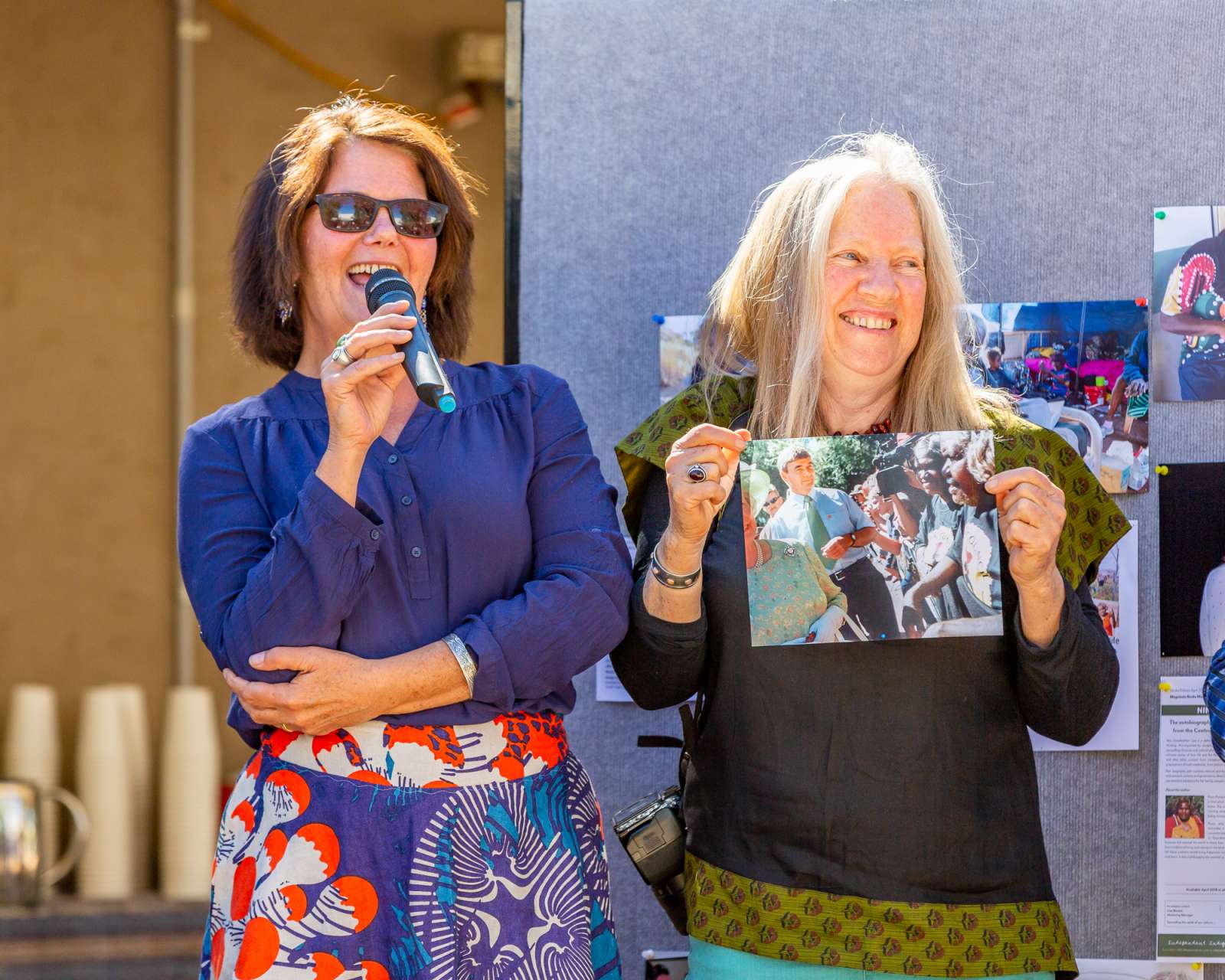


“Her (Nura’s) life was so powerful; she was a leader,” she said.
“When I was growing up she used to teach me, and I’ve written those stories in the book.”
The content for Ninu: Grandmother’s Law, which was compiled by NPY Women’s Council and Ara Irititja, was gathered over the last eight years of Mrs Wards life.
It features a detailed account about how she and her family lived, providing a rich documentation of her life and culture.
NPY Women’s Council director Rene Kulitja described Mrs Ward as a “truly marvellous, and big, important woman”.
“It’s because of women like her that we all know so much; we can all say that our lives have been enriched by her,” she said.
Ninu: Grandmother’s Law is available for purchase at the Tjanpi Desert Weavers Gallery at 3 Wilkinson Street. Proceeds from the book will go to Mrs Ward’s family.

UPK6 launches into the stratosphere
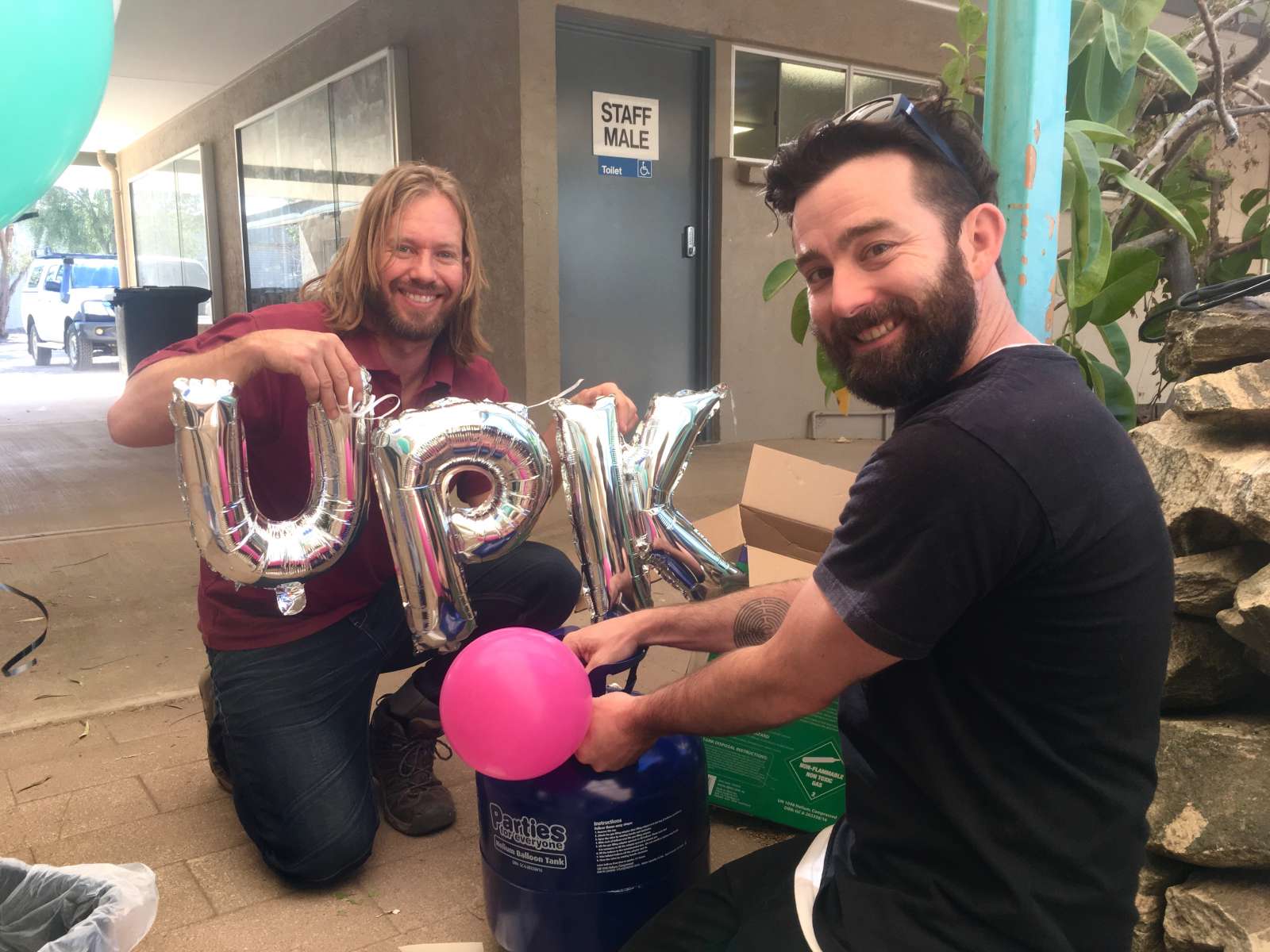
In August NPY Women’s Council celebrated its first involvement with the UPK music program; an initiative of the Nganampa Health Council that uses music to create awareness and inspire action about issues faced by Anangu (people of the Western Desert).
On Thursday a USB carrying the sixth UPK album was launched into the world aboard a balloon ship, it comes almost 30 years after the first instalment was recorded at Mutitjulu in 1989. The current album was also released on Bandcamp and Soundcloud.
UPK stands for Uwankara Palyanku Kanyintjaku; a Pitjantjatjara expression meaning ‘everybody building and caring for the future’.
Using music is an agent of change, the songwriters involved take aim the root causes of hurt they see around them, like petrol sniffing, alcohol and drug addiction, waste management, care-for-country, hunting, and homesickness.
The content of UPK songs is not about blame or victimhood but a musical effort to address the factors that contribute to, or impact on, good living.
Creating awareness is the intention of UPK music because it is the key precedent to positive action.
UPK6 was recorded at West Bore in the APY Lands using an open-air studio with a hessian fence for wind-break, used carpet to keep the dirt down, and digital recording gear housed in the front room of an old outstation home.
The resulting album was released on the APY Lands in the form of a USB slap band containing the whole album, plus a karaoke version complete with scrolling Pitjantjatjara lyrics.
The Launching of UPK6
The launching of the long-awaited sixth album of the UPK series, UPK6, takes place today at the offices of the Pitjantjatjara Council. The intention of UPK music is to draw attention to the elements of life that constitute lifestyle, either negatively or positively and therefore influence the quality of life.
The long history of UPK music as a generic form of contemporary Aboriginal music has been an effective and stimulating – from the very first recording made at Mutitjulu in 1989 to the most recent recording made at West Bore a long way to the south, on the APY Lands.
UPK Music
UPK Music is about Life. Its songs reflect the elements needed to make Life good. However, to continue the time honoured practice of songwriters everywhere, UPK Music songwriters take aim at the root causes of unwellness and social malaise.
UPK music has been the most popular music on the APY Lands in far north SA for more than 30 years.
UPK6
The music of UPK6 is the most recent original music to spring from the music scene on the APY Lands. The songs have a fresh, content-rich, contemporary feel. Pitjanjatjara rock anthems, lush desert dub, poignant acoustic ballads; all songs of the UPK music genre, rich, and varied.
As with all other UPK albums the recording of UPK 6 occurred in a remote bush location, away from all distraction. West Bore, in the very centre of the APY Lands, was the location visited by musicians from right across the Lands who came to record their songs and support one another. An ‘open-air studio’ with a hessian fence for wind-break, used carpet to keep the dirt down and digital recording gear housed in the front room of an old outstation home was the scene of recording action. All UPK music has been recorded this way.
Contact person:
UPK6 Music Director Bill Davis 0407 527706
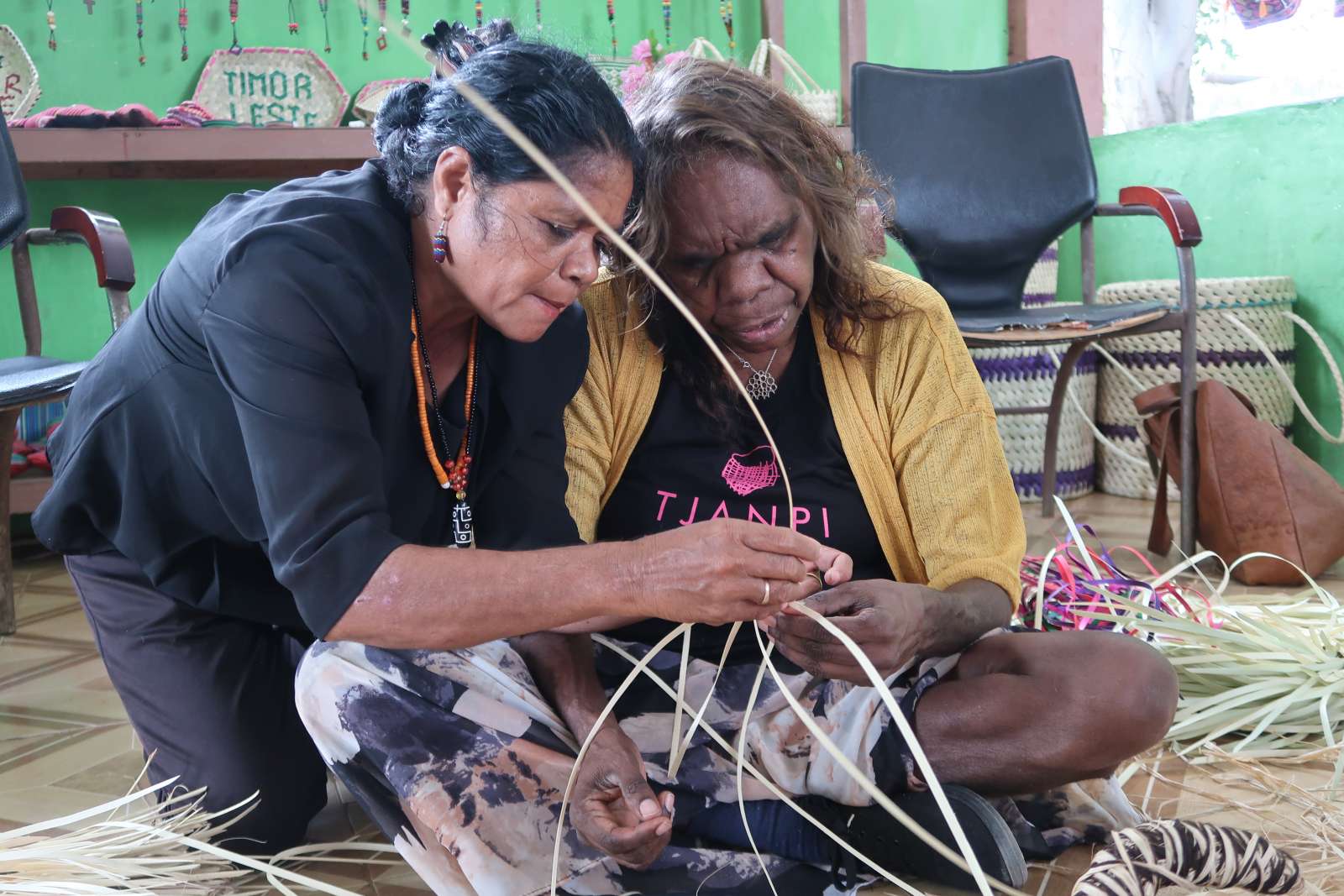
Weavers in Timor-Leste received a dose of Central Australian inspiration when representatives from Tjanpi Desert Weavers took their story to the nation during NAIDOC week.
On invitation by the Australian Embassy, artist Rene Kulitja and Tjanpi Manager Michelle Young travelled to Dili to showcase the achievement and beauty of the desert weavers’ work and share the way their artistic practice has developed.
For Timorese women, weaving is currently seen as a handicraft and cultural expression. In contrast, Tjanpi has grown their practice to a contemporary art form, and their artists exhibit work around Australia and the world.

Ms Young said the way Tjanpi has positioned itself was of great interest the Timorese women.
“Tjanpi has evolved its arts practice over many years, developing a distinctive and innovative art form and they found that very interesting,” Ms Young said.
“They saw the artistic achievements of Tjanpi as a great example, and I think it planted a seed for those women that doing things differently can have great value.”
During the week, Ms Kulitja and Ms Young took part in several NAIDOC week events in Dili to showcase the Tjanpi story to NGOs, government ministers, and women weavers, before travelling to Maubara to spend time with local weavers in their community.
Ms Young said the experience was “affirming”.
“It reminded us to be mindful of what we have achieved over the years; we’ve done a lot of work in this space that we can be proud of,” she said.
“After twenty plus years we’re a well-oiled machine, and it really highlighted our ability to evolve and adapt our practice and model of working, which I think they found inspiring.”
Tjanpi Desert Weavers is a social enterprise of NPY Women’s Council. They represent more than 400 Aboriginal women in the NPY Lands, enabling them to earn their own income from fibre art.

CEO Andrea Mason speaks the Australian Press Club
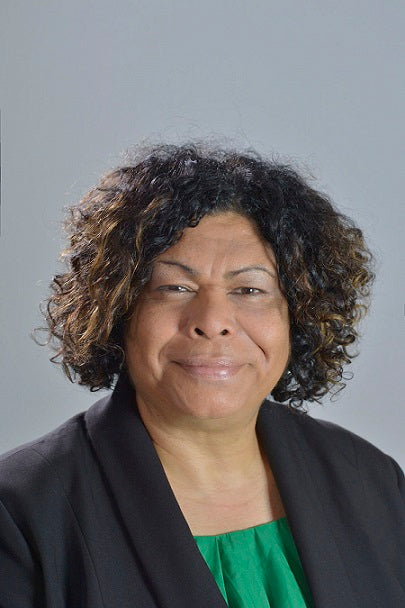
NPY Women’s Council CEO Andrea Mason addressed the Australian Press Club on 12 July 2018 on the program of the NAIDOC Women’s Conference. Below are the words she shared with delegates.
NPY Women’s Council established its Domestic and Family Violence Service (DFV) in 1994. The service initially focused on assisting women to gain access to the criminal justice system. This was what was needed at the time. In the context of NPY Women’s Council as a whole and the changing context of remote communities over that time the service has recently taken on a different focus.
Whilst we know we still have a role to play in crisis work, and in helping women through the legal system, we now know this is not enough. The last two years in particular has seen major changes to how we approach this issue. These changes have been driven by the women (Directors, members and senior management…) who want to work from a position of strength rather than deficit. The old paradigm of domestic and family violence keeps us locked in the deficit position – seeing women as victims on a spectrum of risk and perpetrators on a parallel spectrum of risk.
This paradigm limited our ability to consider different ways of supporting women who have experienced violence, and different ways of working to end violence.
We now clearly articulate that we work from a holistic and relational standpoint which is strongly aligned with Anangu values and the agency of our women. We understand that violence does not occur in a vacuum. And we understand that in our context there is no simple or leading explanation as to why violence occurs.
Our new approach has been influenced by new understandings of trauma and toxic stress which NPYWC as a whole has been working on in different ways. In one example of our work in this area, a group of senior lore women (UK team) have been meeting for the past few years to consider these issues and develop shared meanings for Anangu and Western ways of understanding of the impact of trauma and toxic stress. Their work has been healing and transformative for them and they have developed resources that assists others in their healing process especially young people and children.
The significance of this kind of work has been personally profound for the women involved and profound in the kinds of advice that they have provided for the rest of the organisation. We are now working with a group of senior lore men in the same way specifically on the topic of DFV.
Our focus now is to shine a light on the strengths that will help the collective transformation that we know our members want to see for their communities. In relation to DFV this means shifting the focus from cycles of family and community violence to cycles of care and resilience. We have a practice framework for staff that outlines how their work is best conducted to ensure we are supporting our members to achieve this vision of collective transformation. Our practice framework, which was developed in partnership with the Australian Childhood Foundation, lays out for us where our focus should be. Our job is to support women and communities to: collaboratively understand violence, name its effects, tell stories of renewal acknowledge pain, listen deeply, find connection, validate resistance to violence and resource safety.
The DFV service is now very clearly committed to learning about and understanding:
- how violence occurs in the community and how it is being challenged and resisted;
- the importance of culture and cultural maintenance;
- about trauma and healing;
- about narrative approaches to working with communities’ own efforts to resist and challenge violence; and finally
- ways to enhance community resilience.
Our approach is aligned with what we know to be the aspirations of our members, but it has taken time to get to this place of confidence in the new focus of our work in DFV. We have built on our knowledge of this area gained over many years. We have been able to embed our DFV service within our overall organisation which is already involved in healing work, cultural maintenance and other activities that we know to be enhancing of wellbeing. And we have had to work with the expectations of our funders. Very importantly though, we have been very open to working in genuine partnership with other experts and organisations, such as the Australian Childhood Foundation who assisted us to articulate this new way of working.

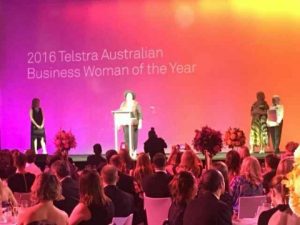
2016 Australian Telstra Business Woman of the Year!
Ngaanyatjarra Pitjantjatjara Yankunytjatjara (NPY) Women’s Council directors and staff congratulate our Chief Executive Officer Andrea Mason on being awarded the 2016 National Telstra Business Woman of the Year for Special Purpose and Social Enterprise, and the 2016 Australian Telstra Business Woman of the Year award!
The Telstra Business Women’s Awards are the longest running women’s awards program in Australia, championing women in diverse industries and creating opportunities for national connections and conversations.
Andrea, along with the other State and Territory finalists, gathered in Melbourne last night for a gala dinner and the announcement of the national award recipients.
NPY Women’s Council also congratulates the other winners of the evening: Jenny Paradiso from Suntrix in South Australia (Entrepreneur Award), Inspector Virginia Nelson from the Queensland Police Service (Public Sector and Academia Award), Jackie McArthur from Martin Brower in NSW (Corporate and Private Award), Rituparna Chakraborty from TeamLease in India (Business Woman in Asia Award) and Anna Ross from Kester Black in Victoria (Young Business Woman of the Year).
“I am excited at the opportunity these awards present for NPY Women’s Council” Said Ms Mason.
NPY Women’s Council is proud of the achievements of our CEO Andrea, and once again congratulates her and the other winners of the 2016 Telstra Business Woman of the Year Awards.
Read our media release.


Congratulations! 2017 NT Australian of the Year
Congratulations to Chief Executive Officer Andrea Mason on receiving the 2017 NT Australian of the Year Award, last night at a reception in Darwin.
Andrea won this prestigious award for her dedication, commitment and work across the tri-state region of NT, SA and WA to Aboriginal women and their families.
Andrea has been CEO of NPY Women’s Council since 2010 and has lead the organisation on a journey of growth and towards financial sustainability.
Congratulations are extended to the other NT Award recipients
- 2017 Senior Australian of the Year; Sister Anne Gardiner AM,
- 2017 NT Local Hero; Tejinder pal Singh and
- 2017 NT Young Australian of the Year; Bridie Duggan
See our media release.
For further information on the Awards and the National event that all State and Territory Award recipients will be attending in January 2017 see the Australian of the Year website.
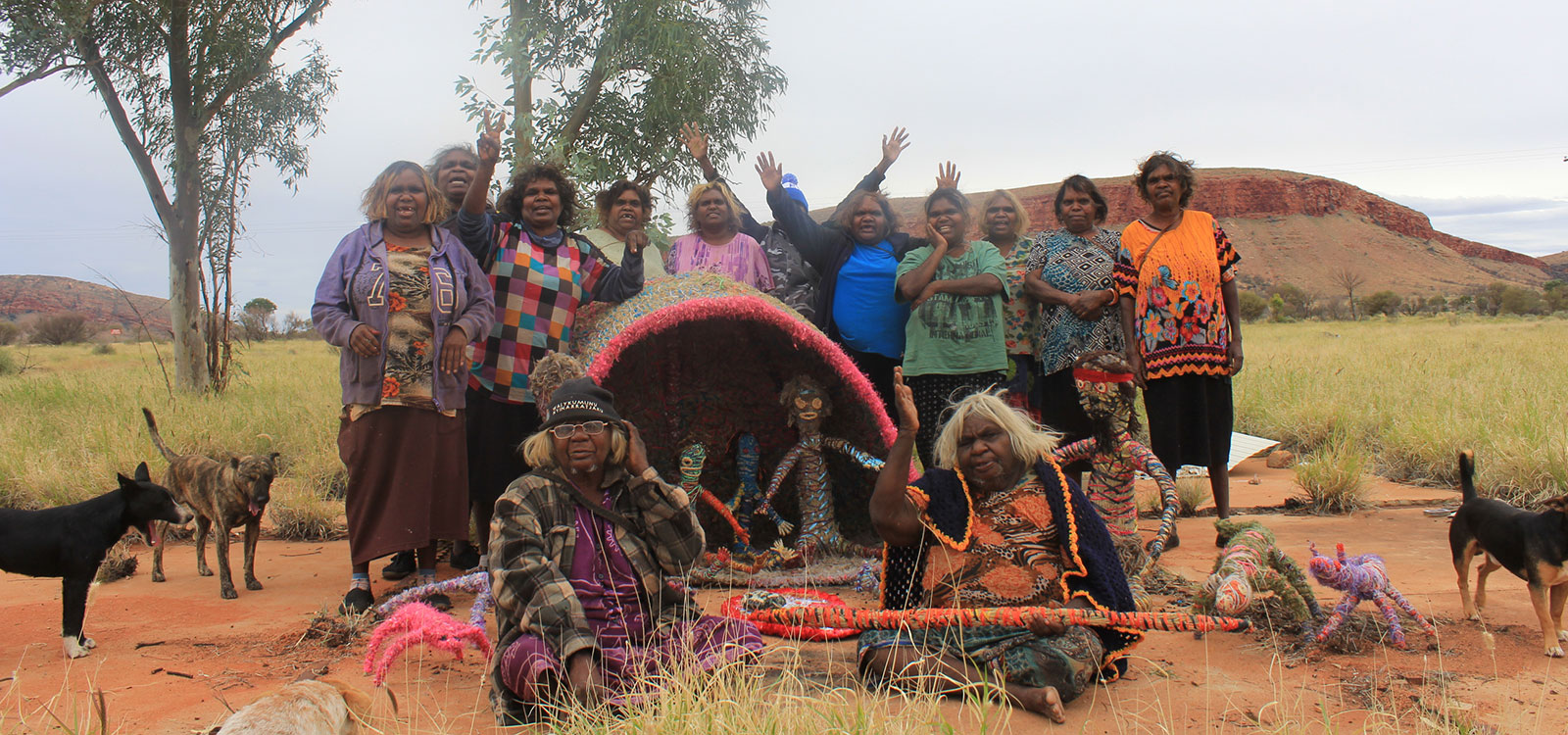
Tjanpi Desert Weavers runners up in Ethical Enterprise Award
Tjanpi Desert Weavers have won second prize in the Moral Fairground Ethical Enterprise Award 2016, announced in Melbourne at the end of last week. The Ethical Enterprise Award 2016 recognises the most inspirational ethical enterprise in Australia – a business or organisation that has achieved the most positive social and economic impact in a local or overseas community through their innovative and ethical trade practices.
Tjanpi Desert Weavers were one of 9 finalists in the national award, with the winners being Pollinate Energy, an Australian Enterprise founded in 2012 with a mission to being solar light to people living in Indian slums.
Tjanpi Desert Weavers is an Indigenous social enterprise of the Ngaanyatjarra Pitjantjatjara Yankunytjatjara Women’s Council. In 1995 NPYWC members created Tjanpi (meaning, ‘locally harvested grasses’) to enable women on the lands to earn a regular income from selling their fibre art. The enterprise provides a broad range of services including trips to remote Country for artists to collect grass and support cultural maintenance activities, skills develop workshops, selling artwork to retail outlets nationally, selling work locally through a gallery in Alice Springs and online in addition to exhibitions of artwork in national galleries and facilitating commissions for public institutions and collectors.
Tjanpi Desert Weavers have also just been shortlisted as a finalist in the Women’s Impact Award category for the Social Enterprise Awards 2016.
“I am honoured to receive the award on behalf of Tjanpi Desert Weavers,” said Michelle Young, manager of Tjanpi Desert Weavers. “Tjanpi has become firmly embedded in central and western desert culture. The social enterprise supports economic, artistic, cultural, social and wellbeing outcomes for desert women and demonstrates impact consistently and deeply.”
Individuals and organisations can support Tjanpi by purchasing artwork at the online gallery or by making a direct donation www.tjanpi.com.au
Media Comment: Michelle Young, Manager Tjanpi Desert Weavers 08 8958 2337
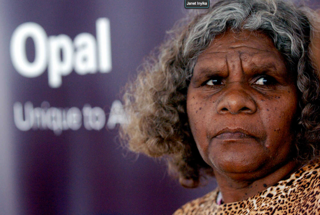
Marking 10 years of Low Aromatic Fuel in central Australia

Press Release
Low Aromatic Fuel 10 Years on and Going Strong: a community-driven solution that has stood the test of time.
This month it is 10 years since Opal fuel first rolled into Alice Springs. This happened on the back of a community campaign and with the support of fuel companies, government and many retailers in the region. It has worked well and 10 years on we have reason to celebrate and highlight this good story.
CAYLUS, WYDAC and NPY Women’s Council are proud of our involvement in this campaign and ongoing work with remote communities to support the roll out of the fuel and other measures for the wellbeing of young people and families. We were not alone in this work, many community leaders took action against sniffing and argued for resources and support that were needed, governments, industry, councils, social service organisations and many concerned individuals all played a role and continue to make regional use of LAF a success.
Blair McFarland CAYLUS Manager stated “Low Aromatic Fuel use has led to a 94% reduction in sniffing in Central Australia. While many new and old challenges persist in the region, this roll out is an example of getting it right, community voices being listened to and community organisations, government and industry collaborating and backing a working strategy over the long term”.
Brett Badger the general manager of WYDAC stated “ 10 years ago, we were worrying about petrol sniffing in the region, kids were getting hurt and sometimes sniffers hurt other people. Board members and staff from WYDAC talked up for using Opal in the region, and especially bringing it in to Alice Springs. We knew from experience in Yuendumu that it is possible to deal with problems like petrol sniffing. Aboriginal organisations worked together to lobby for this and to make it happen and it worked. We need to keep this going but we also need to learn from it about good ways to face other challenges.”
Liza Balmer, Deputy CEO NPY Women’s Council, stated “today is a great opportunity to celebrate a success that we have all achieved together. Sniffing still happens occasionally and can’t be ignored, but it’s not the endemic problem that it once was. A generation of children are now growing up free from sniffing. Unfortunately there is still the legacy of past generations of petrol sniffing and the number of adults with acquired brain injury. And, despite all the evidence, there are still some retailers that do not stock Low Aromatic Fuel, this can be linked to sniffing outbreaks in our region, so there is still some work to do. However, today we want to celebrate the years of persistence and hard work that has led to the roll out of Opal fuel in central Australia and the consequent reduction in the prevalence in petrol sniffing.”
Blair McFarland from CAYLUS stated “with petrol sniffing if we only focused on treatment, case management and other measures that happened once people were chronic sniffers we would still be running around in circles today. There is good evidence to show that we can reduce the levels of crime in our communities through positive measures that take a holistic approach, like good youth programs that empower young people, through using community development approaches, including the right approaches to jobs and education. We hope that this is not missed in the considerations of the Royal Commission.”
A public event to celebrate this milestone will be held tomorrow Oct 27th at the Spinifex Room Double Tree Hilton Alice Springs from 11am. Speakers will include representatives from our three organisations, community leaders who were involved in campaigning for regional use of Opal and Nigel Scullion Minister for Indigenous Affairs.
As a part of the event we will hold the Alice Springs launch of the Monitoring Trends in the Prevalence of Petrol Sniffing in Selected Australian Aboriginal communities 2011-2014: Final Report from the Menzies School of Health Research. It reports an 87.9% reduction in sniffing in the 17 communities sampled. Hard copies of the report will be available and there will be a recorded introduction from one of the authors of the report Professor Peter d’Abbs.
Directors, members and staff congratulate our Chief Executive Officer Andrea Mason on her nomination as a finalist in the 2017 NT Australian of the Year awards.
See the article form the Centralian Advocate published today (21 October 2016).
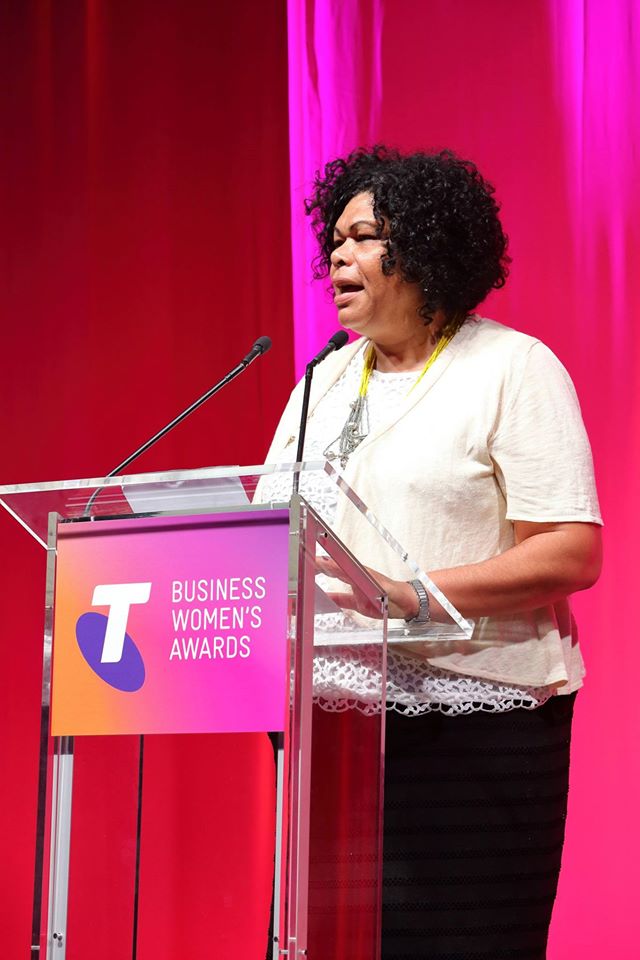
NT Telstra Business Women of the Year 2016

Ms Andrea Mason, Chief Executive NPY Women’s Council, named NT Telstra Business Woman of the Year.
Directors, members and staff of the NPY Women’s Council congratulate their CEO, Andrea Mason, for last night’s award of NT Telstra Business Woman of the Year.
NPY Women’s Council provides services for women and their families to increase their capacity to lead safe and healthy lives with improved life choices in the tri-state region of NT, SA and WA, otherwise known as the Ngaanyatjarra Pitjantjatjara Yankunytjatjara lands.
Last night at the Darwin Convention Centre we celebrated the achievements of brilliant business women from the Northern Territory, where Andrea was named as winner of the ‘For Purpose and Social Enterprise’ Award. Up against the accomplishments of some incredibly inspiring and successful women, Ms Mason was then awarded the overall NT Telstra Business Woman of the Year 2016.
Andrea has worked for the NPY Women’s Council since 2008, filling the role of Chief Executive Officer since 2009.
“One of the biggest challenges is constantly working to secure funding for projects and to keep the organisation afloat. Every dollar that we spend in the organisation and through the organisation is all about improving the lives of our members and their families and the communities where they live,” she said.
Ms Mason said women brought something different to the table when it came to executive management.
“We are very strongly driven by success for our organisation and central to this is developing and maintaining strong relationships — with our staff and the people we work with.”
Congratulations to Andrea and all the other finalists at this year’s NT Telstra Business Women’s Awards. Andrea will now go on to represent the Northern Territory at the National finals in Melbourne in November.
For more information about the awards go to:
2016 Telstra Northern Territory Business Women’s Awards
NPY Women’s Council directors and staff congratulate our CEO Andrea Mason on becoming a finalist in the For Purpose and Social Enterprise of the 2016 Telstra Northern Territory Business Women’s Award event series. The winners will be announced at a gala event in Darwin on the 4th October 2016.
2016 Telstra Northern Territory Business Women’s Awards
NPY Women’s Council directors and staff congratulate our CEO Andrea Mason on becoming a finalist in the For Purpose and Social Enterprise of the 2016 Telstra Northern Territory Business Women’s Award event series. The winners will be announced at a gala event in Darwin on the 4th October 2016.
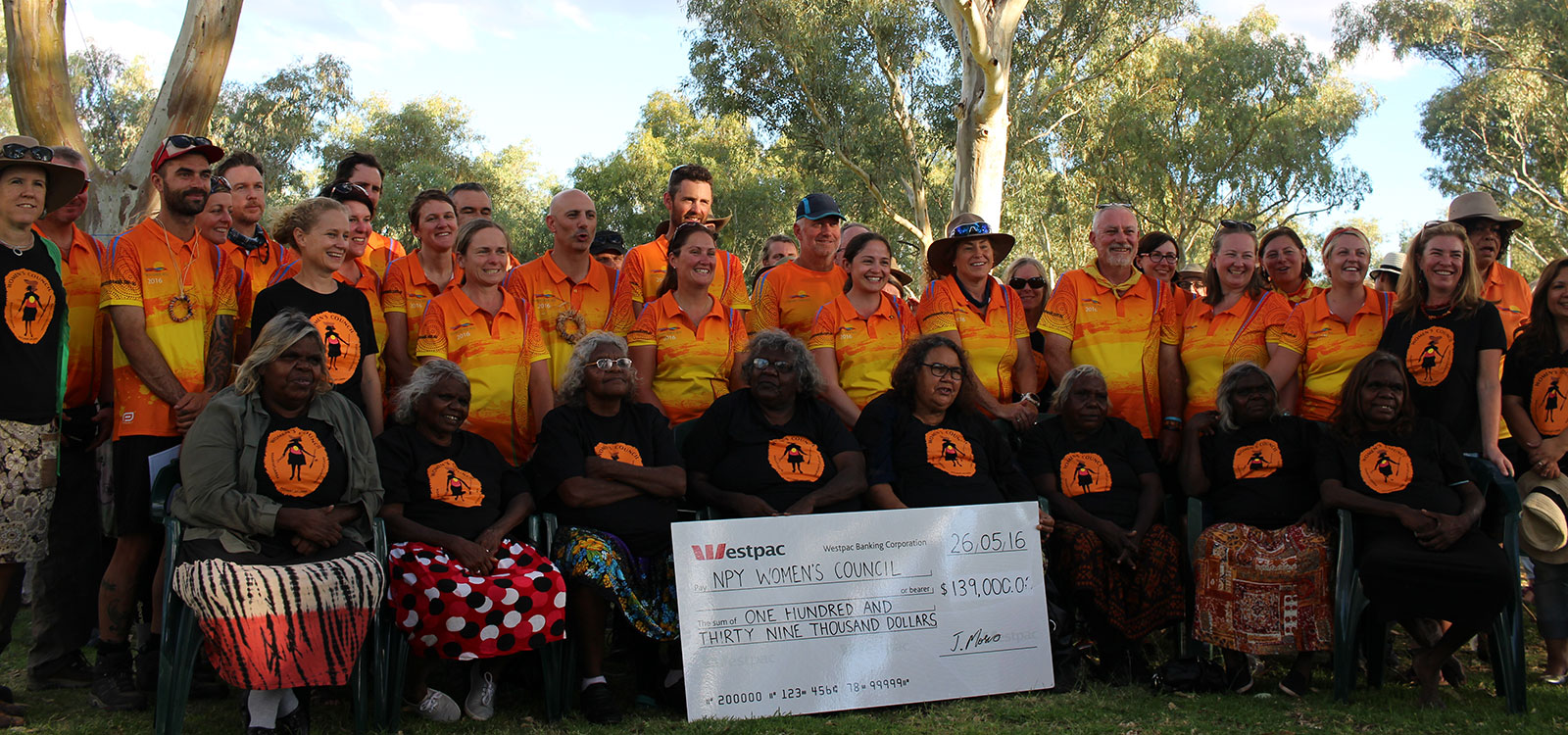
Larapinta Extreme walkers raise $139,000
What an amazing celebration at the Telegraph Station this afternoon to mark the end the 11 day walk. The Larapinta Extreme Walk volunteers have done it again and more! They have raised funds for our women’s law and culture meeting and other operational activities of NPYWC to the sum of $139,000, and each volunteer has had a life changing experience.
Thank you for exceeding last year’s effort!!! It’s now time to have a shower, relax and celebrate !!!
Andrea Mason, NPYWC CEO
For more information about the Larapinta Extreme Walk go to http://www.larapintaextremewalk.com.au/ or visit their facebook page.
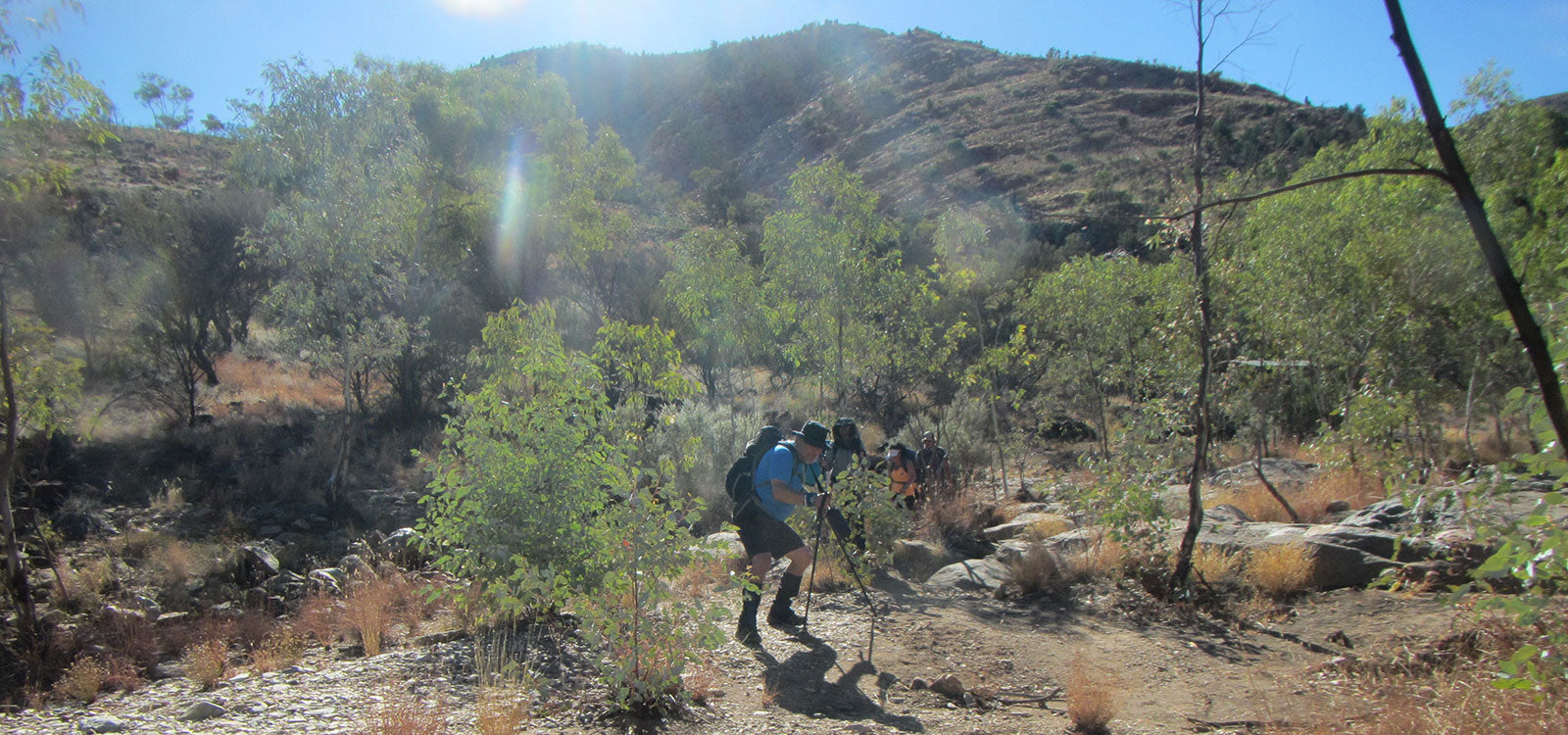
2016 Larapinta Extreme Walk Fundraiser
From the 15th to the 26th May a team of 30 volunteers are tackling one of the most extreme trail walks in Australia, and they are doing it all for charity. A total of 27 walkers and 3 support crew, including employees from Perpetual, Telstra, IAG, Broadspectrum and NPY Women’s Council, two self-employed people and insurance brokers. Volunteers are coming from the NT, South Australia, WA, Queensland, NSW and Victoria, having trained, planned and saved they are all paying their own way to central Australia to raise funds for NPY Women’s Council.
The 27 walkers are climbing mountain ridges, clambering through numerous gorges and tackling extreme conditions on the Larapinta Extreme Trail, an epic challenge that is recommended to take 3 weeks, but these bold adventurers are attempting to complete their expedition in just 11 days!
Awaiting their arrival at the Old Telegraph Station on 26th May will be a celebration of their achievements: mental, physical, emotional, and of course fundraising! All of this work has been done to support the Ngaanyatjarra Pitjantjatjara Yankunytjatjara Women’s Council (NPYWC) and their annual Law and Culture meeting.
The event started as a result Tony Messenger’s, secondment to the NPYWC in 2013-2014. At the time he was working as Program Manager for Transformation and Change, at IAG. During his secondment he gained an understanding of the importance of the NPYWC’s Annual Law and Culture meeting and decided to create an event to raise vital funds. From the seed of a simple idea numerous volunteers hopped on-board to participate, offer their help or donate, and the response has been overwhelming.
You can see profiles of all the participants at their website, as well as make a donation at their donations page. The whole team would like to thank you for your ongoing support and invite you to follow their progress.
The NPY Women’s Council Law and Culture meeting focuses on empowering women to speak up on matters important to them, including preserving indigenous traditions and upholding policy and law in their communities. These gatherings provide an opportunity for women from the NPY region to come together to celebrate and consolidate their traditional cultural practices and identity, often drawing between 120-150 women to their meetings. The annual gathering contributes to these women’s ability to deal with the sometimes overwhelming pressures and difficulties of their daily lives, for example responding to serious family matters including drug and alcohol addictions of family members, domestic and other violence, or the challenge of caring for disabled or aged family members. Women from the NPY region hold Law and Culture meetings in high regard because they are a forum where they can come together from across the NPY tri-state:
- To exchange of traditional knowledge and ceremonial cycles;
- To perform dances and ceremonial cycles in order to confirm the importance and power of women’s law;
- To promote the position and status of senior Aboriginal women from the Ngaanyatjarra, Pitjantjatjara and Yankunytjatjara communities;
- For the purpose of exposing younger women and women dispossessed of their culture to particular practices, they may gain an understanding of their heritage.
Women only Law and Culture meetings allow NPYWC members to pursue a part of life that is quite separate from that of their men, strengthen their ties with one another, their land and important sites. Ongoing feedback and internal program evaluations show consistently that members view their Law and Culture as one of the most empowering, unifying and important aspects of their lives.

Uti Kulintjaku Project Wins 2015 NT Administrator’s Medal For Excellence in Primary Health Care
For the past two years a team of Indigenous women and mental health professionals have been coming together to uncover words for talking about mental health in Pitjantjatjara, Ngaanyatjarra and Yankunytjatjara. The group believe that creating a shared understanding of the language used to talk about feelings will improve mental health and emotional literacy, which will lead to increased help-seeking and better communication between Indigenous people and health workers.
NPYWC Domestic and Family Violence Service marks 20 years
2014 marks the 20th year of NPY Women’s Council’s Domestic and Family Violence Service, a significant milestone in our history. On Tuesday, 25 November 2014, also international White Ribbon day, we formally recognised the achievements of the Domestic and Family Violence Service with events in Alice Springs, Amata, Blackstone and Warakurna screening the short film ‘Minyma Rapa’ documenting the history and importance of the service in the NPY region.
The Northern Territory Chronic Diseases Network 2014 Recognition Awards
The Northern Territory Chronic Diseases Network Recognition Awards 2014 were announced on Wednesday 3rd September 2014. Alice Springs Mayor, Damien Ryan, presented NPY Women’s Council with the award for ‘Conference Theme Category’. This year’s conference theme was ‘Equity at the centre: Action on social determinations of health’. NPY Women’s Council won this award for the achievements of a mental health literacy project: the Uti Kulintjaku project.
‘Uti Kulintjaku’ means ‘to think and understand clearly’ in Pitjantjatjara. The Uti Kulintjaku team includes Senior Anangu Consultants and Mental Health professionals who are participating in a series of workshops around mental health. By participating in these workshops together, Anangu and health professionals are coming to a shared understanding about the words to use when talking about mental health. For more information about this project email ukinfo@npywc.org.au.
Introduction
I acknowledge the traditional owners, the Ngunnawal and pay my respect to their elders past and present.
I would like to thank Ernst and Young, especially Catherine Friday (a partner of the company) for extending me this invitation to travel to Canberra for this event. My home for the past six years has been Alice Springs, the capital of Central Australia. It is a beautiful part of Australia and if you haven’t visited this region before or if it has been a long time since your last visit, please don’t be a stranger.
This morning I would like to introduce Michelle Young, a colleague from NPY Women’s Council. Michelle is the Manager of Tjanpi Desert Weavers, NPY Women’s Council’s inspiring social enterprise.
My speech this morning is divided into three parts: the beginning, the power of one and the power of us
Part 1: The Beginning
At sometime just after the beginning of the 20th century a small family was forming on the western side of the great western desert region in Western Australia in lands between where Warburton and Jameson communities are situated today on the Ngaanyatjarra Lands. From accounts I have heard the husband was a kind man and he loved his two wives.
But like the biblical account of Abram and Sarai and her handmaiden Haggai, the older wife became jealous of the younger wife and on a day when the husband was out hunting, the first wife took the opportunity to cast the younger wife out of the camp.
She was told to head further west to where her family were camped and asked to never return. Before leaving the camp the second wife, pregnant with her first child, was given a fire stick so that she could survive and then she headed out of the camp. That second wife was my grandmother and she very carefully used her knowledge and skills to walk over 600km through arid desert lands to the remote frontier town of Laverton.
In and around Laverton she settled, eventually having more children. As each of these children grew, the long arm of the White Australia policy eventually reached them, including my father, who in due time was placed in Mount Margaret Mission, where among other things, he learned to read and write to grade 3 standard as was the policy at that time.
Unfortunately I never met my grandmother. Some who knew her described her as a very caring and compassionate person and clearly she was someone who could take care of herself and others.
Then in 1979 my parents took their family on a similar journey – not one that was forced but one they chose: to relocate from Kalgoorlie to Adelaide so that their children could have a stronger chance of completing high school and, through this, have a greater chance to go to university and start careers to give back to their family and community.
In Adelaide my siblings and I thrived. Three of us did complete a degree or two and my mother also completed a university program. My mum was raised on a mission near the WA town of Norseman and so she, like my dad, was a mission kid. She was a quiet and reserved woman and incredibly determined. She taught herself how to sew and became a very capable seamstress, she taught herself to play the piano and she put herself through university in spite of still having her five children at home and no computer in sight.
As a young person my mum held an ambition to take on whatever was beyond school, to make a contribution, but due to circumstances of her living as a ward of the State on a mission, she had limited choices.
For most of her working career she worked with vulnerable Aboriginal people on the margins of society. She worked as a child protection worker, assisted homeless Aboriginal people through her position as a senior worker in Centrelink and, for a time, she was the Chairperson of the Aboriginal Women’s Shelter in Adelaide: Nunga Mi:Minar.
Like her mother-in-law who she never met, mum rose above her life circumstances to make a life for herself and her family.
In my family, sport and music have opened up doors to opportunities that may have otherwise remained unopened. I played netball at an elite level which opened the door to me attending the Australian Institute of Sport in Canberra in 1984 and 1985. I was among the Institute’s first group of Indigenous scholarship holders alongside Marcia Ella and Sammy Mills who is family to Patrick Mills.
I also experienced during my high school years in Adelaide, racism and bullying and also the intervention of a compassionate and just high school Principal.
Years later I met the sister of the teenage boy who was the chief harasser. I enquired after him, knowing she was not aware of our history.
She said: “Oh its terrible Andrea, he’s living with a woman who is much older than him. She’s very bossy and domineering.” I quickly took this in and maybe I smiled.
In 2014 Australia is recognised as a wealthy, developed Western nation. We look at nations like Bhutan, Indonesia and Namibia and the life of their citizens as very removed from our life. Except that this is not true as some of their values and norms are found in this land.
As we know, Australia prior to the occupation of the British was a land ruled by nations that lived accordingly to non-Western values and practices. So let me provide some examples of non-Western values. A system called customary law regulated relationships, there were rituals for life and death; ancient song lines bound nations across thousands of kilometres; the ownership of land was expressed in terms of the land being our life and therefore it could only be held by custodians for the next generation; and land boundaries between tribes were respected without the need for fences.
When I was a young person I was interested in understanding the diversity between Western customs and values and non-Western or Eastern customs and values. I was told that in Western society, the priority is who you are becoming, getting an education, getting a job and buying a house and family was more about the nuclear family.
In communities based on non-Western or traditional Eastern values and principles, the priority is who you are and your place in society, education is through concrete experiences, having everyday provisions is the norm and priority (rather than accumulating wealth), family is defined by the relationships in the extended family and life is expressed as a continuous connection to stories, land and principles through ancient songlines and these in turn have a relevance to today.
Importantly security was in the knowledge held by the group, especially senior members who are more expert teachers than elders. So to state it plainly, Australia was ruled by hundreds of councils, which means Indigenous Australia’s governance model is councilocracy rather than democracy (51% majority) or theocracy.
Certainly today these descriptions are more fluid, but in the 1900s when that small family was forming in WA, these differences were seen as irreconcilable.
Part 2: The Power of One
So today we have Indigenous and non-Indigenous people living in communities all across this land. And Indigenous people are living by a range of Western and non-Western values and customs based on a wide spectrum, but with a common denominator of people identifying as Indigenous Australians. In my region of the NPY lands, Eastern or traditional Indigenous practices are well and truly alive, and I would say are the more dominant culture than Western culture.
In this region of 6000 people, my time is focussed on facilitating and co-ordinating work that leads to improved life outcomes in areas such as education, health and social, economic and community development.
If Australians need an example of leadership and governance to show how people of different identities can come together and achieve the right balance, we need look no further than to NPY Women’s Council: an organisation started by the women of the central desert region of WA, SA and the NT under the vision of ‘The Power of One’, or as the women say it “Only One Women’s Council”.
Over the past thirty three years, the organisation has stacked up an incredible list of achievements and respect from other leaders in the region.
While NPY Women’s Council has an enviable record of corporate governance including financial management, the women who comprise its membership and board are also strong in Aboriginal law and culture and in protecting the three most important things to continuing their presence: Manta – country, Walytja – family and Tjukurpa – law (I was reminded of this recently by Mrs Nyurapaya Burton, a former director of NPY Women’s Council).
In a generation where becoming famous ranges from being a secret desire to an obsession and fame is possible because of social media, the internet and smart-Phones, it would be easy for leaders such as the members and staff of NPY Women’s Council to have one eye on the task and the other on accolades.
However, if a choice is given to choose between significance and prominence, then I would always choose significance and I am sure so would the staff and members of NPY Women’s Council.
So how do I define significance? I see it as someone who has an ambition to leave a legacy, a greater life affirming legacy for the next generation, whether in their marriage, family, community and or in their professional contribution.
The ambition I am talking about is one that does not pressure relationships, but attracts leaders, because collaboration is accessed using a positive and transformative energy.
I am sure many of you here today are identifying with what I am saying and I am sure everyone in this room identifies with a life that is defined as significant. So now I’m thinking that here today as Australians we have more in common than what keeps us apart.
Many of you here this morning would remember a movie that was shown in cinemas around the world in 1992 called The Power of One. This film was based on the 1989 novel of the same name by the late South African and Australian author Bryce Courtenay.
The hero of this film was Peekay, a young English boy. As a boy growing up in South Africa he suffered as the only English boy in an all Afrikaans school.
While visiting his friend Doc in prison, Peekay meets Geel Piet who teaches him to box. As events unfold Geel creates an atmosphere of hope by calling Peekay the rain maker, drawing on an African myth that speaks of a man who brings peace to all the tribes of Africa. Young Peekay grows into a man who overcomes the hatred of others and makes a stand to reach out to his nation to transform it though teaching young people how to read.
Part 3: The Power of Us
While the message of ‘the Power of One’ is inspiring, working at NPY Women’s Council has underlined and re-inspired for me the Power of Us. I am seeing this concept repeated in other relationships NPY Women’s Council is developing, such as a proposal called Empowered Communities, which the Department of the Prime Minister and Cabinet is supporting.
The aim of the Empowered Communities concept is to increase Indigenous responsibility in our communities, to address issues and create opportunities for our communities and for government to deliver its accountability, by supporting and, where necessary, resourcing priorities set by Indigenous leaders. This collaboration of Indigenous leaders from eight regions across Australia tells me of the Power of Us, of Indigenous leaders uniting for a common purpose and vision.
So what of the Power of Us for Indigenous and non-Indigenous Australians? I hope it is something of a synergy and by this I mean: one plus one equals three. And this ‘three’ won’t be like anything we’ve seen, this is the best of Indigenous and non-Indigenous Australia and our nation rejecting the worst elements of the two cultures, such as domestic and family violence, financial abuse, child abuse and neglect.
This is an Australia where Indigenous people and culture are celebrated and our shared history is respected, and Indigenous Australians respectfully acknowledge non-Indigenous people and various sectors that have and are making a contribution and where we as Australians can acknowledge that there is history in this country where we have sometimes got it right.
So let’s imagine if we could do this in this nation’s Parliament?
Image a minority party of NPY women with the balance of power working for all Australians through their current guiding principles:
respect each other and follow the law straight, kind hearted, peaceful and calm, conciliatory, united and strong.
Clearly today this scenario is a long way from happening.
What we have today are laws being enacted for Indigenous Australians by a majority of members of Parliament who live out Western values elected by a nation comprised of people who are on the whole living by Western values. So how do we find the balance when the wisdom from the East sits outside the Parliament?
I would think leaders such as NPY Women’s Council must necessarily have a role and concepts like Empowered Communities must be given support as one of a range of solutions with the potential to create a more just and fair society.
At a practical level I believe a galvanising bridge bringing the two cultures together is education and education based on concrete experiences and a connection beyond school to meaningful engagement including work. I believe education that includes a history of this nation and continent is a stronger basis to encourage all Australians to think, to consider, to reflect and to act with significance.
And in the long term it would also provide a basis for Indigenous and non-Indigenous Australians to find common ground to create an Australia that is a stronger, empowered and more just nation.
I believe this would also help to close the gap and I’m not only talking about education, health and the economy, but also respect, understanding and appreciation so that Indigenous Australians have the opportunity to access an economy above provisions, while continuing to strengthen their identity.
If you are thinking of what you can do to support NPY Women’s Council and other leaders working in similar ways I would say stay positive and stay optimistic, because positive effort is being made.
Secondly, I would encourage you to support the Indigenous economy, Indigenous education schemes, donate, fund and actively support Indigenous businesses and community development organisations and the projects they deliver such as NPY Women’s Council, as all of these initiatives and more are building a significant legacy for the next generation of Indigenous and non-Indigenous Australians.
Thank you.
I acknowledge the traditional owners, the Ngunnawal and pay my respect to their elders past and present.
I would like to thank Ernst and Young, especially Catherine Friday (a partner of the company) for extending me this invitation to travel to Canberra for this event. My home for the past six years has been Alice Springs, the capital of Central Australia. It is a beautiful part of Australia and if you haven’t visited this region before or if it has been a long time since your last visit, please don’t be a stranger.
NPYWC Awarded ASES Accreditation

In October 2013, NPYWC was officially awarded Certificate Level accreditation under the Australian Service Excellence Standards (ASES) by the SA Department of Communities and Social Inclusion.
The Australian Service Excellence Standards (ASES) is built on the internationally recognised Service Excellence Standards.
“Australian Service Excellence Standards recognises the unique characteristics of the Community Services Sector. They are a proven guide to quality that helps you to effectively manage your resources, gain better understanding of your customer needs and improve accountability and reporting.
When an organisation creates a quality consciousness this forms the foundation for a strong and sustainable organisation. Organisations that create a culture of quality also provide quality services to their consumers.”
The underlying principles to each standard are:
- Customer focused
- Clear direction with accountability
- Continuous learning and innovation
- Valuing people and diversity
- Collaborative work practices
- Evidenced-based decision making
- Social, environmental and ethical responsibility
Certificate level
Organisations operating confidently and efficiently actively apply sound management principles and meet legislative, industry and government guidelines.
Organisations are confident that they have developed effective risk management systems; enabled effective communication; their people are working in a safe and healthy environment; fostered strong partnerships and consumer confidence in service provision.
Consumers will play an integral role in the development and planning of services and in the decision-making process. Independence is fostered by providing opportunities for feedback, linked to continual improvement of services and operating systems.

At the 2013 Deadly Awards in Sydney on September 10, the NPY Women’s Council Ngangkari Program took out the Published Book of the Year award with their impressive publication Traditional Healers of Central Australia: Ngangkari, published by Magabala Books.
NPY Women’s Council ngangkari Pantjiti McKenzie, Maringka Burton, Naomi Kantjuriny and Ilawanti Ken accepted the award at the ceremony in Sydney. Fortunately talented Namatjira actor Derek Lynch from Finke , was on hand to interpret Pantjiti McKenzie’s speech, the only speech of the night to be made in language.
NPY Women’s Council Ngangkari team are proud of their award and the success of their program. The book Traditional Healers of Central Australia: Ngangkari published by Magabala Books has only been released for less than a year and already the first print run has sold out, with another reprint on the way.
The NPY Women’s Council Ngangkari have received many national and international awards for their work increasing understanding and collaboration with mainstream health services and the wider community, and in nurturing the physical, emotional and social well-being of their people.

Tjanpi Desert Weavers wins a Deadly Award
Tjanpi Desert Weavers, NPY Women’s Council social enterprise supporting more than 400 women of the Central and Western Desert region, was awarded a Deadly for Outstanding Achievement in Cultural Advancement.
The award was presented on Tuesday 25th September 2012 at the Sydney Opera House before a welcoming crowd. Andrea Mason, the Coordinator of Ngaanyatjarra Pitjantjatjara Yankunytjatjara (NPY) Women’s Council accepted the award on behalf of all Tjanpi artists.
Tjanpi (meaning ‘grass’) began as a series of basket-weaving workshops NPY Women’s Council held on the Ngaanyatjarra Lands in 1995. Women spoke up strongly for meaningful employment opportunities in their homelands, to be able to provide for their families. New-found weaving skills were quickly shared with relations on neighbouring communities, and weaving spread. Today, more than 400 women are making baskets and sculptures out of grass and other materials, and working with fibre in this way is now firmly embedded in Western and Central Desert culture.
At its core, Tjanpi is about family and community — walytja. Tjanpi Desert Weavers has met with such phenomenal success because creating Tjanpi work fits so happily alongside the demands, obligations and joys of family. Not confined by place or purse, Tjanpi work allows the Tjanpi weavers and sculptors to be out bush, at home, or on the road, and it can be accomplished with few resources. It is work that encourages social and cultural obligations; families combine trips out bush to collect grass with gathering bush tucker, hunting, maintaining custodial responsibilities, performing inma (song and dance) and collecting bush medicines.
The Tjanpi walytja is a wide-reaching network of mothers, daughters, aunties, sisters and grandmothers whose shared stories, skills and experiences are the bloodline of the weaving phenomenon that has swept the Western and Central Deserts over the past sixteen years. The Tjanpi family extends across 350,000 sq km and takes in 26 NPY member communities, and is growing all the time.
Michelle Young, Manager of Tjanpi Desert Weavers, said, ‘The Deadly Award provides a wonderful recognition of the many economic, cultural, social, artistic and health benefits that Tjanpi brings to the women of this region and demonstrates how much Tjanpi is valued across the Ngaanyatjarra, Pitjantjatjara, Yankunytjatjara Lands.’
Tjanpi Desert Weavers is supported by the Department of the Prime Minister and Cabinet – Office for the Arts, Westpac Foundation, Caritas Australia, Rio Tinto and Australia Council for the Arts.
For further information please contact:
Michelle Young
Manager
Tjanpi Desert Weavers
08 8958 2377
0417439107
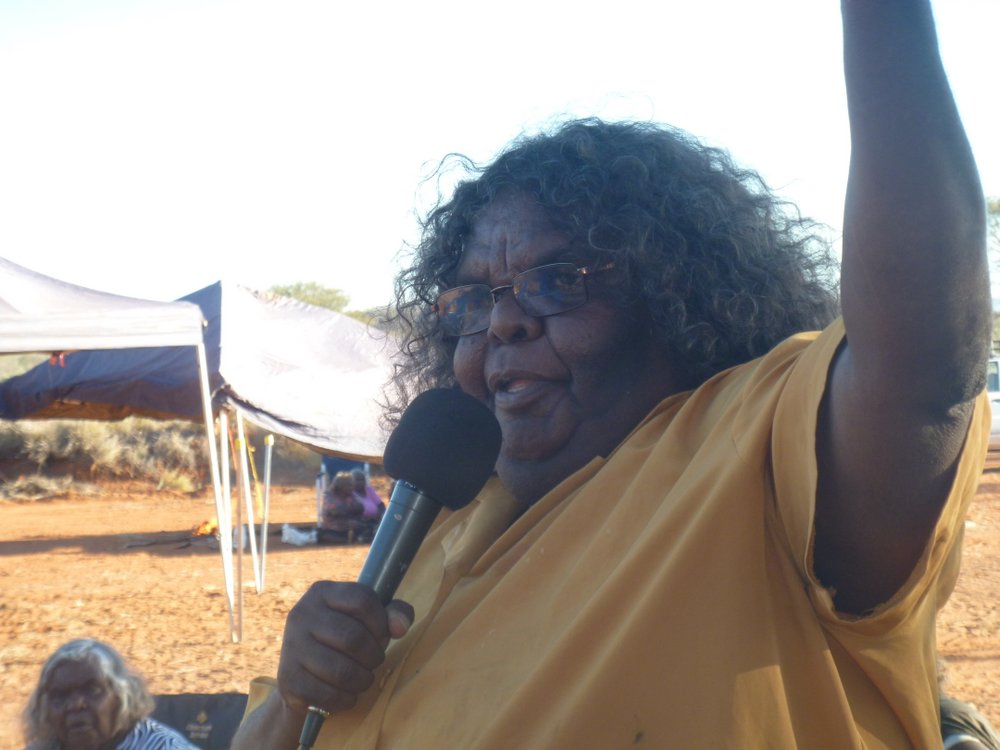
NPYWC announced the winner of the 2012 Indigenous Governance Awards

NPY Women’s Council has received the 2012 Indigenous Governance Award in the category of Outstanding example of Indigenous governance in an Indigenous incorporated organisation. The Council won it ahead of four other finalists from across Australia, pleasingly two of the other finalists were from Central Australia.
“A record number of Aboriginal and Torres Strait Islander organisations applied this year, I heard there were over 100 applications so to have made the short list as a finalist was a great achievement in itself”, says Andrea Mason, Co-ordinator of NPY Women’s Council.
The Council’s Chairperson, Mrs Yanyi Bandicha met with the judging panel in August in Alice Springs, when they visited to hear further examples of the governance strengths of the Council.
“The judges came prepared, the questions they asked were well thought through, they certainly knew a lot about what we do and we have achieved. I spent a lot of time with them, explaining how the members provide direction to the organisation and how they keep the organisation strong. They asked for examples of how we have made a difference in the lives of people from our region and we told them about how we spoke up about petrol sniffing and how we advocated for Opal fuel to be available in our region to reduce petrol sniffing especially in young people”.
“NPY Women’s Council is pleased to receive this Award because it gives public acknowledgment to the efforts the women have been doing for many years in our communities. This Award belongs to all members and staff, past and present”.
NPY Women’s Council was established in 1980 by the women of the Naanyatjarra Pitjantjatjara Yankunytjatjara Lands to give them a platform to speak out on issues of concern to them. In the early years the women advocated to protect sacred women’s site, for funding for art centres and they facilitated a trip to attend a national women’s consultative group where they raised the need for action to deal with domestic violence, alcohol abuse and petrol sniffing in their home communities.
Today NPY Women’s Council delivers a range of services including a domestic and family violence service, programs for youth, child and family wellbeing services, aged and disability services and advocacy, a cross border respite service and the award winning Ngangkari (traditional healers) project and Tjanpi Desert Weavers which is NPY Women’s Council social enterprise.
The range of services and projects at the Council demonstrates how the Council reflects the strength, creativity and resilience of its members in central desert communities” said the judges of the 2012 Award.