Skip to content

Your donation supports the voices and leadership of Aṉangu women across the Ngaanyatjarra, Pitjantjatjara and Yankunytjatjara Lands. NPY Women’s Council is an Aboriginal-led organisation created by women for women, focused on improving health, safety, culture and community wellbeing in remote Central Australia.

We appreciate any contribution you are able to offer.

Please fill out the form below to make a donation.

Cart

Your cart is empty

Donate

Article: NINU Grandmother’s Law book launch

NINU Grandmother’s Law book launch

NINU Grandmother’s Law book launch

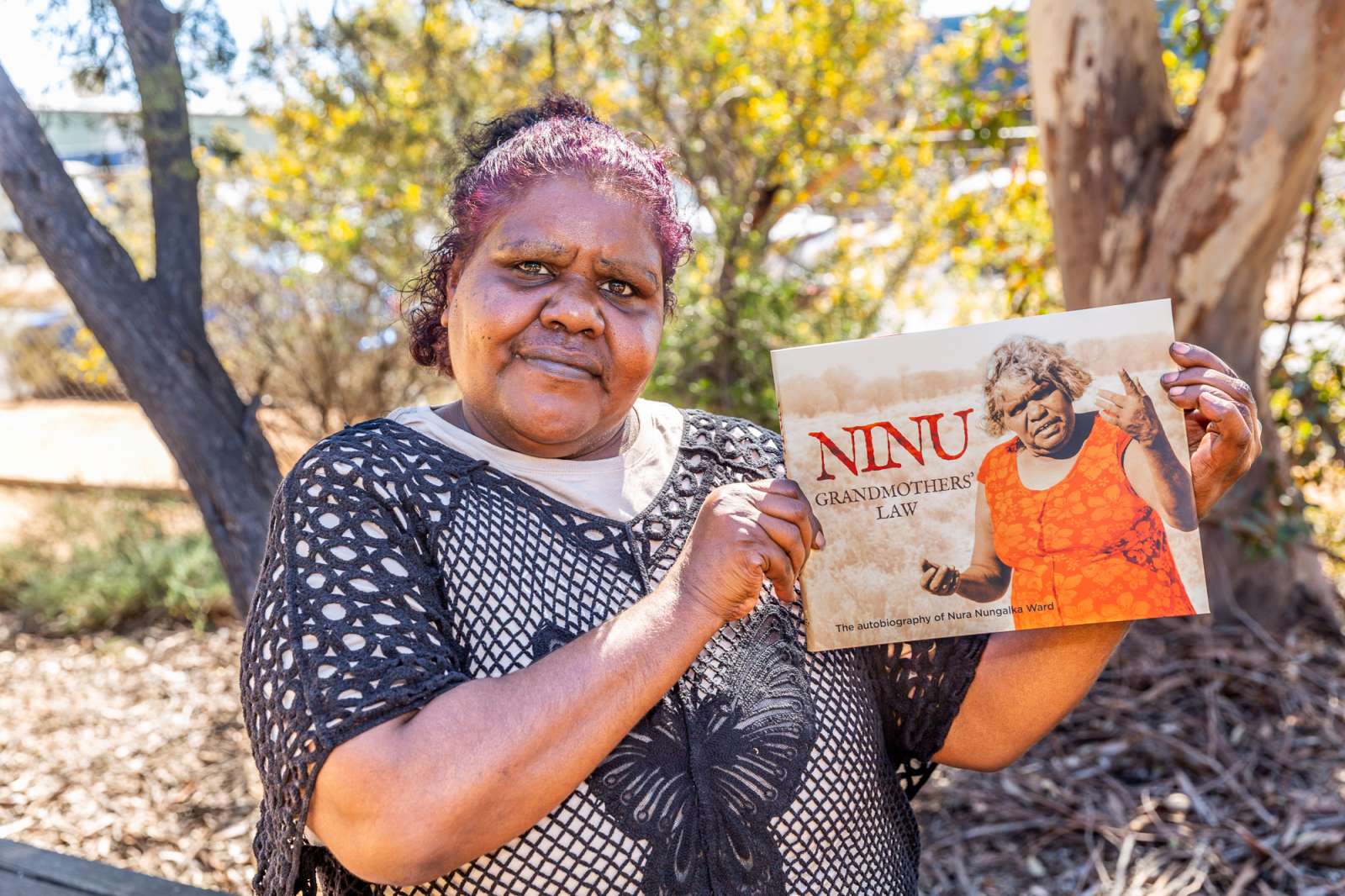
The life and teachings of the late Nura Ward are now available to everyone through her autobiography Ninu: Grandmother’s Law, which was launched last week.

Mrs Ward, who passed away in 2013, was a true leader of the NPY region and is remembered as a generous cultural teacher and a relentless advocate for indigenous health.

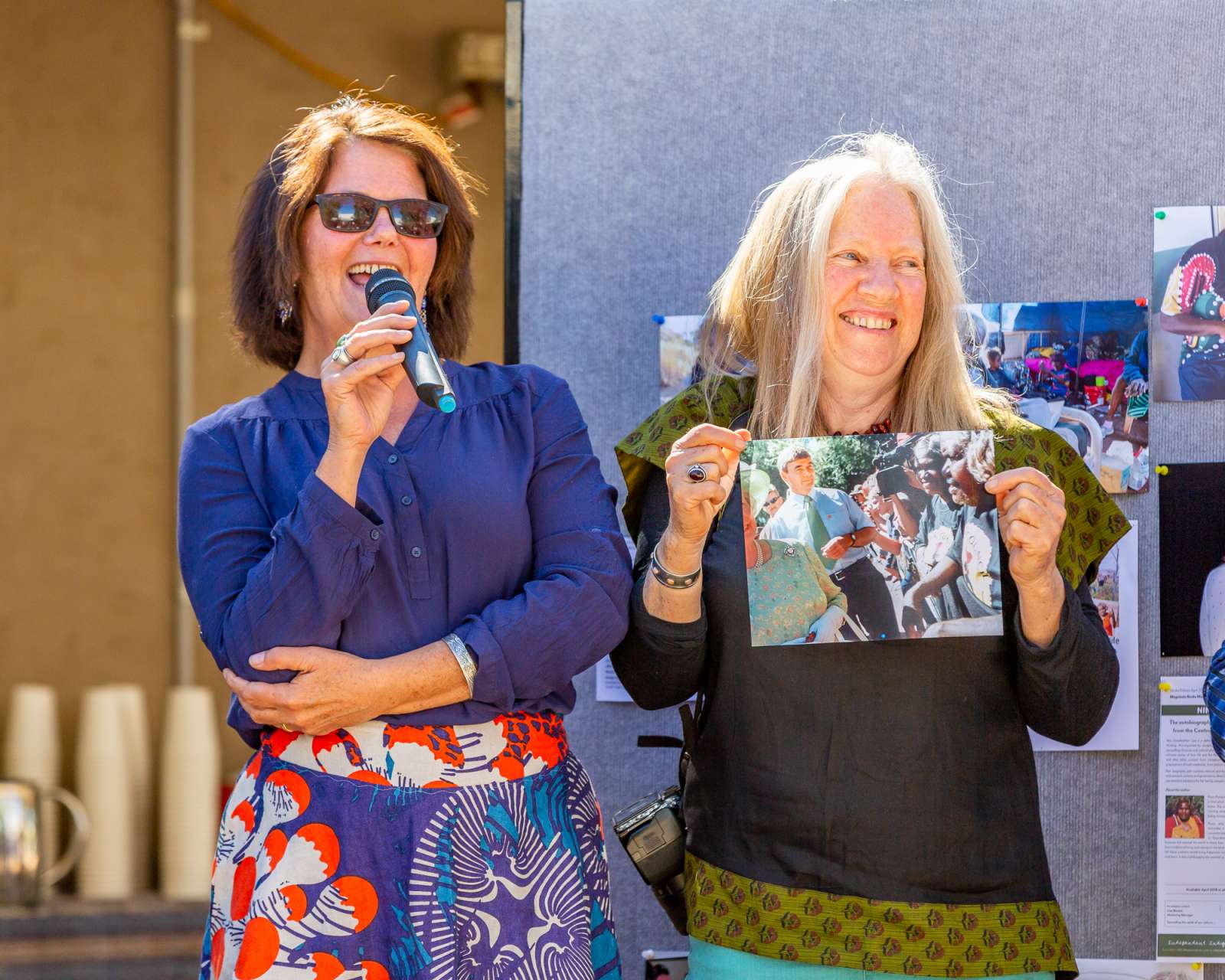
Speaking at the launch last Thursday, Mrs Ward’s niece Melissa Thompson, who wrote the forward for the book, said she was proud to see the publication finished.

“Her (Nura’s) life was so powerful; she was a leader,” she said.

“When I was growing up she used to teach me, and I’ve written those stories in the book.”

The content for Ninu: Grandmother’s Law, which was compiled by NPY Women’s Council and Ara Irititja, was gathered over the last eight years of Mrs Wards life.

It features a detailed account about how she and her family lived, providing a rich documentation of her life and culture.

NPY Women’s Council director Rene Kulitja described Mrs Ward as a “truly marvellous, and big, important woman”.

“It’s because of women like her that we all know so much; we can all say that our lives have been enriched by her,” she said.

Ninu: Grandmother’s Law is available for purchase at the Tjanpi Desert Weavers Gallery at 3 Wilkinson Street. Proceeds from the book will go to Mrs Ward’s family.

Read more

UPK6 launches into the stratosphere

UPK6 launches into the stratosphere

In August NPY Women’s Council celebrated its first involvement with the UPK music program; an initiative of the Nganampa Health Council that uses music to create awareness and inspire action about issues faced by Anangu (people of the Western Desert).

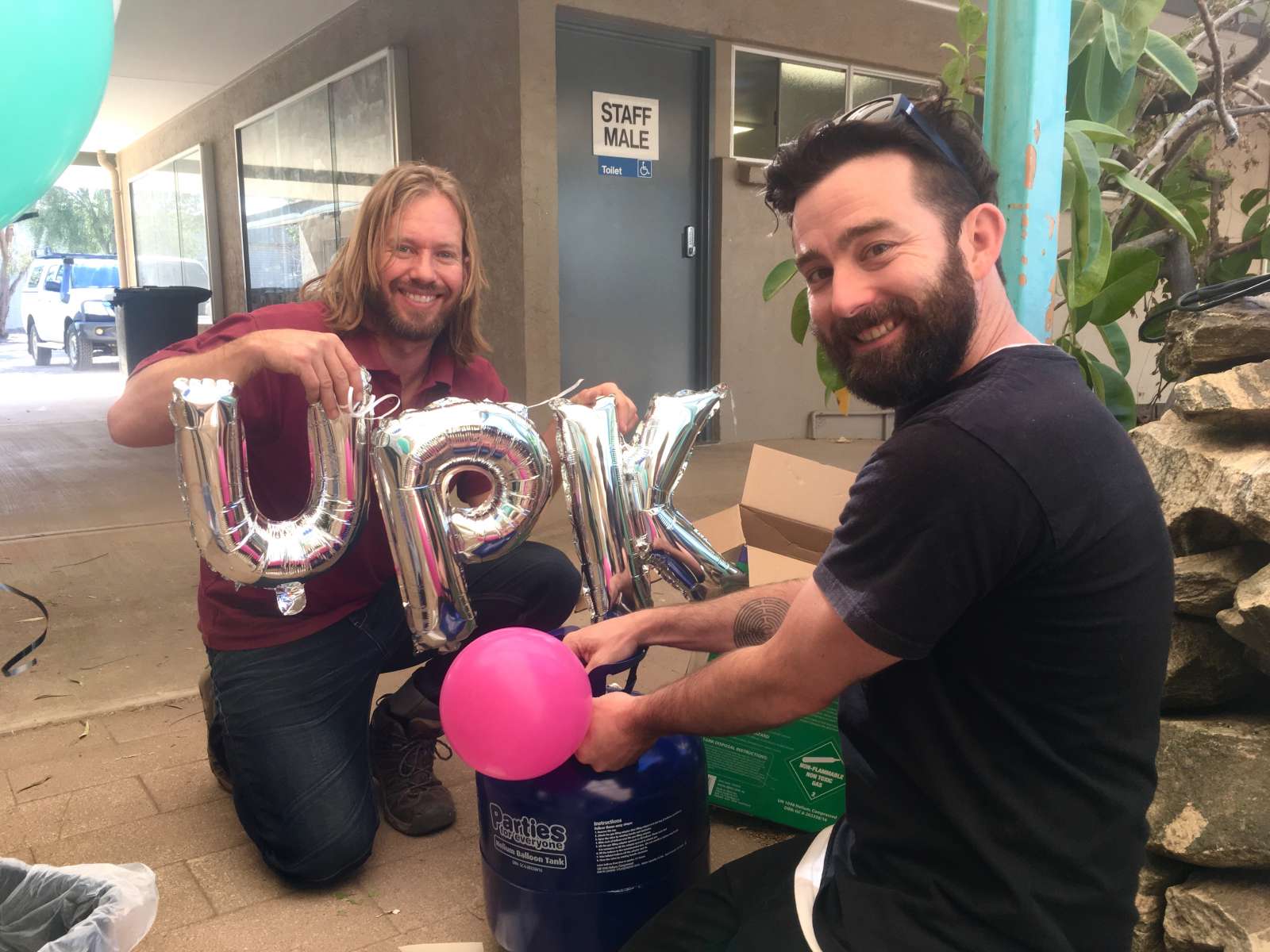
On Thursday a USB carrying the sixth UPK album was launched into the world aboard a balloon ship, it comes almost 30 years after the first instalment was recorded at Mutitjulu in 1989. The current album was also released on Bandcamp and Soundcloud.

UPK stands for Uwankara Palyanku Kanyintjaku; a Pitjantjatjara expression meaning ‘everybody building and caring for the future’.

Using music is an agent of change, the songwriters involved take aim the root causes of hurt they see around them, like petrol sniffing, alcohol and drug addiction, waste management, care-for-country, hunting, and homesickness.

The content of UPK songs is not about blame or victimhood but a musical effort to address the factors that contribute to, or impact on, good living.

Creating awareness is the intention of UPK music because it is the key precedent to positive action.

UPK6 was recorded at West Bore in the APY Lands using an open-air studio with a hessian fence for wind-break, used carpet to keep the dirt down, and digital recording gear housed in the front room of an old outstation home.

The resulting album was released on the APY Lands in the form of a USB slap band containing the whole album, plus a karaoke version complete with scrolling Pitjantjatjara lyrics.

The Launching of UPK6

The launching of the long-awaited sixth album of the UPK series, UPK6, takes place today at the offices of the Pitjantjatjara Council. The intention of UPK music is to draw attention to the elements of life that constitute lifestyle, either negatively or positively and therefore influence the quality of life.

The long history of UPK music as a generic form of contemporary Aboriginal music has been an effective and stimulating – from the very first recording made at Mutitjulu in 1989 to the most recent recording made at West Bore a long way to the south, on the APY Lands.

UPK Music

UPK Music is about Life. Its songs reflect the elements needed to make Life good. However, to continue the time honoured practice of songwriters everywhere, UPK Music songwriters take aim at the root causes of unwellness and social malaise.

UPK music has been the most popular music on the APY Lands in far north SA for more than 30 years.

UPK6

The music of UPK6 is the most recent original music to spring from the music scene on the APY Lands. The songs have a fresh, content-rich, contemporary feel. Pitjanjatjara rock anthems, lush desert dub, poignant acoustic ballads; all songs of the UPK music genre, rich, and varied.

As with all other UPK albums the recording of UPK 6 occurred in a remote bush location, away from all distraction. West Bore, in the very centre of the APY Lands, was the location visited by musicians from right across the Lands who came to record their songs and support one another. An ‘open-air studio’ with a hessian fence for wind-break, used carpet to keep the dirt down and digital recording gear housed in the front room of an old outstation home was the scene of recording action. All UPK music has been recorded this way.

Contact person:

UPK6 Music Director Bill Davis 0407 527706
Read more
Tjanpi Desert Weavers at Desert Mob

Tjanpi Desert Weavers at Desert Mob

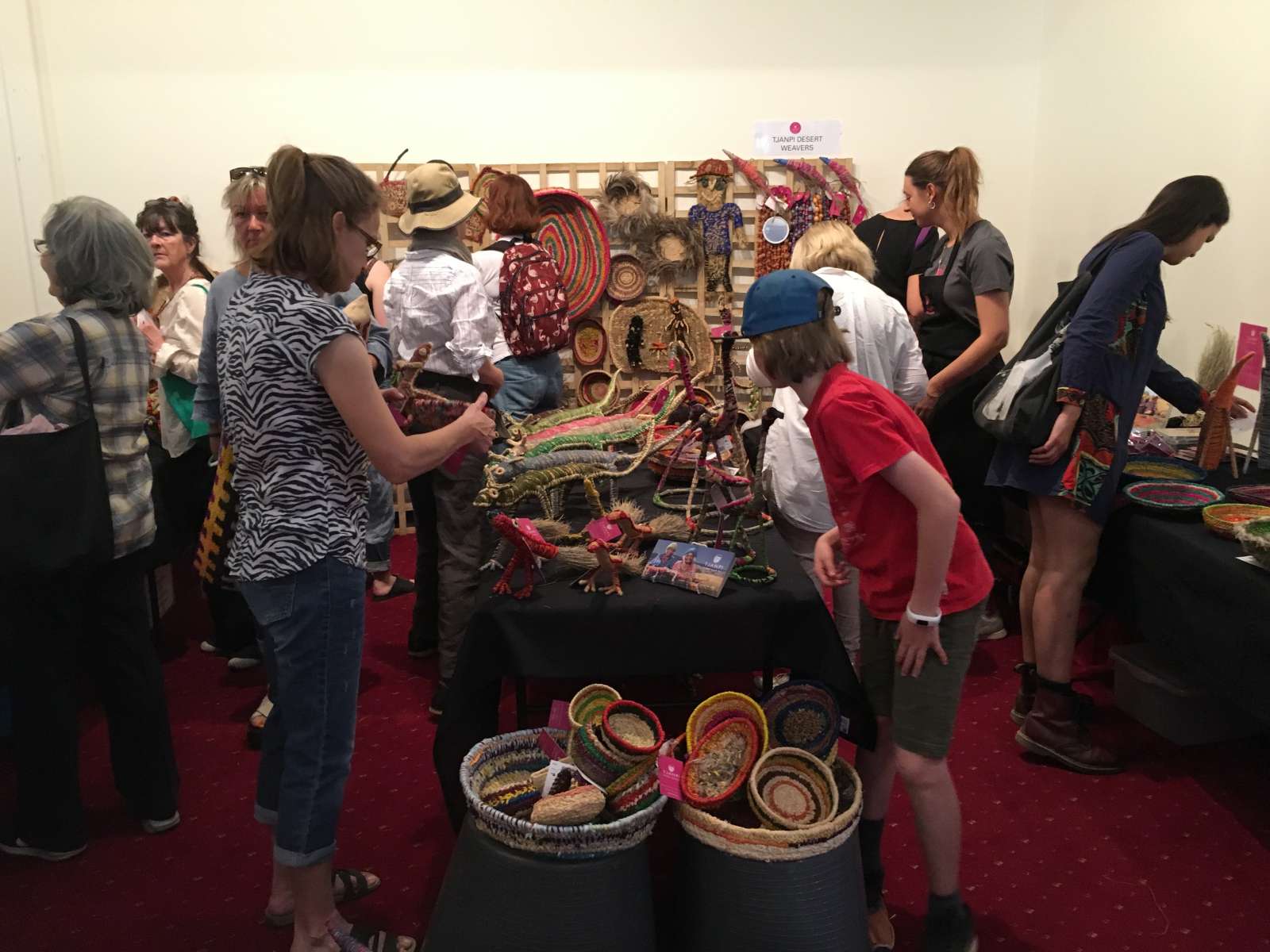
Our social enterprise Tjanpi Desert Weavers helped kick off another successful Desert Mob – an annual event celebrating contemporary art from Aboriginal owned art centres in Central Australia.

NPY Women’s Council director and Tjanpi senior weaver, Rene Kulitja, officially opened the 2018 event in front of hundreds of people on Thursday evening. And on Friday, Tjanpi artist Cynthia Burke presented at the Desert Mob Symposium with animator Jonathan Daw on their project Ngayuku Papa (My Dog); an animation about Cynthia’s own papa, Tiny.

And on Saturday, Tjanpi work proved popular with the crowd at the Marketplace, with our staff recording a sales increase of 35% compared to last year.

But the talking point of Tjanpi’s involvement at Desert Mob was an artwork in the exhibition by our artists Nancy Nanana Jackson and Judith Yinyika Chambers titled Tutjurangara Massacre (Circus Water Rockhole Massacre).

The work tells the story of a massacre that happened at Tutjurangara (Circus Water) sometime prior to 1935. Both Nancy and Judith’s relatives were involved in the massacre and, in collaboration with key knowledge holder Bernard Newberry, they created this work.

The story is told all over the Ngaanyatjarra lands of Western Australia, but there is no written record of the massacre. In creating this artwork and telling the story of the Tutjurangara massacre, Nancy, Judith and Bernard hope to raise the profile of this significant event and share the often brutal reality of the early meetings between Aboriginal and non-Aboriginal people in Australia.

The work was purchased on opening night by Deborah Sims and Matt Dickson from the Sims Dickson Collection.

In a statement released, the pair said that “Judith and Nancy’s incredible Tjanpi work is beautiful, honest, brave and innovative.”

“It tells us a true story that we all need to know. We’ll be lending it for public exhibition as far and wide as we can.

“Without acknowledgement by non-Aboriginal Australians of past wrongs, there can be no moral foundation for Australia’s future. Tutjurangara Massacre is a hugely important step on that path.”

The work will be on display at Araluen Arts Centre until the Desert Mob exhibition closes on Friday 21 October.

Read more