

Our Voices, Our Stories
Where the voices, journeys, and projects of the NPY Women’s Council come alive. Here we share perspectives from across our communities; the wins, challenges, and everyday moments that shape our collective story.
Stories
Atunypa Wiru Minyma Uwankaraku - Good Protection For ALL Women
Domestic & Family Violence: from national conversations to on the ground responses – Anangu women are met with a culture of silence and normalizing violence. This includes police responses, investigations, funding allocations, decision making and policy reform.
Domestic & Family Violence Service Hits Boiling Point Over Summer
In the first three weeks of January 2024 over 300 phone calls have been received from women experiencing domestic violence in the remote NPY lands (population around 6000).
COVID Placing Women and Children At Greater Risk of Domestic Violence
How restrictions and stretched services have taken a toll
Women and children have been placed in vulnerable circumstances unable to flee violence, access sexual assault screening and police support…some have been facing homelessness in an effort to keep themselves safe amongst Covid restrictions. How Covid has placed women and children at greater risk of domestic and family violence under a complex landscape of stretched services, border barriers and busy health systems.
More barriers for an already stretched service
In remote regions where there is already significant limitations in regard to domestic & family violence support, Covid -19 restrictions have created greater complexity for women and children accessing support services. This is especially true in the NPY region placed at the intersection of 3 state & territory borders.
In early February, some remote communities were inaccessible to police and airstrips were closed due to flooding. These communities were only accessible by roads with services across borders.
Despite urgent requests for cross-border police responses to domestic & family violence, enforced border restrictions meant approval for police responses were denied, leaving some women and children at risk of serious harm.
Impact of busy health systems for women experiencing domestic violence
Reduced RFDS capacity due to covid-19 related backlogs and airstrip flooding has created precarious circumstances for women and children experiencing violence related injuries.
Women and children have been, at times, unable to access urgent medical review, mental health support, sexual assault screening and emergency evacuation following serious Domestic Violence incidents.
In one instance our service had to a charter private flight to ensure safety for a young woman who had experienced and remained at risk of extreme domestic violence.
Women locked out of safety
Women in urban centres, such as Kalgoorlie, Alice Springs, Adelaide and Port Augusta have been forced to navigate vaccine mandates, lockouts and lockdowns, within an overwhelmed service system where crisis accommodation options have been limited.
Support services have been under pressure and have been frustrated by blanket Covid-19 responses. They often have not been able to provide financial or practical support for women and children who have either fled from violence in community or are experiencing violence in town but are unable to return home due to reduced transport, border closures and the cost of quarantine requirements.
Our service, despite having limited funds, and at great expense, continue to fill service gaps across all of these regional hubs. In an effort to ensure women and children are not forced into homelessness or the child protection system we continue to fund alternative accommodation, food and transport outside our service.
This has not only resulted in significant financial strain on the service but is also contributing to an under-resourced and overwhelmed workforce.
Increase in demand
Since the beginning of the Covid-19 outbreak, we have seen an increased demand for our service. Our team have been receiving around 600-700 calls a month from women. The calls could be for anything from emergency food relief, homelessness support to urgent support for safety.
What needs to be done
Despite the increased complexity of responses and limited resources, we continue to try our best to explore innovative ways to support women experiencing violence on the Lands.
To keep women and children from remote communities safe from domestic & family violence we urgently seek:
- Stronger cross-border responses and clearer exemptions for border crossings, quarantine and return to community for women and children fleeing domestic & family violence.
- Transportation options to support women and children to return to, or leave, their communities.
- Financial support and options for emergency accommodation for women in urban settings fleeing violence
- Increased financial support to enable greater emergency financial relief for transport, accommodation and material goods for women and children fleeing violence.
Now more than ever, we recognise that responses to preventing and ending violence are most powerful when they draw upon and uphold, the pre-existing knowledge and resources inherent within Anangu culture, families and communities.
Find out more about the NPYWC Domestic & Family Violence Service
We were controversial and challenging
Have we stopped domestic & family violence in remote communities? No. But we have made women much safer.
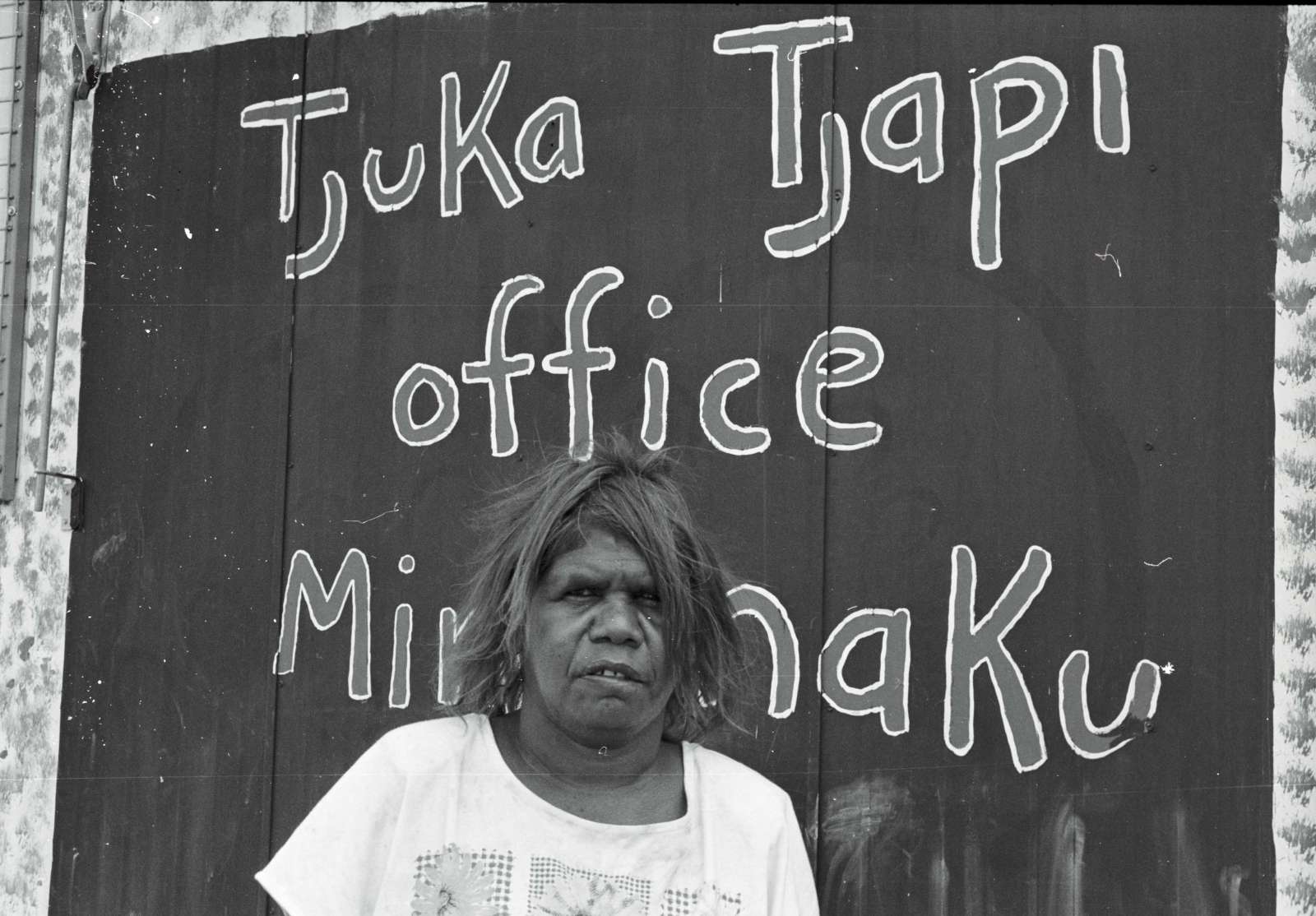
Kunbry Peipai (pictured) sat alongside staff and listened to women talking about domestic violence at early NPYWC meetings. The women were upset about police response to violence and the small jail sentences for offenders. Kunbry became a key founder and driver of the Domestic & Family Violence Service in the early years…
In 1993 several women went to a Domestic Violence Conference in Sydney, inspired and knowing they needed to do something in their own community. A a pilot program was first set up in Mutitjulu. The goal was to give women greater protection from violence…

Many senior women in Mutitjulu were very supportive of the new service. What they were doing at the time was controversial and challenging. They encountered a lot of resistance from both Aboriginal and non-Aboriginal men.
At the time, police did not believe Anangu women wanted to face the court system. The new service offered women support and confidence through the system. The Service and the police also worked together to improving how the criminal justice system responded to Anangu women in the region.
The service importantly gave voice and awareness to conversations on domestic and family violence in remote communities.

The Domestic & Family Violence Service now works across the region, conducting casework, taking referrals, providing legal advice and education.
Women’s groups across the region gather together and share ideas about:
- how violence occurs in the community and how it is being challenged;
- the importance of culture to people in the community;
- about trauma and healing;
- about narrative approaches to working with communities’ own efforts to resist and challenge violence;
- ways to grow community resilience.
Find out more about the NPYWC Domestic & Family Violence Service

Ending violence from the ground up
Ending violence in the community will occur when it is supported and championed by an individual and/or group who will act to lead the change. These are community advocates who are interspersed in the community itself. They are from the community and are positioned as leaders. There must be specific strategies aimed at building their capacity, confidence and skills to influence the hearts and minds of the community.’
Strengthening Community Capacity to End Violence Framework (2018)<1>:
The NPYWC Domestic & Family Violence Service (DFVS) Women’s Advisory Group has met throughout 2021 in communities across the NPY Lands. The group includes DFVS workers, Anangu women and DV practitioners working together to deepen their knowledge on DV issues such as trauma and safe ways to work with women experiencing DV. The group shares stories of strength and explore how communities are showing resistance to violence.

The group will work alongside the DFVS advising on strategies and the best ways to work with women experiencing DV. Their input will offer the best chance for developing effective responses and pathways.
We are all women here… getting stronger – WAG member

Anangu understandings give better support for women experiencing sexual assault
“Here is a Ngaanyatjarra woman who has gone through many things in her life, violence, assault and sexual assault. She has many problems. She is just sitting there and thinking, “Who can I trust? Who can I trust to help me? To encourage me? Where can I go for guidance and encouragement to put me on the right path? So I can have hope in my life.” And after that, “How can I get healed, my whole life and be strong? So in the end I can be happy, have a good husband, have kids and a happy life. Forget all those other things that have happened behind.” Anangu Co-Researcher. Read about the Domestic & Family Violence Service’s new paper and how trust, language and relationships can help to heal and inform DFV practice.
The NPYWC Domestic & Family Violence Service’s (DFVS) new research paper “Exploring Anangu understandings to strengthen support for Anangu women experiencing sexual assault” asked:
- What are Anangu understandings of sexual assault and its effects?
- How do you talk about sexual assault with Anangu women in a safe way?
- What support do Anangu women need if they have experienced sexual assault?
Anangu and non-Aboriginal DFVS staff, a psychotherapist and senior Anangu women from NPYWC’s Uti Kulintjaku (clear thinking) initiative worked together to answer these questions and find the best way forward to support Anangu women who have experienced sexual assault.
We are feeling empowered by this process to explain that we need to slow down and think about this work more carefully and talk about it in the right way and this has been informed by the knowledge of these senior Uti Kulintjaku ladies… The Uti Kulintjaku team work in a very slow, careful way to really look at words and ideas and Anangu knowledge… To say things in the right way, carefully. We know we can stop and slow down, we have the knowledge.” Anangu co-researcher

This is about the knowledge growing from when the minyma, Uti Kulintjaku team and the DV team first got together. We have started to do something and this is coming through, coming in to the DV team. We talked about secret language that came up at this workshop, strong Tjukurpa that has been hidden and was shared by the Uti Kulintjaku ladies. It’s like the pretty flowers, it made me really happy. Thank you, I’m really happy that you are here and sharing this Tjukurpa. Now it’s really big, it’s like the pretty flowers. Anangu co-researcher
Here are some of the ideas discussed in the report:
Language & Culture
The importance of language and knowledge of culture and community were seen as central in supporting women who have experienced sexual assault. The need to work sensitively in small communities where many people are related to ensure trust and maintain confidentiality. Anangu women described the way of speaking “sideways” or kiti-kiti wangkanyi as the appropriate Anangu way of talking about sensitive issues to ensure that further hurt, distress, shame or offence is not caused.
Trust & Relationships
Trust and finding the right person for an Anangu woman to talk about her experience of sexual assault is important –a woman that she already has a loving and caring relationship with like a mother, grandmother or sister is an important support.
In our communities, domestic and family violence causes a lot of sadness and distress. This work [is strengthening our idea that when piranpa come and go from communities, they don’t hold the knowledge and history for a long time in the way that Anangu do. They don’t know the families and the relationships and all the information about what is happening in communities. So it is really important that when workers come from outside they need to have a malpa – an Anangu worker working alongside them and to listen to them

We got together to talk Anangu and piranpa, and then going back to the communities and talking with the young women, it can help. It’s in the communities, it’s happening, going out there to talk to them. Making them feel happy and good inside by sharing that story. So they can feel like a rainbow, special. What I think is that the learning and sharing is starting and helping to start talking like with the girls and the senior women together. We are strong women doing the work and the circles in the drawing are growing as we are getting stronger, feeling stronger to take it back out to the young women, each time we come together.
Domestic & Family Violence - Ways of Working: Holding onto Hope
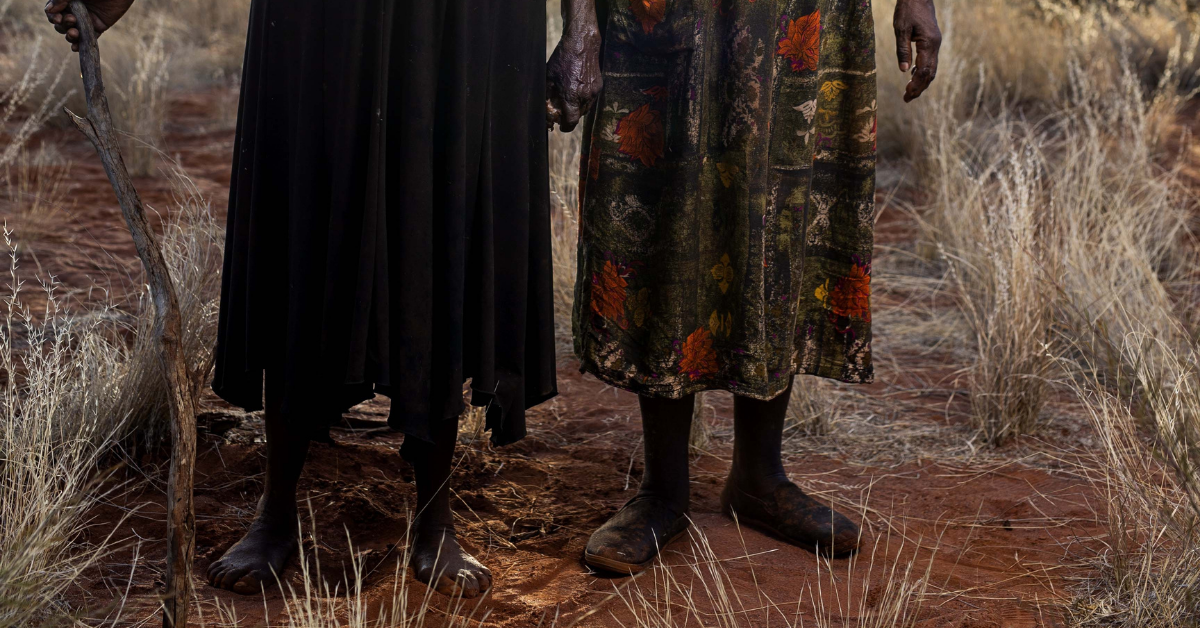
Our Domestic & Family Violence Service staff are on the phones every day of the week talking with women who call from all across the NPY lands. These relationships have developed over many years and when women call they know they will talk to a worker who knows their community and who they may have met out bush or in town, where they sat down and talked.
Our relationships grow over time, hearing stories of family and community, her work, her painting or tjanpi making, and other things she loves. We might talk about good things that have happened in the past, stories of her grandmother, of being a good mother and daughter. The conversation focuses on her journey which might include her sadness. It might include the violence she is experiencing; it is a travelling journey she is on and the sadness is like a roller coaster.
There is much practical support that women might want and we can help with to ensure her safety and that of her children. When she is feeling safe again, we might talk about the stories she told us in the past – of her hopes and dreams and she will feel strong like a tree. She will feel like it’s a new start and she will never give up.
Creating a space to weave, connect & check in
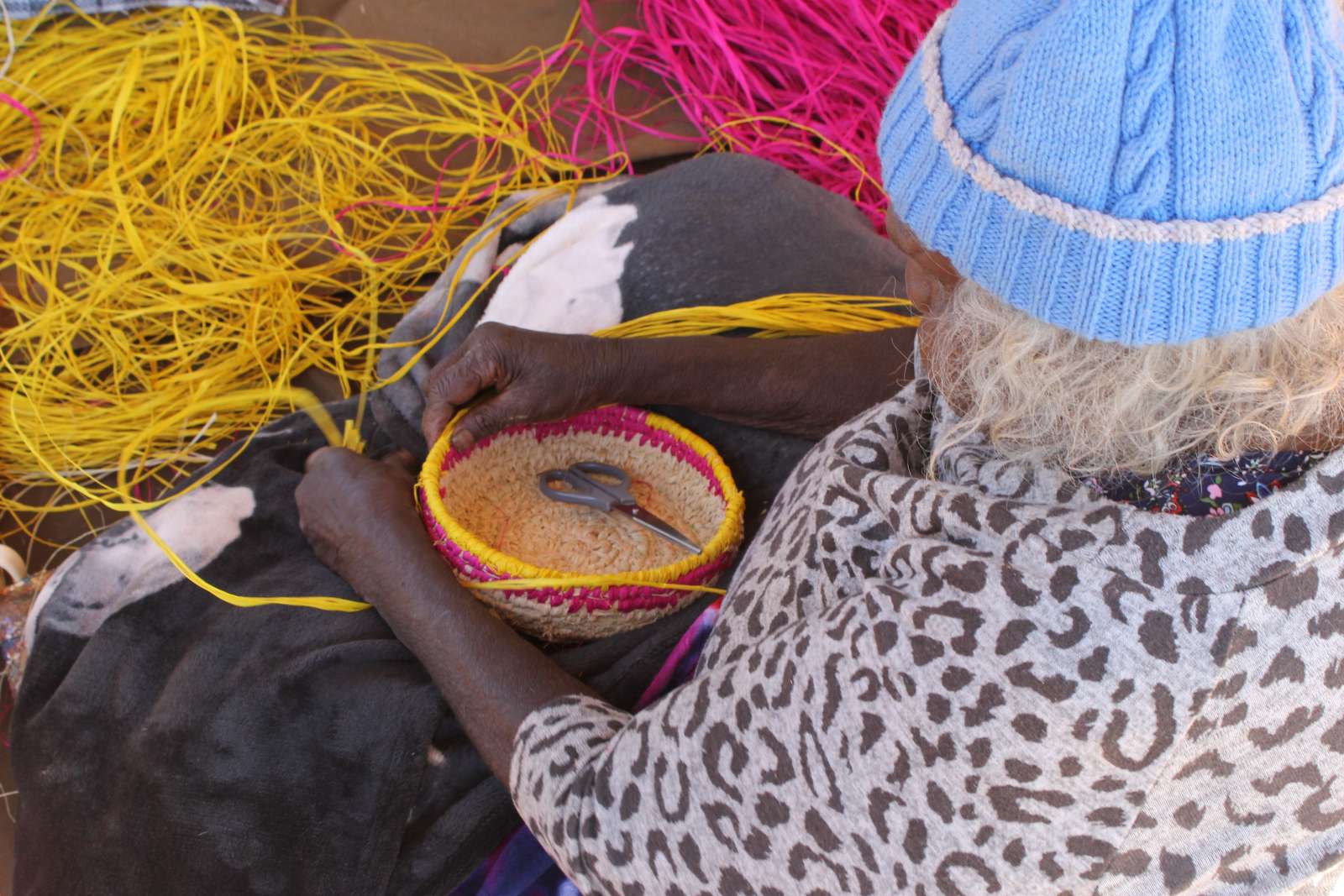
In the first set of Tjanpi workshops since biosecurity restrictions were lifted, Tjanpi loaded a car load of Tjanpi supplies for hungry weavers. The workshops offered an opportunity to reconnect, weave and talk about people’s wellbeing during the pandemic. The workshops were a new collaboration between Tjanpi and the NPYWC Domestic & Family Violence Service and supported discussion around the threat of heightened family violence during COVID lock-downs.
Workshops in Docker River and Mutijulu created a space to weave, talk and reconnect after limited travel during biosecurity measures in the NPY Lands. In a relaxed and supportive environment, Tjanpi and the Domestic & Family Violence Service (DFVS) were also able to pave the way for deep and profound discussions regarding domestic and family violence.
While successful in producing amazing new tjanpi work, the workshops have also provided the opportunity for new relationship building and DFV awareness.
This project was funded by the Central Land Council grants supporting: Provision of support services for residents of Aboriginal communities affected by restrictions imposed to reduce the spread of COVID-19
Find out more about NPYWC Family & Domestic Violence Service
Exploring Anangu Legal Awareness
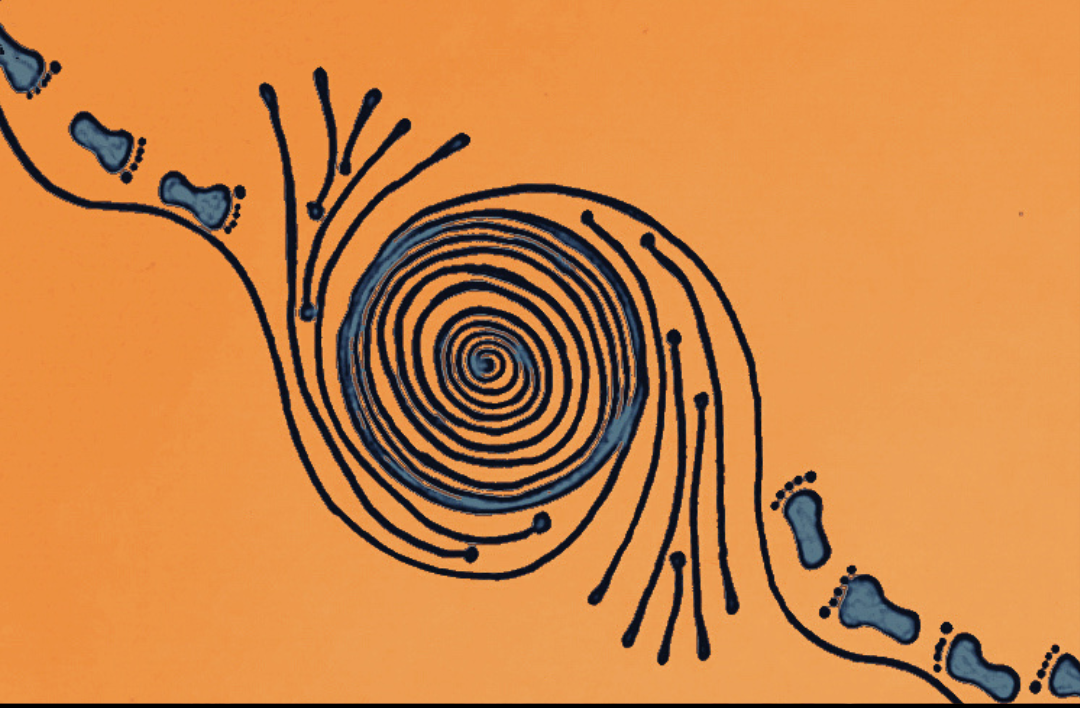
COVID-19 inadvertently created an environment for learning due to the NPYWC Domestic & Family Violence Service‘s (DFVS) forced slowing down of pace. DFVS’s Specialist Legal Educator and Anangu staff were able to explore legal / illegal behaviours and current misunderstandings around legal issues.
“……it comes as a shock to them when the police have a warrant for their arrest. This shock comes to both her and him and the family.” Anangu Support Worker

An DFVS Anangu Support Worker talks about her experience: I drew this picture after we were having talks about legal issues. We were trying to get a better understanding of how Anangu think about domestic violence orders (DVOs).
In the Anangu community, they think it’s none of their business when partners have a fight. The fight might start after they have a drink then maybe they start arguing about the money saying things like ‘You spent my money!’ People around think he’s just going mad, they might say: ‘I just heard something happening’, but they don’t do anything.
They don’t know that there are legal things there – the threating and the violence is there and it’s not good for the kids, it’s like trauma is happening for the kids.
A problem here is that people think its ok to leave it
They don’t know how important it is to understand. It is a big thing now they have to know about. It can affect the family and the children. It is affecting the woman and the man. Both need to have a clear picture. It will affect you now and in the future. They can come together in the middle and talk about the DVO and what it means. They need to know that the DVO can help to stop the violence.
They need to understand that their behaviour is illegal. People don’t know what is legal or illegal behaviour this knowledge is hidden. Good legal education is important because people understand their rights but also the effects of their behaviour.
The difference came for me last week when we looked at the
It’s gone from being – the man and woman walking towards each other to sort out the DVO, to now we have a better understanding so that she can say to him ‘I want you to be my husband and a father to the children but you need to understand the DVO’. In the middle of the picture is about the going to court time, the legal statements, the lawyers, how are we going to fix this? Lots of worries.
Now
Using training from the NT Legal Aid Commission’s Blurred Borders resource kit DFVS staff spent time discussing and building greater understandings around legal stories about restraining orders, conditions, police, and arrest. The DFVS now holds a greater understanding of gaps in community knowledge that can now be addressed through a fledgling DFVS legal education project.
Staff talked at length about threats, power and control, the word ‘psychological’ and emotional harm, which Anagnu staff equated to spiritual harm. These conversations have led to all staff developing a more nuanced exploration of legal/illegal behaviours, and the purpose of a DVO and criminal procedure being to create protection, not trouble.
I have found something meaningful to me
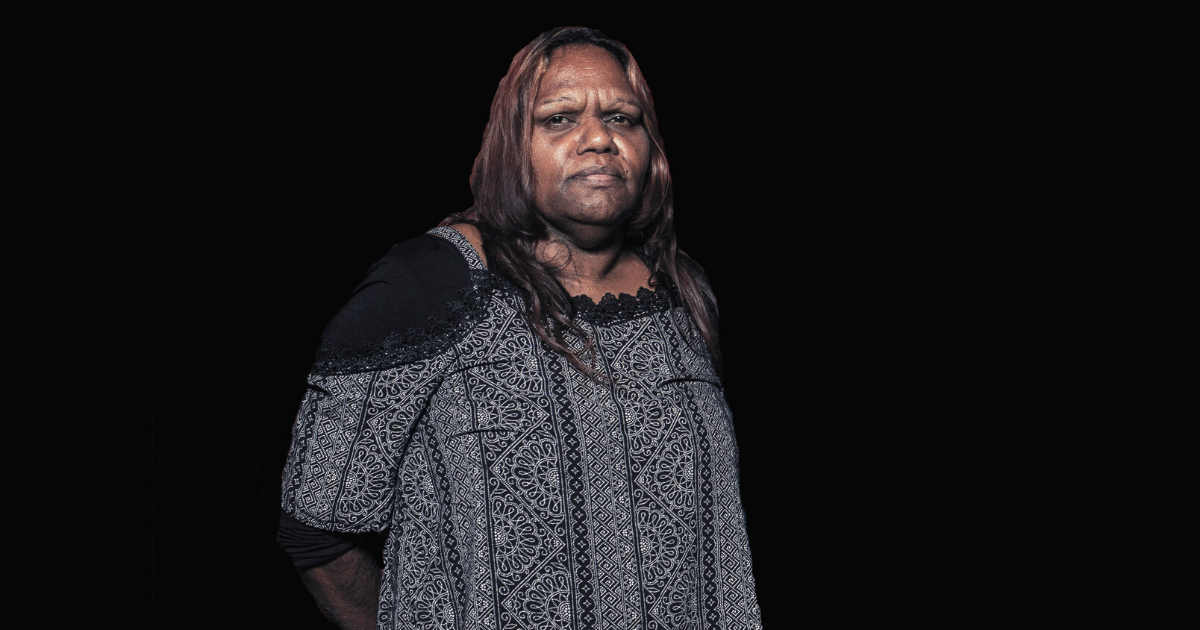
“My work keeps opening doors inside of me………….I will never stop doing this.”
In 2018, Dianne attended a workshop run by the NPYWC Domestic & Family Violence Service (DFVS). The workshop was for people that may be interested in working with them, helping Anangu women and families that are impacted by domestic & family violence.
I was a bit shy and nervous Dianne said. But I saw one of the NPYWC Directors, Mrs Smith and she said “I am glad you are here. This is going to change you and your spirit… you will be a different person inside.”
“Listening in the workshop, I thought: I have found something that means something to me.”
Working with the DFVS offers me levels of growing, I keep learning. I began to understand what domestic violence was.
A key job for Dianne in her work as an Anangu Support Worker is translation. For Dianne, translation is not just about changing the words from English to Pitjantjara but also translating meanings and concepts. English has a lot of technical words, especially around the law. Dianne helps create resources and use relatable concepts to help people understand more about domestic violence.
“Many people don’t understand how laws affect them. They don’t understand the power of judges to separate families and what restraining orders mean.”
“My job with the DVFS is like a bridge.”
Dianne and her team also run workshops in remote communities. The workshops create a safe space for women to talk about domestic violence and about what to do if violence approaches their lives.
In the office Dianne plays an important role in supporting women that have been impacted by, or are worried about domestic violence. “I sit with the women and make them feel safe and comfortable. I give them advice on how to think through things slowly so they can work them out.”
Domestic Violence has such negative connotations, sometimes people don’t want to engage with learning about it. “It is important to learn from the past, people in the future need to know the past even though sometimes it is sad.”
About Dianne
Dianne grew up in Kaltjiti (Fregon, SA) and Pukatja (Ernabella, SA). She remembers her childhood playing with friends and family, waiting for the rain to fill up waterholes so she could go swimming, digging for imaginary honey ants and catching lizards. Dianne went up to year 11 at Ernabella Anangu School and went on to study further at TAFE and Bachelor College in 1993.
A talented artist, Dianne has also worked with Kaltjiti Art from 1996. In 2001 Dianne began a teaching degree with AnTEP through the University of South Australia and completed this in 2007. She worked as an Anangu teacher at Ernabella Anangu School from 2008 and continued up until 2015. Dianne has been with the NPY Women’s Council DVFS team since 2018.
Anangu Domestic Violence worker talks about her job
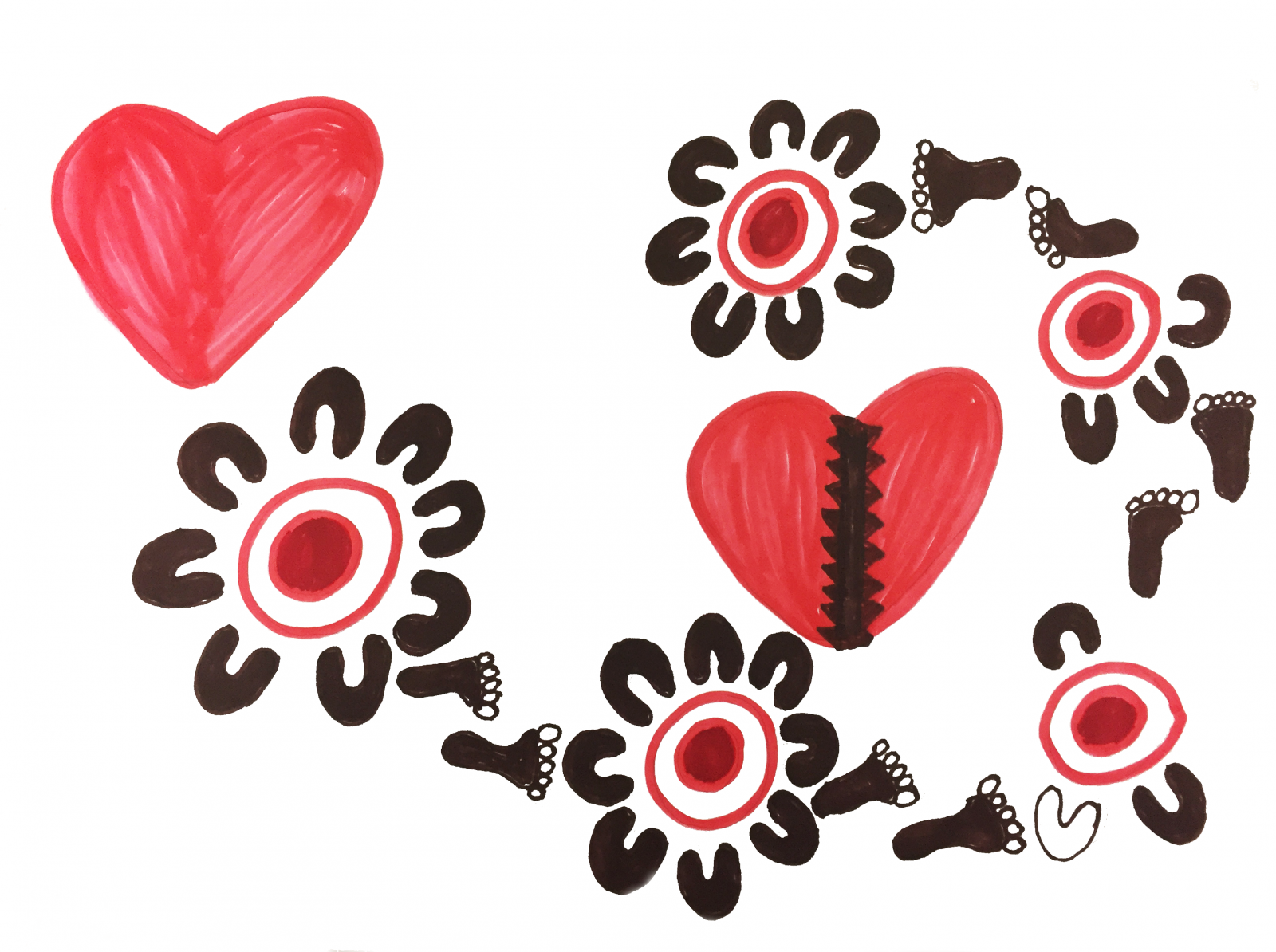
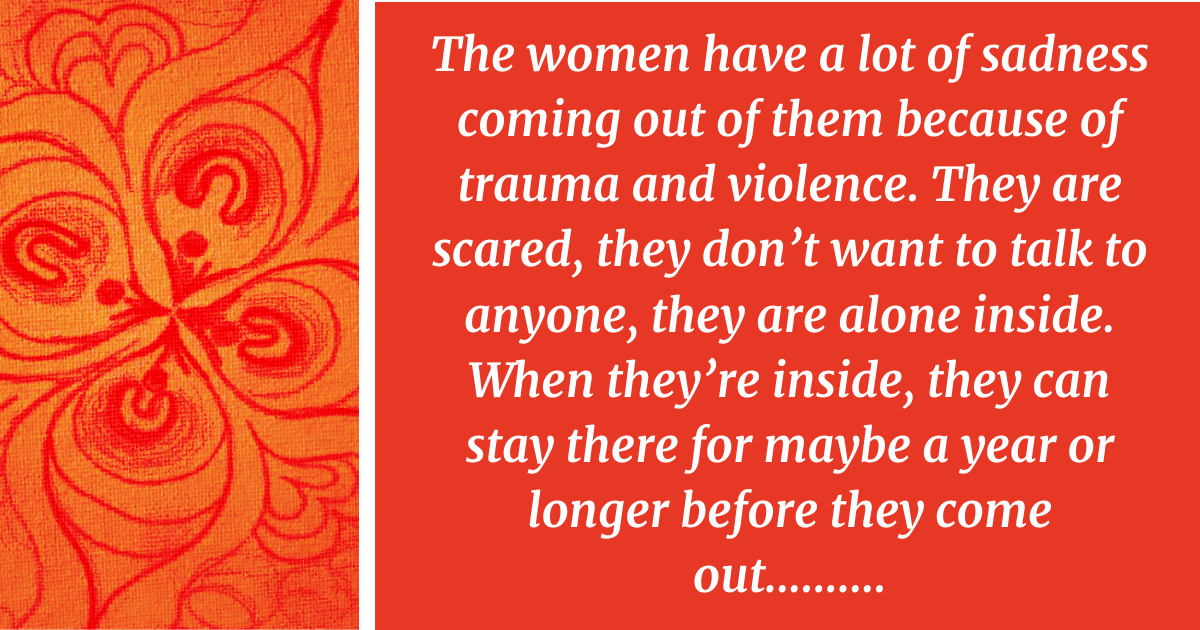
This drawing is about women sitting down, they have got sadness coming out of them because of trauma and violence. They are scared, they don’t want to talk to anyone, they are alone inside. When they’re inside, they can stay there for maybe a year or longer before they come out.
If they want to come out they have NPYWC case workers and people like that around them. It takes a while but it’s people like family and NPYWC, who can help to make them feel safe. They remember the good times again. It’s hard for them to say what is wrong because they are so scared because of the trauma and the violence.
They come out when they are ready, it happens slowly when they have love, and kids and family around them supporting them. Then they come out of the shell and back on the road to being happy. It’s like they can grow into a beautiful flower with their family, culture and community around them.
Sometimes when we have bush picnics we are all shy but we still encourage each other to speak – it’s alright because we are safe.
This is part of the way we work; we find safe ways to talk to women. We don’t go straight up to someone; we go ‘sideways’. We watch and wait for the right time.
We do things like eating, sitting and talking together, this helps women to feel safe and then they can talk.
Dianne Brown, Anangu DFVS team member.
Read more about NPY Women’s Councils Domestic & Family Violence Service