Skip to content

Your donation supports the voices and leadership of Aṉangu women across the Ngaanyatjarra, Pitjantjatjara and Yankunytjatjara Lands. NPY Women’s Council is an Aboriginal-led organisation created by women for women, focused on improving health, safety, culture and community wellbeing in remote Central Australia.

We appreciate any contribution you are able to offer.

Please fill out the form below to make a donation.

Cart

Your cart is empty

Donate

Article: I have found something meaningful to me

I have found something meaningful to me

I have found something meaningful to me

“My work keeps opening doors inside of me………….I will never stop doing this.”

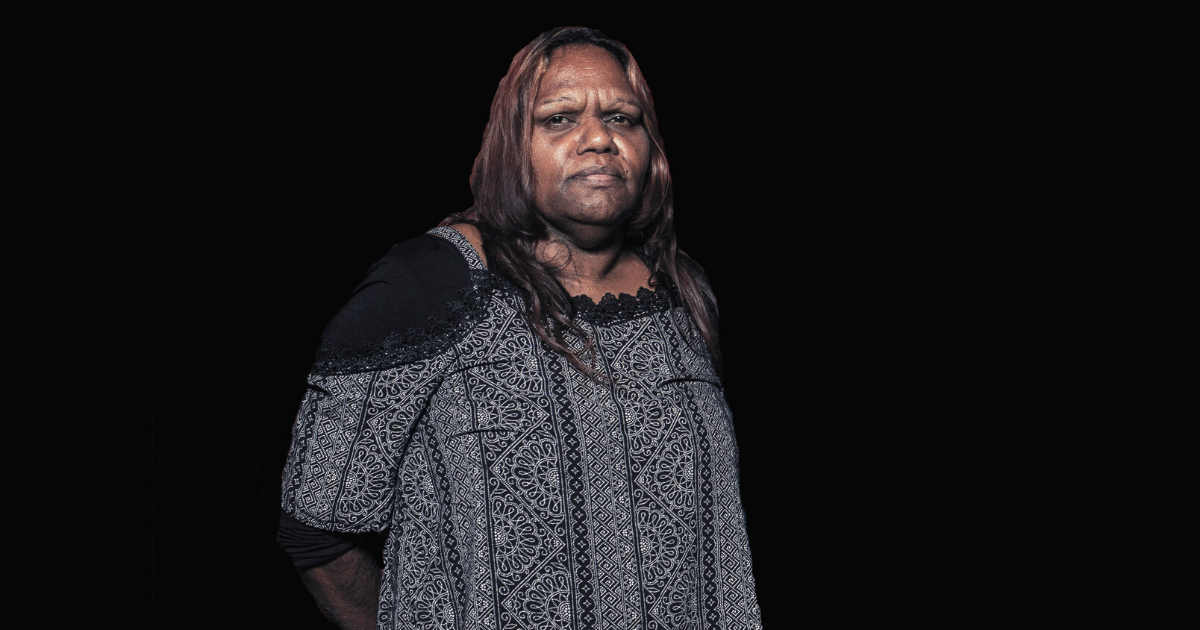
In 2018, Dianne attended a workshop run by the NPYWC Domestic & Family Violence Service (DFVS). The workshop was for people that may be interested in working with them, helping Anangu women and families that are impacted by domestic & family violence.

I was a bit shy and nervous Dianne said. But I saw one of the NPYWC Directors, Mrs Smith and she said “I am glad you are here. This is going to change you and your spirit… you will be a different person inside.”

“Listening in the workshop, I thought: I have found something that means something to me.”

Working with the DFVS offers me levels of growing, I keep learning. I began to understand what domestic violence was.

A key job for Dianne in her work as an Anangu Support Worker is translation. For Dianne, translation is not just about changing the words from English to Pitjantjara but also translating meanings and concepts. English has a lot of technical words, especially around the law. Dianne helps create resources and use relatable concepts to help people understand more about domestic violence.

“Many people don’t understand how laws affect them. They don’t understand the power of judges to separate families and what restraining orders mean.”

“My job with the DVFS is like a bridge.”

Dianne and her team also run workshops in remote communities. The workshops create a safe space for women to talk about domestic violence and about what to do if violence approaches their lives.

In the office Dianne plays an important role in supporting women that have been impacted by, or are worried about domestic violence. “I sit with the women and make them feel safe and comfortable. I give them advice on how to think through things slowly so they can work them out.”

Domestic Violence has such negative connotations, sometimes people don’t want to engage with learning about it. “It is important to learn from the past, people in the future need to know the past even though sometimes it is sad.”

About Dianne

Dianne grew up in Kaltjiti (Fregon, SA) and Pukatja (Ernabella, SA). She remembers her childhood playing with friends and family, waiting for the rain to fill up waterholes so she could go swimming, digging for imaginary honey ants and catching lizards. Dianne went up to year 11 at Ernabella Anangu School and went on to study further at TAFE and Bachelor College in 1993.

A talented artist, Dianne has also worked with Kaltjiti Art from 1996. In 2001 Dianne began a teaching degree with AnTEP through the University of South Australia and completed this in 2007. She worked as an Anangu teacher at Ernabella Anangu School from 2008 and continued up until 2015. Dianne has been with the NPY Women’s Council DVFS team since 2018.
Read more

NPY Women's Council opposes Cashless Debit Card
Research & Policy

NPY Women's Council opposes Cashless Debit Card

NPY Women’s Council (NPYWC) opposes the Federal Government’s proposed mandatory roll out of the Cashless Debit Card in the NT, or more broadly throughout Australia. NPYWC believes the scheme will create a lack of empowerment for impoverished people and not address the root cause of poverty and substance misuse.

Recipients of Centrelink income are currently subject to the Basics Card, brought in by the Howard government in 2007 as a part of the NT intervention. The Basics Card quarantines 50 per cent of recipients’ income for use at approved stores, compared with the opportunity for 80 per cent on the proposed Cashless Debit Card (CDC).

There is no conclusive research or evidence to suggest that the CDC will address its key objectives of ‘alleviating poverty, alcohol abuse or encouraging employment’. NPYWC believes the introduction of the CDC will negatively impact remote income recipients who are already living well below the poverty line and live in very fragile financial ecosystems.

NPYWC advocates that the causes of poverty and substance misuse in remote communities are urgently addressed in a qualified way; and that the financial cost ($1.7 million)of transitioning people to the CDC would be better spent in services that support people to achieve this, such as early job creation for school leavers.

The CDC will act to disempower remote community recipients and bring them “back to when our ancestors first walked into the missions and were fed by rations.” NPY Women’s Council Director, Maime Butler.

Remote communities have not been consulted in relation the CDC roll out and have not been able to provide input to how this will affect their lives where the reality is that no matter what kind of income management is implemented, people are still living well below the poverty line with little access to permanent employment.

A national one size fits all CDC model does not consider remote community income recipients who:

· pay substantially more for store bought goods than anyone else in Australia due to freight costs

· speak English as a second language, finding it nearly impossible to access Centrelink phone support without translators

· operate in a different cultural environment where resources are shared according to family obligations

The CDC will not reduce violence or poverty and may act to exasperate it as more pressure will be placed on community members with cash incomes to share what resources they have.

NPYWC does support voluntary engagement with the scheme.

Read more
The Birth of NPYWC
General

The Birth of NPYWC

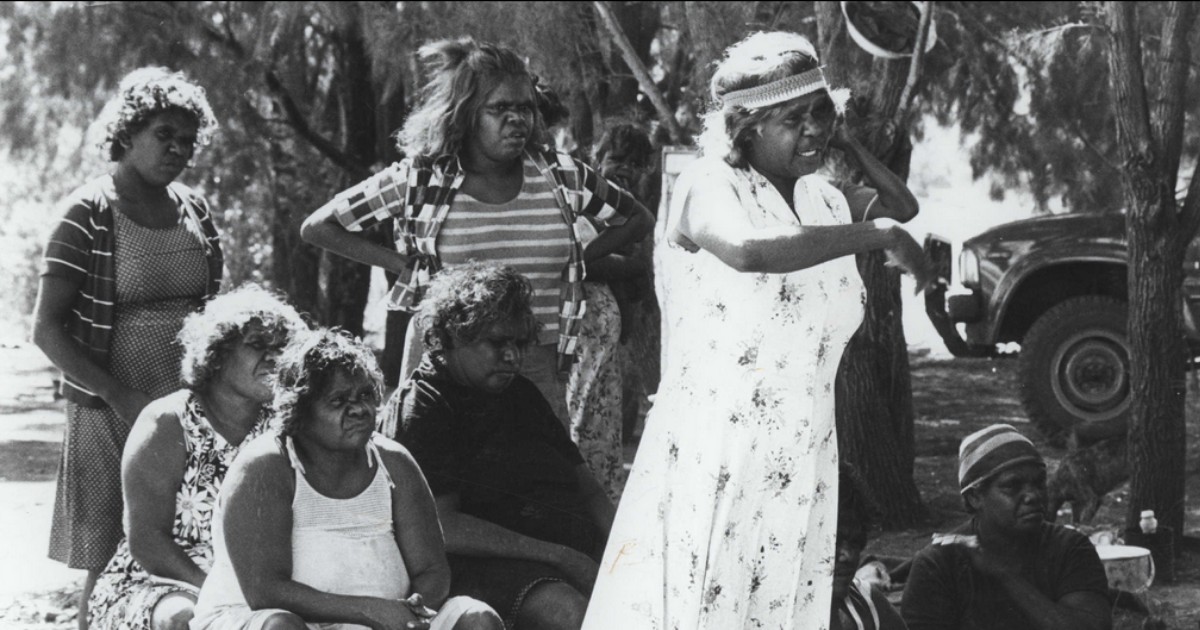
This picture of Purki Edwards AO helps tell the story of strong Anangu women and how they organised themselves in the face of exclusion from important political, cultural and land rights conversations in the late 70’s and early 80’s.

At this time important land right conversations were beginning in the NPY Lands as Anangu were understanding that they were being governed from afar and their land was under the control of government bodies. The Pitjantjatjara Council was established to support these conversations.

A sign of the times, the meetings were led by male politicians and anthropologists, and attended by Anangu men. Women were present at the meetings, watching from nearby, but were not allowed to speak.

Uneasy to be talking about land in close proximity to women, the Anangu men told women to leave the meeting.

The women knew they had their own important cultural connection to land, and had equal say as custodians of country. They wanted to protect and represent women’s law and country in these discussions.

The cassette

In May 1980, in a caravan in Kalka, Mantatjara Wilson supported by other key Anangu women recorded an invitation on a cassette tape.

It said “I have been thinking about all you women from every community….I have been thinking that we women should hold our own women’s meeting. We should think about having our own female chairperson and our own women’s council.”

Mantatjara talked about her concerns for the whole 2 sides of the cassette. Concerns about being left out of important meetings unable to speak, concerns that resources for communities were only being directed by men, concerns about issues facing families in communities. The cassette was then copied and sent to women all across the NPY lands. The first Women’s Council meeting was held at Kanpi on the 6 & 7 of December 1980 and were attended by 40 women from across the NPY Lands .

NPYWC is celebrating 40 years in 2020.

Read more