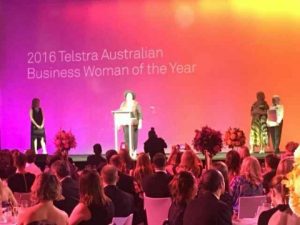
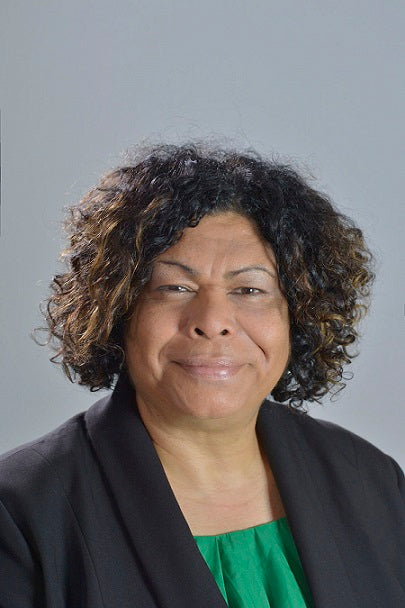
NPY Women’s Council CEO Andrea Mason addressed the Australian Press Club on 12 July 2018 on the program of the NAIDOC Women’s Conference. Below are the words she shared with delegates.
NPY Women’s Council established its Domestic and Family Violence Service (DFV) in 1994. The service initially focused on assisting women to gain access to the criminal justice system. This was what was needed at the time. In the context of NPY Women’s Council as a whole and the changing context of remote communities over that time the service has recently taken on a different focus.
Whilst we know we still have a role to play in crisis work, and in helping women through the legal system, we now know this is not enough. The last two years in particular has seen major changes to how we approach this issue. These changes have been driven by the women (Directors, members and senior management…) who want to work from a position of strength rather than deficit. The old paradigm of domestic and family violence keeps us locked in the deficit position – seeing women as victims on a spectrum of risk and perpetrators on a parallel spectrum of risk.
This paradigm limited our ability to consider different ways of supporting women who have experienced violence, and different ways of working to end violence.
We now clearly articulate that we work from a holistic and relational standpoint which is strongly aligned with Anangu values and the agency of our women. We understand that violence does not occur in a vacuum. And we understand that in our context there is no simple or leading explanation as to why violence occurs.
Our new approach has been influenced by new understandings of trauma and toxic stress which NPYWC as a whole has been working on in different ways. In one example of our work in this area, a group of senior lore women (UK team) have been meeting for the past few years to consider these issues and develop shared meanings for Anangu and Western ways of understanding of the impact of trauma and toxic stress. Their work has been healing and transformative for them and they have developed resources that assists others in their healing process especially young people and children.
The significance of this kind of work has been personally profound for the women involved and profound in the kinds of advice that they have provided for the rest of the organisation. We are now working with a group of senior lore men in the same way specifically on the topic of DFV.
Our focus now is to shine a light on the strengths that will help the collective transformation that we know our members want to see for their communities. In relation to DFV this means shifting the focus from cycles of family and community violence to cycles of care and resilience. We have a practice framework for staff that outlines how their work is best conducted to ensure we are supporting our members to achieve this vision of collective transformation. Our practice framework, which was developed in partnership with the Australian Childhood Foundation, lays out for us where our focus should be. Our job is to support women and communities to: collaboratively understand violence, name its effects, tell stories of renewal acknowledge pain, listen deeply, find connection, validate resistance to violence and resource safety.
The DFV service is now very clearly committed to learning about and understanding:
- how violence occurs in the community and how it is being challenged and resisted;
- the importance of culture and cultural maintenance;
- about trauma and healing;
- about narrative approaches to working with communities’ own efforts to resist and challenge violence; and finally
- ways to enhance community resilience.
Our approach is aligned with what we know to be the aspirations of our members, but it has taken time to get to this place of confidence in the new focus of our work in DFV. We have built on our knowledge of this area gained over many years. We have been able to embed our DFV service within our overall organisation which is already involved in healing work, cultural maintenance and other activities that we know to be enhancing of wellbeing. And we have had to work with the expectations of our funders. Very importantly though, we have been very open to working in genuine partnership with other experts and organisations, such as the Australian Childhood Foundation who assisted us to articulate this new way of working.




%20Women%E2%80%99s%20Council%20directors%20and%20staff%20congratulate%20our%20Chief%20Executive%20Officer%20Andrea%20Mason%20on%20being%20awarded%20the%202016%20National%20Telstra%20Business%20Woma...)