Skip to content

Your donation supports the voices and leadership of Aṉangu women across the Ngaanyatjarra, Pitjantjatjara and Yankunytjatjara Lands. NPY Women’s Council is an Aboriginal-led organisation created by women for women, focused on improving health, safety, culture and community wellbeing in remote Central Australia.

We appreciate any contribution you are able to offer.

Please fill out the form below to make a donation.

Cart

Your cart is empty

Donate

Article: "We don't understand" - Disability Information Not Working

"We don't understand" - Disability Information Not Working

"We don't understand" - Disability Information Not Working

Working to bring cross cultural understanding for disability information in remote communities

A lot of health and disability information sent to remote communities is written in English, uses terminology and have poor distribution channels. Generic disability information often fails to understand the context of remote community life and that prescribed services, examples and health directives are not available or easily undertaken in communities.

We have begun a disability Information Project, we want to know how to best make information people can understand and act upon.

Information is empowering, with good information you can make good decisions. We believe accessible information is key to creating an equitable, inclusive society.

The Tjunguku Information Project has started talking to communities about what disability information people found challenging and what they were interested in learning about. People were interested to learn about different disabilities like Foetal Alcohol Syndrome Disorder, acquired brain injuries, dementia. They wanted to know how to support people living with different mental health conditions and cognitive disabilities.

The Information Project aims to tailor key messages that raise awareness and understanding of different disabilities and where to find support in a way that is both accessible and understandable to remote community members.

Learn more about Tjungu Aged & Disability Services

Read more

COVID Placing Women and Children At Greater Risk of Domestic Violence
Domestic & Family Violence

COVID Placing Women and Children At Greater Risk of Domestic Violence

How restrictions and stretched services have taken a toll

Women and children have been placed in vulnerable circumstances unable to flee violence, access sexual assault screening and police support…some have been facing homelessness in an effort to keep themselves safe amongst Covid restrictions. How Covid has placed women and children at greater risk of domestic and family violence under a complex landscape of stretched services, border barriers and busy health systems.

More barriers for an already stretched service

In remote regions where there is already significant limitations in regard to domestic & family violence support, Covid -19 restrictions have created greater complexity for women and children accessing support services. This is especially true in the NPY region placed at the intersection of 3 state & territory borders.

In early February, some remote communities were inaccessible to police and airstrips were closed due to flooding. These communities were only accessible by roads with services across borders.

Despite urgent requests for cross-border police responses to domestic & family violence, enforced border restrictions meant approval for police responses were denied, leaving some women and children at risk of serious harm.

Impact of busy health systems for women experiencing domestic violence

Reduced RFDS capacity due to covid-19 related backlogs and airstrip flooding has created precarious circumstances for women and children experiencing violence related injuries.

Women and children have been, at times, unable to access urgent medical review, mental health support, sexual assault screening and emergency evacuation following serious Domestic Violence incidents.

In one instance our service had to a charter private flight to ensure safety for a young woman who had experienced and remained at risk of extreme domestic violence.

Women locked out of safety

Women in urban centres, such as Kalgoorlie, Alice Springs, Adelaide and Port Augusta have been forced to navigate vaccine mandates, lockouts and lockdowns, within an overwhelmed service system where crisis accommodation options have been limited.

Support services have been under pressure and have been frustrated by blanket Covid-19 responses. They often have not been able to provide financial or practical support for women and children who have either fled from violence in community or are experiencing violence in town but are unable to return home due to reduced transport, border closures and the cost of quarantine requirements.

Our service, despite having limited funds, and at great expense, continue to fill service gaps across all of these regional hubs. In an effort to ensure women and children are not forced into homelessness or the child protection system we continue to fund alternative accommodation, food and transport outside our service.

This has not only resulted in significant financial strain on the service but is also contributing to an under-resourced and overwhelmed workforce.

Increase in demand

Since the beginning of the Covid-19 outbreak, we have seen an increased demand for our service. Our team have been receiving around 600-700 calls a month from women. The calls could be for anything from emergency food relief, homelessness support to urgent support for safety.

What needs to be done

Despite the increased complexity of responses and limited resources, we continue to try our best to explore innovative ways to support women experiencing violence on the Lands.

To keep women and children from remote communities safe from domestic & family violence we urgently seek:

  • Stronger cross-border responses and clearer exemptions for border crossings, quarantine and return to community for women and children fleeing domestic & family violence.
  • Transportation options to support women and children to return to, or leave, their communities.
  • Financial support and options for emergency accommodation for women in urban settings fleeing violence
  • Increased financial support to enable greater emergency financial relief for transport, accommodation and material goods for women and children fleeing violence.

Now more than ever, we recognise that responses to preventing and ending violence are most powerful when they draw upon and uphold, the pre-existing knowledge and resources inherent within Anangu culture, families and communities.

Find out more about the NPYWC Domestic & Family Violence Service
Read more
Formal Recognition and Support Needed For Art Centres Delivering Care For Elderly
Tjanpi Desert Weavers

Formal Recognition and Support Needed For Art Centres Delivering Care For Elderly

New research shows art centres play important role for the aged in communities

A three-year research study has found that Aboriginal art centres play a key role in delivering day-to-day care of older artists as well as creating a space of healing and respite.

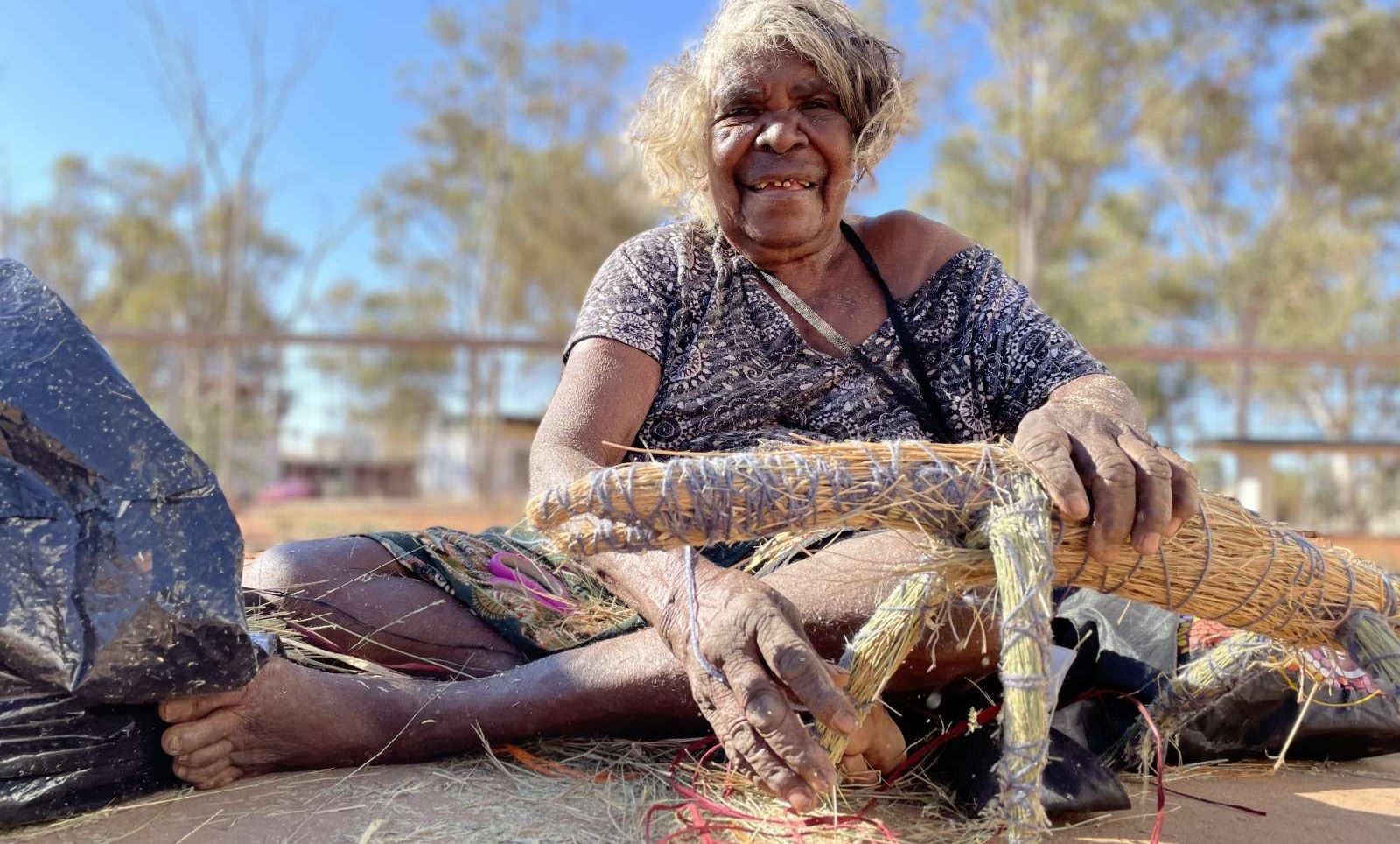
Tjanpi Desert Weavers is a social enterprise supporting and elevating fibre artists from the NPY lands. Many of our artists are older women who not only form the cultural backbone of Tjanpi but also require an increasing level of care.

Art centres like Tjanpi work hard to support elderly artists and their day-to-day health needs, whilst facing challenges such as:

  • Lack of formal recognition or resourcing in supporting older artists
  • High demands of care from elders and community
  • Poorly designed or inadequate infrastructure at art centres

The National Ageing Research Institute worked with Tjanpi Desert Weavers, Mangkaja Arts Resource Agency (Fitzroy Crossing) and Ikuntji Artists (Haasts Bluff) to conduct a research study to understand how three different art centres in remote locations support their older artists. The research study was funded by a Department of Health Dementia and Aged Care (DACS) Innovation grant from 2017-2021.


Key findings of the research include:

  • Art centres are considered a safe space, a place of healing and respite, and a place for everyone. They reduce stigma associated with dementia and functional decline; they promote a sense of belonging.
  • Art centres play an enormous role in delivering day-to-day care needs of older artists. They also facilitate social connection, spiritual and cognitive wellbeing.
  • Elders are at the foundation of the art centres.
  • Art Centres work hard to build and maintain relationships of trust and reciprocal models of care.
  • Older artists are the senior artists, role models and ‘superstars’.
  • The centres prioritise the role of Elders by creating a space where intergenerational connection, teaching and learning, and leaving a legacy are key drivers of their engagement.
  • They retain a local workforce and they are in an ideal position to notice physical and cognitive changes in older artists and work with them to promote social, emotional and cognitive wellbeing.
  • Elders are integral to the governance systems of art centres. Culture, Country, kin, language and storytelling are embedded into these systems and everything they do.
  • The centres are immersed in their Country’s context and the history of their community.
  • Many art centres are collaborating with aged care providers and have identified the potential to enhance these collaborations to better meet the needs of older artists and their families. This includes sharing infrastructure, organising joint trips to Country, sharing staffing and expertise across sites.

Tjanpi is currently advocating to government through the Royal Commission into Aged Care Quality and Safety and the recent Productivity Commission to share these keys findings. This research will also be shared through peer review journals such as the Australian Journal of Ageing.

You can learn more from the following audio visual resource.

https://www.nari.net.au/art-centres-supporting-elders-a-good-news-story

Learn more about Tjanpi Desert Weavers

Read more