Skip to content

Your donation supports the voices and leadership of Aṉangu women across the Ngaanyatjarra, Pitjantjatjara and Yankunytjatjara Lands. NPY Women’s Council is an Aboriginal-led organisation created by women for women, focused on improving health, safety, culture and community wellbeing in remote Central Australia.

We appreciate any contribution you are able to offer.

Please fill out the form below to make a donation.

Cart

Your cart is empty

Donate

Article: Raylene – Our Disability Advocacy Champion!

Raylene – Our Disability Advocacy Champion!

Raylene – Our Disability Advocacy Champion!

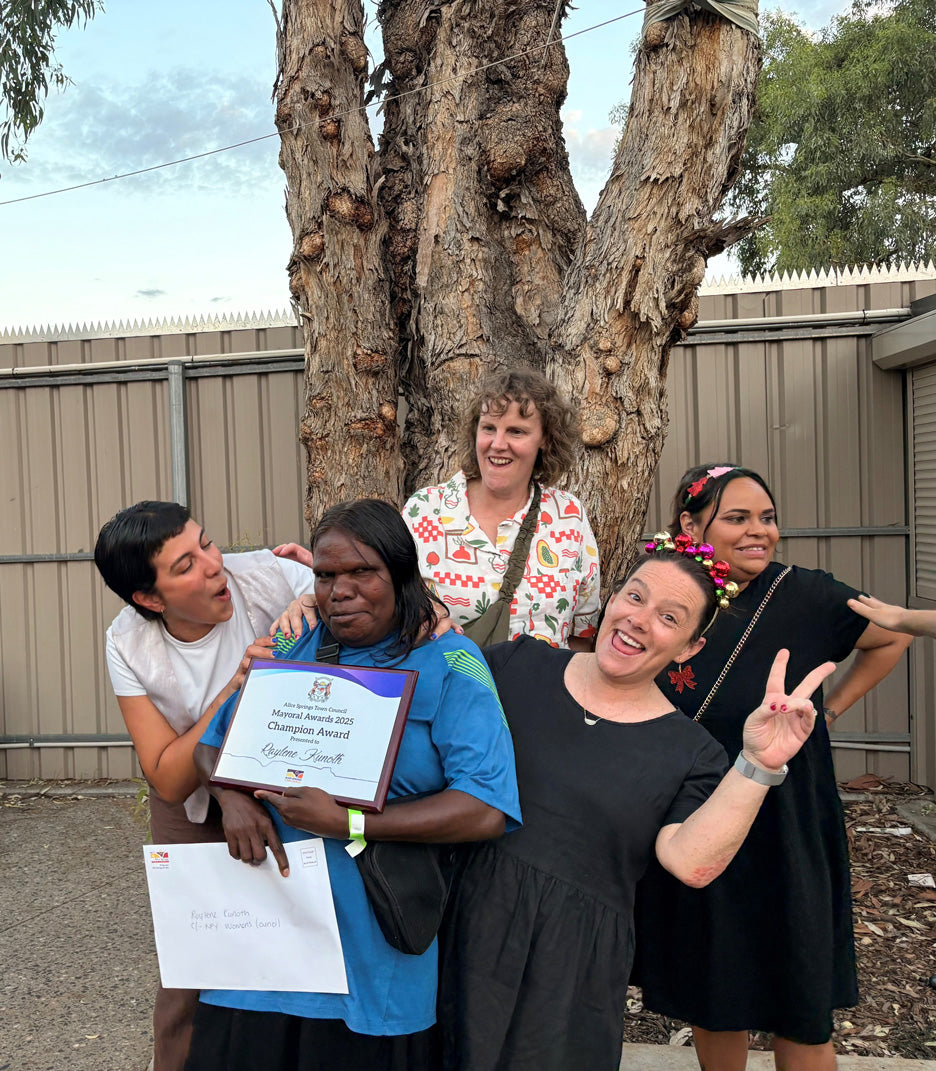
We are thrilled to congratulate Raylene, a fierce advocate for those living with a disability in remote communities, for her recent recognition in the Alice Springs Mayoral Awards with a Champion Award on International Day for People with a Disability.

It’s Tuesday, 8:15am, and Raylene has already called her malpa – Piranpa (non-Aboriginal) colleague – twice to make sure she will be picked up on time. She knows it is an important day and doesn’t want to be late.

Raylene will be visiting a group home in Alice Springs where four men living with disabilities - originally from Indigenous remote communities in the NPY Lands - live together and are supported by Disability Support Workers 24 hours a day. 

She hops into the car with some paperwork, explaining that she has been reading about the difference between the NDIS and the NDIA. She wants to be well prepared to support the men as they attend a NDIS meeting via Zoom. 

When she arrives, the men smile. They know her. They are excited to see her. Raylene greets each of them warmly and asks how they are going. After making sure everyone has a cup of tea, she explains what is about to happen. She takes care to fully understand the impact of each man’s disability and their personal circumstances, ensuring she can advocate for them appropriately. 

As a mother of a daughter with a disability, Raylene knows firsthand the daily challenges faced by people living with disabilities and their families. 

Raylene decided to work in the disability sector to “speak up” for people living with disabilities. Her favourite part of her role as an Advocacy and Disability Worker in the Tjungu Team is “working malparara way and advocating for people living with disabilities from the NPY Lands in Alice Springs.”

Her biggest wish is for people with disabilities “to be happy and to have family looking after them and caring with love. Mukulya,” and for the Tjungu Team to “keep supporting them the proper way.”

Raylene worries about people from the Lands who must come to Alice Springs to receive support and are separated from their family and Country.

“I wanna tell their family that they have to come and visit, even if they are busy. Bring photos for them to see every day. Put them up on their wall. Take a photo of your family member with disability to bring back to community and show everyone,” she says.

Raylene has made history as the first Anangu member of the NT Disability Advisory Council. In this role, she ensures that the voices of remote and Aboriginal people are not only heard, but respected in decision-making. Her presence on the council has brought a vital new perspective that continues to shape disability policy and practice in the Northern Territory.

Raylene’s impact is far-reaching. She uplifts individuals, strengthens communities, and works toward a more inclusive future for everyone. Her contribution to the disability sector and to Alice Springs is outstanding. She is a true role model, and we are so proud of Raylene for this very special recognition!
Read more

NPYWC Call for Ongoing Protection for Children and Young People
Research & Policy

NPYWC Call for Ongoing Protection for Children and Young People

The Ngaanyatjarra Pitjantjatjara Yankunytjatjara (NPY) Women’s Council strongly opposes a series of harmful legislative and policy changes to the youth justice system introduced by the Northern Territory (NT) Country Liberal Party (CLP) Government since August 2024.

In October 2024, the NT Government lowered the age of criminal responsibility to 10 years and imposed stricter conditions on bail, making it more difficult for children and young people to be granted release. In November 2024 the Government announced they would be relocating all children and young people from the Alice Springs Youth Detention Facility to the Holtze Youth Detention Facility in Darwin 1500kms away. NT Department of Corrections have confirmed they will provide no financial support for families to travel to Darwin to visit children and young people incarcerated at Holtze facility.

At ten – we don’t understand crime. – Young person, Imanpa

Most recently, in July 2025, further changes to the Youth Justice Act were introduced, including expanded use of force within detention facilities, the reintroduction of spit hoods, mechanical restraints, and the use of dogs. These practices are harmful and dehumanising. The reinstatement of spit hoods violates Australia’s commitments under key United Nations human rights treaties, including United Nations Declaration on the Rights of Indigenous Peoples (UNDRIP), United Nations Convention on the Rights of the Child (UNCRC) and the Convention Against Torture & Other Cruel, Inhuman or Degrading Treatment or Punishment (CAT). These changes deeply impact the rights and wellbeing of Aboriginal children and young people.

We don’t want to send our kids to jail. We need funding to keep kids active, keep them out of jail and on country. Men and women need to be taught about culture when young and we need to keep it going. Keep it strong. We need young people to make our community proud. – NPY Women’s Council Director

These changes also contradict the recommendations from the 2017 Royal Commission into the Protection and Detention of Children in the Northern Territory, which called for trauma-informed, culturally appropriate, and community-led approaches to youth justice.

Despite Aboriginal Community Controlled Organisations (ACCOs) attempting to provide feedback to the Government for their “reform” agenda, no consultation with young people, ACCO’s, or community organisations were completed prior to the legislative changes to the Youth Justice Act. NPY Women’s Council Directors are concerned that whilst these changes have been made in the Northern Territory, they will have an impact across the tri-state area due to the transience of families travelling across the NPY lands and often, into Mparntwe Alice Springs.

NPY Women’s Council are a member of the Central Australian Youth Justice (CAYJ) Coalition undertaking youth justice advocacy urging the government to address policies that sever Anangu children and young people’s connection to family, culture, and Country, perpetuating intergenerational trauma that echoes the devastating impacts of the Stolen Generations. We support the #RaiseTheAge campaign and stand with other First Nations leaders advocating to end state violence against children and raise the age of criminal responsibility to at least 14 years to align with the recommendation by the United Nations Committee on the Rights of the Child.

Further, NPY Women’s Council expresses strong opposition to the NT Government’s decision to carry out a 12-month trial, effective 1st September, to allow members of the community to purchase, possess, and use Oleoresin Capsicum (OC) spray — commonly known as pepper spray. This policy shift forms part of a broader “tough on crime” agenda that continues to disproportionately target and harm Aboriginal communities. Introducing weapons into the community under the guise of safety contradicts the evidence; such measures are far more likely to escalate conflict than to prevent it, leading to a diminished sense of safety for all.

You know all the Directors we don’t want to create more problems. It’s dangerous. It’s a big risk. It’s going to cause more violence. We don’t want that to come into communities or to be in community stores. – NPY Women’s Council Director

Although the NT Government has stated it is committed to building safer communities, it must shift its focus from punitive measures to addressing the structural conditions that give rise to harm. Communities need investment in housing, health, education and specialist domestic violence and youth services in order to achieve meaningful change. NPY Women’s Council has signed an open letter with Justice Not Jails imploring the government to reverse the OC spray trial and prevent further harm in communities.

Recently NPY Women’s Council met with the Australian Human Rights Commission Children’s Commissioner Anne Hollands as well Minister for Social Services Tanya Plibersek to discuss these issues impacting our communities and highlight our commitment to advocating for children, young and vulnerable people who are disproportionality affected by these policies. We have also engaged in meaningful conversations with state and federal stakeholders at SNAICC’s conference in Brisbane this week, alongside other ACCOs and First-Nations led organisations working towards increased protections for Aboriginal and Torres Strait Islander children across the country.

Most importantly, the voices of children, young people and families must be central to any decision-making about youth justice and criminal justice legislation to ensure that Anangu are not left behind.

Read more
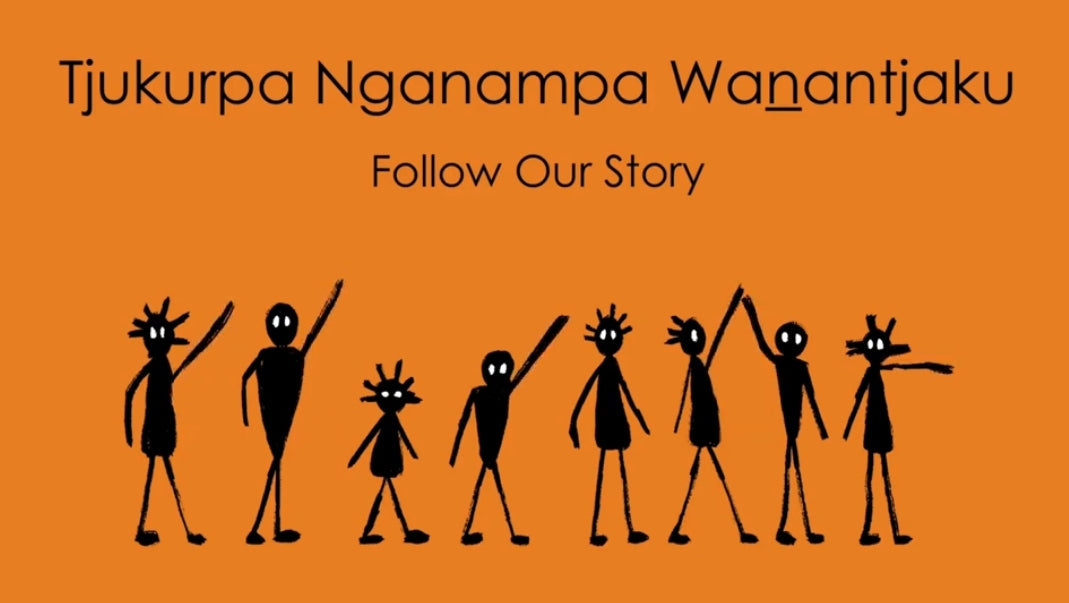
Tjukurpa Nganampa Wanantjaku - Our New Research Guide for Working With Aṉangu
Research & Policy

Tjukurpa Nganampa Wanantjaku - Our New Research Guide for Working With Aṉangu

Translating from Pitjantjatjara to “follow our story” in English, Tjukurpa Nganampa Wanantjaku was created by the Research and Policy team at NPY Women’s Council, our Chairperson Mrs Smith, and supporting Anangu Directors. It exists to protect Anangu knowledge and ensure that when research is undertaken, it leads to meaningful, shared outcomes that genuinely benefit community.

Aimed at researchers, potential partners and collaborators, the following animation introduces the guide in Pitjantjara and English through the voice of our Chairperson, Mrs Smith:

Tjukurpa Nganampa Wanantjaku builds upon existing Anangu-led action research models introduced by the late Mrs T Colin of NPY Women’s Council in 1992, alongside decolonised research practices that merge Indigenous methodologies with an Anangu way of being, doing and knowing. This is achieved by clearly identifying and defining the key components of the research framework to ensure the research both is and promotes:

At NPY Women’s Council, we want to continue to build partnerships but make sure the stories stay with Anangu, and that Anangu benefit from sharing their stories.

Through Iwara Wanala (to follow the road/ path), by giving back to community or support community directly through donations from research, Anangu can lead a process of storytelling and take researchers by the hand, to make sure stories are shared on their own terms. The key components of Tjukurpa Nganampa Wanantjaku are also supported by key cultural protocols to consider when working alongside Anangu on the NPY Lands. Our Chairperson, Mrs Smith, believes in the importance of updating our processes and frameworks to preserve Anangu ways of being doing and knowing.

Anangu want a clear understanding of the work you are doing, for us to understand really clear - you know - about research. Through this animation and guide Anangu are helping you understand more clearly.

The animation helps Anangu understand in our own language too you know, it's for you and for us, for both of us, for a clearer understanding about working with us on research. It’s important for you to make sure our voices are heard and to understand more clearly what Anangu need.

-Mrs Smith, NPY Women’s Council Chairperson

The guide helps us continue to meet our strategic objectives of an Anangu-led voice, evidence-based practice, financial sustainability, stronger stakeholder relationships, financial sustainability and a greater promotion of Anangu culture, governance and agency. The protocols outlined in the framework continue to keep the safety and respect of Anangu paramount in our work.

For more information on ethics processes, our advocacy priorities, and how you can engage NPY Women’s Council in your research, please visit our research requests page and complete an expression of interest. You can also contact research@npywc.org.au directly.

We look forward to hearing from you! Palya!

Read more