Skip to content

Your donation supports the voices and leadership of Aṉangu women across the Ngaanyatjarra, Pitjantjatjara and Yankunytjatjara Lands. NPY Women’s Council is an Aboriginal-led organisation created by women for women, focused on improving health, safety, culture and community wellbeing in remote Central Australia.

We appreciate any contribution you are able to offer.

Please fill out the form below to make a donation.

Cart

Your cart is empty

Donate

Article: Create Heroes not Villains

Create Heroes not Villains

Create Heroes not Villains

Jail can cause great harm to children. In Australia 10 yo children can be arrested, charged and jailed. We know incarcerating children does not reduce crime, is extremely costly and increases the chances of children re-offending x3. Is there a better way? Read more about why children are in jail and what alternatives exist. NPYWC Directors ask the Australian Government to #RaiseTheAge of incarcerated children from age 10 to 14 in line with UN recommendations.

Who are the children in jail?
65% of children in jail (aged 10-13) are Aboriginal. Research shows children in jail are already struggling with a range of life situations and health issues, that have not been adequately addressed.
We know that incarcerated children are more likely to have:

  • intellectual disabilities
  • low levels of education
  • poor mental and physical health
  • engage in substance abuse
  • been exposed to violence and other mistreatment
  • been placed in foster care

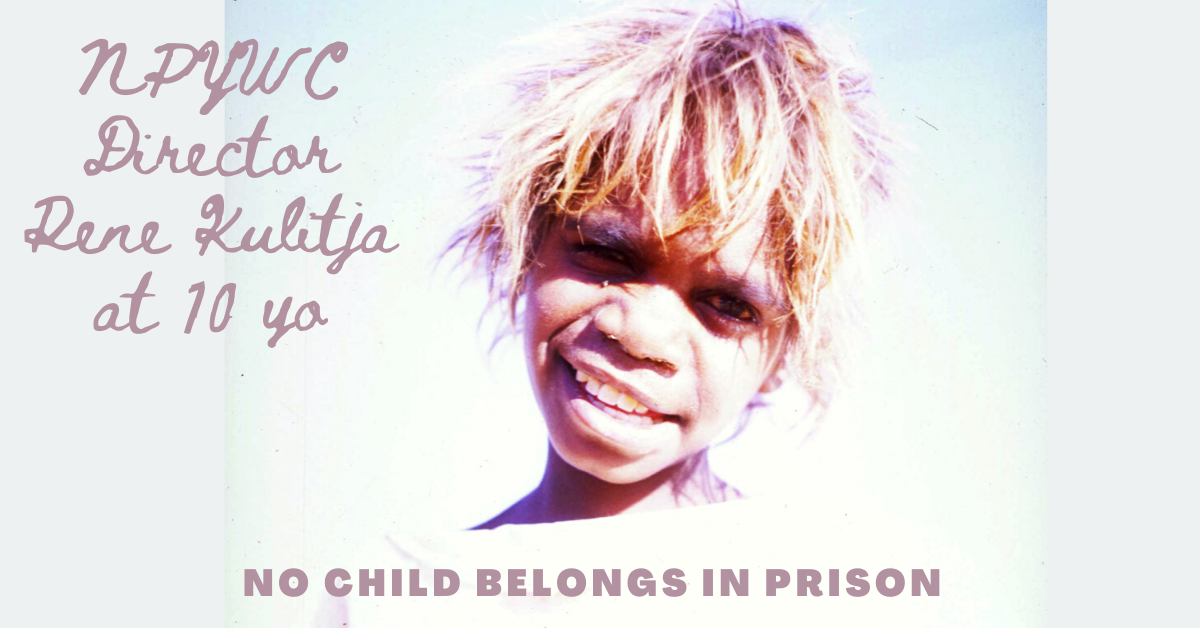
NPYWC Director, Wanatjura Lewis at 10 years old (check dress)

In Australia it costs $1579 / day per child or $539 million dollars annually to keep in youth detention (2018/19, Productivity Commission). Is there a more effective way of reducing crime and increasing children’s welfare that are cost effective?

When we invest early on in children, families and communities reap the rewards.
Investing in the welfare of children and families is good for everyone. Holistic and community based programs that work with the complex issues causing children to fall through the cracks, can prevent a children heading down the terrifying path of detention and jail.

A good start is growing preventative programs that provide support for:

  • families to care for children with intellectual disabilities
  • boys/young men to better understand and manage their violent behaviour, and support for families and men to deal with domestic violence
  • programs like NPYWC’s Walytjapiti team that work with families to prevent children being removed from their family and culture
  • appropriate resourced and culturally relevant mental health and well-being programs.

“It’s not a matter of ignoring that behaviour and doing nothing, it’s a matter of rethinking how we approach those problems in a way that’s more constructive,” University of Technology Sydney criminology professor Chris Cunneen.

NPYWC Chairperson, Yanyi Bandicha at 10 years old

“When they take young people to jail, they think oh well I will just do bad things again, I have been to jail before and I know I can go again. They will keep doing the wrong things and go back to jail then more bad things will grow in them over and over again.” Yanyi Bandicha NPYWC Chairperson.

Read more about NPYWC’s plea to raise the criminal age of children here

You can show your support by:

Read more

Aboriginal Indigenous Raise the Age
Child & Family Wellbeing

NPY Women’s Council calls on government to stop imprisoning children

It is alarming that children as young as 10 can be arrested, charged and imprisoned in Australia. Every year, 600 Australian children between the ages of 10 and 13 are locked up in prison and sadly 65% of these children are Aboriginal or Torres Strait Islander.

NPY Women’s Council Directors support the #RaiseTheAge campaign and stand with other Aboriginal leaders to advocate to raise the age. NPY Women’s Council agrees that Australia’s minimum age of criminal responsibility should be raised to at least 14 years to align with the recommendation by the UN Committee on the Rights of the Child.

NPY Women’s Council Director, Yanyi Bandicha at 10 yo

“They are learning and they are too young to be locked up, they have a long way to go before they know what is right or wrong and what is good for them,” – NPY Women’s Council Director, Maimie Butler

In July 2020, Australian lawmakers at the Council of Attorneys-General failed to make a decision to raise the age, deferring this to 2021. The ACT government are the first jurisdiction to agree to align its laws with the UN’s recommendation. NPY Women’s Council Directors call on the Commonwealth, state and territory governments to follow the footsteps of the ACT government and protect Australia’s next generation.

Director Yangi Yangi Fox at 10yo (left)

The 2017 Royal Commission into the Detention and Protection of Children in the Northern Territory found that a hard-line approach would not reduce crime, hence one of their key recommendations was to raise the age of criminal responsibility. Research has found that children jailed before the age of 14 are three times more likely to re-offend.

“Governments have been locking kids up for a long time, and yet youth crime is on the rise… There is plenty of evidence that supports a different approach to tackling crime,” – NPYWC Youth Service Manager, Christine Williamson

NPY Women’s Council Youth Service works within research and evidence based frameworks that acknowledge school attendance and reducing family violence are key influencers in reducing youth anti-social and criminal activity. NPY Women’s Council believes that the best place for a child is on country, with family and culture not in jail.

“They shouldn’t be locked up, they need the chance to sit with their family and learn more about what is right or wrong. If they are locked up at that age (10yrs) all they know is how to obey the security guards and live in jail, it is not right,” – NPY Women’s Council Director, Maimie Butler

Christine Williamson, Manager of NPYWC’s Youth Service, calls on Australians to “sign the petition, write to your local member, educate yourself about the issues and what works and share this with others in a way they will understand,”

Actions:

o Show your support and sign the petition: https://www.raisetheage.org.au/#petition

o Write to your local member

o Donate to NPYWC Youth Service

Read more
IWARA: A NEW PATH FOR YOUNG PEOPLE IN REMOTE COMMUNITIES
Youth

IWARA: A NEW PATH FOR YOUNG PEOPLE IN REMOTE COMMUNITIES

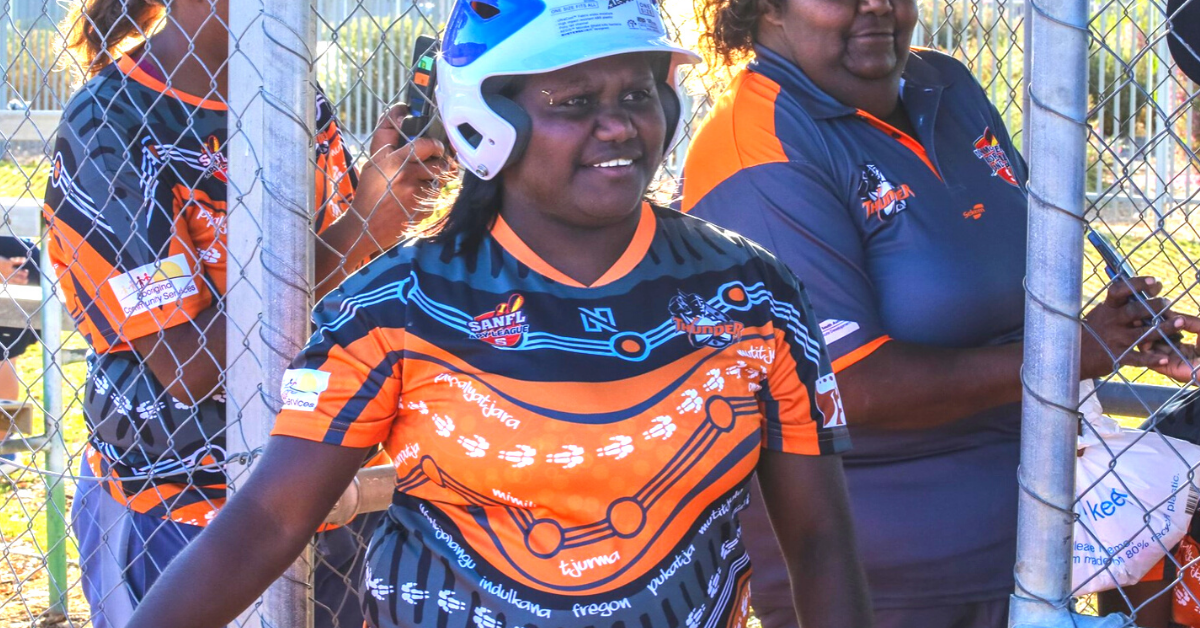
The NPYWC Youth Service is about to embark on a new program, Iwara (path / track) aimed at assisting young people to gain meaningful employment in their community through the love of sport.

Iwara is a partnership with AFL NT, Softball NT, Tafe SA and CDU that will offer qualifications in Community Services and Sport & Recreation at completion.

Iwara participants will be mentored by an Anangu Employment Officer (AEPO) from the NPYWC Youth Service throughout their journey. The AEPO will also work with the trainees at the end of the program to identify ongoing work with youth programs and agencies across Central Australia.

Iwara is a 7 month program that will include three months of immersion into softball and football; trainees will learn foundational work skills related to these sports before heading back to communities and implementing their new abilities and key learnings. .

The program is a part of the NPYWC Youth Service’s broader commitment to Anangu employment and assisting Anangu to live well in both worlds.

If you know of a young person who would be an excellent fit for Iwara or want more information on the project, please contact Brett Toll at youth.asstmgr@npywc.org.au

Find out more about the Youth Service

Read more