Your donation supports the voices and leadership of Aṉangu women across the Ngaanyatjarra, Pitjantjatjara and Yankunytjatjara Lands. NPY Women’s Council is an Aboriginal-led organisation created by women for women, focused on improving health, safety, culture and community wellbeing in remote Central Australia.
We appreciate any contribution you are able to offer.
Please fill out the form below to make a donation.
Punu ngaanya mirritjanu warngkaringu– the dead tree comes to life again.
The Blue Tree project began as a conversation during a long car journey between Mparntwe (Alice Springs) and Warakurna, a remote community in the Ngaanyatjarra Lands of Western Australia. The discussion was sparked by the sight of a blue-painted tree at Curtin Springs, part of a national initiative to raise awareness of mental health – and this is what that particular Curtin Springs tree did.
A group of Anangu and Yarnangu women from the Uti Kulintjaku team at NPY Women’s Council developed the idea of making a blue tree out of tjanpi (grass), as a way of reinterpreting this initiative beyond the Western understanding of the tree, and of mental health more broadly, into a way that resonates with Anangu and Yarnangu. They collaborated withTjanpi Desert Weaversto do this.
Not only was the physical act of making the tree healing, but it also stood as a powerful metaphor to open up dialogue about mental health in a meaningful and hopeful way.
The women talked about looking to the future – nyaakula kuranyukutu – going from a hopeless state – walykurringu – to having hope again, and recovering, returning to happiness – marlaku palyaringkupayi mapalyarringu.
The women often take the tree into Ngaanyatjarra Schools to engage the kids in discussions and meditations, encouraging them to create leaves to hang on the branches as symbols of regrowth. This interactive process shares the story of the blue tree in a way that reinforces the message of hope and healing.
The women hope the tree will travel, sparking many more conversations about mental health across communities, bridging cultural understandings, and bringing people together.
Learn more about the Uti Kulintjaku initiative and Ngangkari Traditional Healershere.
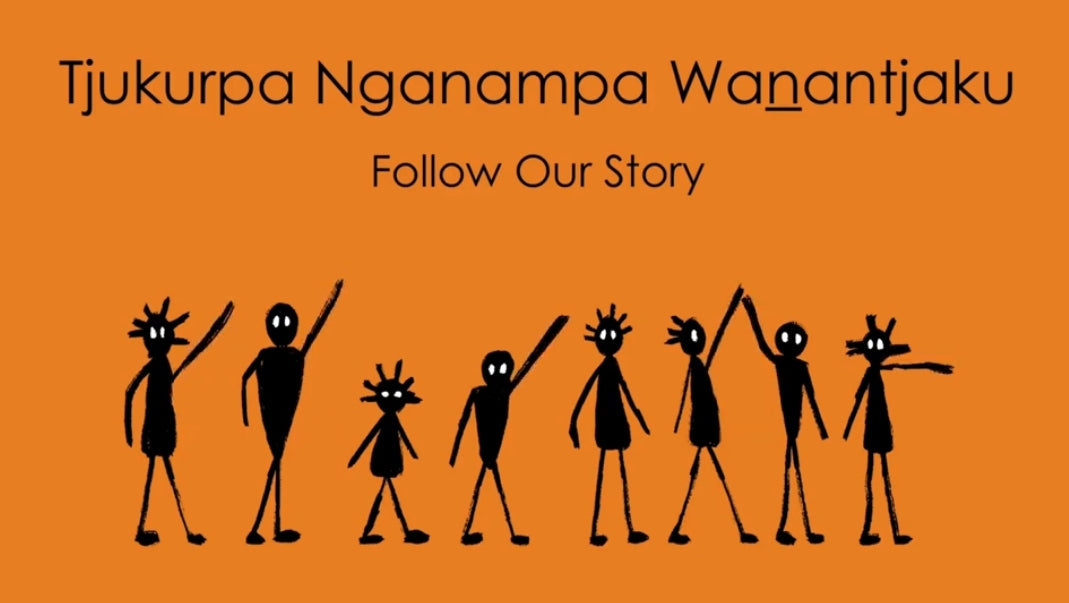
Translating from Pitjantjatjara to “follow our story” in English, Tjukurpa Nganampa Wanantjaku was created by the Research and Policy team at NPY Women’s Council, our Chairperson Mrs Smith, and supporting Anangu Directors. It exists to protect Anangu knowledge and ensure that when research is undertaken, it leads to meaningful, shared outcomes that genuinely benefit community.
Aimed at researchers, potential partners and collaborators, the following animation introduces the guide in Pitjantjara and English through the voice of our Chairperson, Mrs Smith:
Tjukurpa Nganampa Wanantjaku builds upon existing Anangu-led action research models introduced by the late Mrs T Colin of NPY Women’s Council in 1992, alongside decolonised research practices that merge Indigenous methodologies with an Anangu way of being, doing and knowing. This is achieved by clearly identifying and defining the key components of the research framework to ensure the research both is and promotes:
At NPY Women’s Council, we want to continue to build partnerships but make sure the stories stay with Anangu, and that Anangu benefit from sharing their stories.
Through Iwara Wanala (to follow the road/ path), by giving back to community or support community directly through donations from research, Anangu can lead a process of storytelling and take researchers by the hand, to make sure stories are shared on their own terms. The key components of Tjukurpa Nganampa Wanantjaku are also supported by key cultural protocols to consider when working alongside Anangu on the NPY Lands. Our Chairperson, Mrs Smith, believes in the importance of updating our processes and frameworks to preserve Anangu ways of being doing and knowing.
Anangu want a clear understanding of the work you are doing, for us to understand really clear - you know - about research. Through this animation and guide Anangu are helping you understand more clearly.
The animation helps Anangu understand in our own language too you know, it's for you and for us, for both of us, for a clearer understanding about working with us on research. It’s important for you to make sure our voices are heard and to understand more clearly what Anangu need.
-Mrs Smith, NPY Women’s Council Chairperson
The guide helps us continue to meet our strategic objectives of an Anangu-led voice, evidence-based practice, financial sustainability, stronger stakeholder relationships, financial sustainability and a greater promotion of Anangu culture, governance and agency. The protocols outlined in the framework continue to keep the safety and respect of Anangu paramount in our work.
For more information on ethics processes, our advocacy priorities, and how you can engage NPY Women’s Council in your research, please visit our research requests page and complete an expression of interest. You can also contact research@npywc.org.au directly.
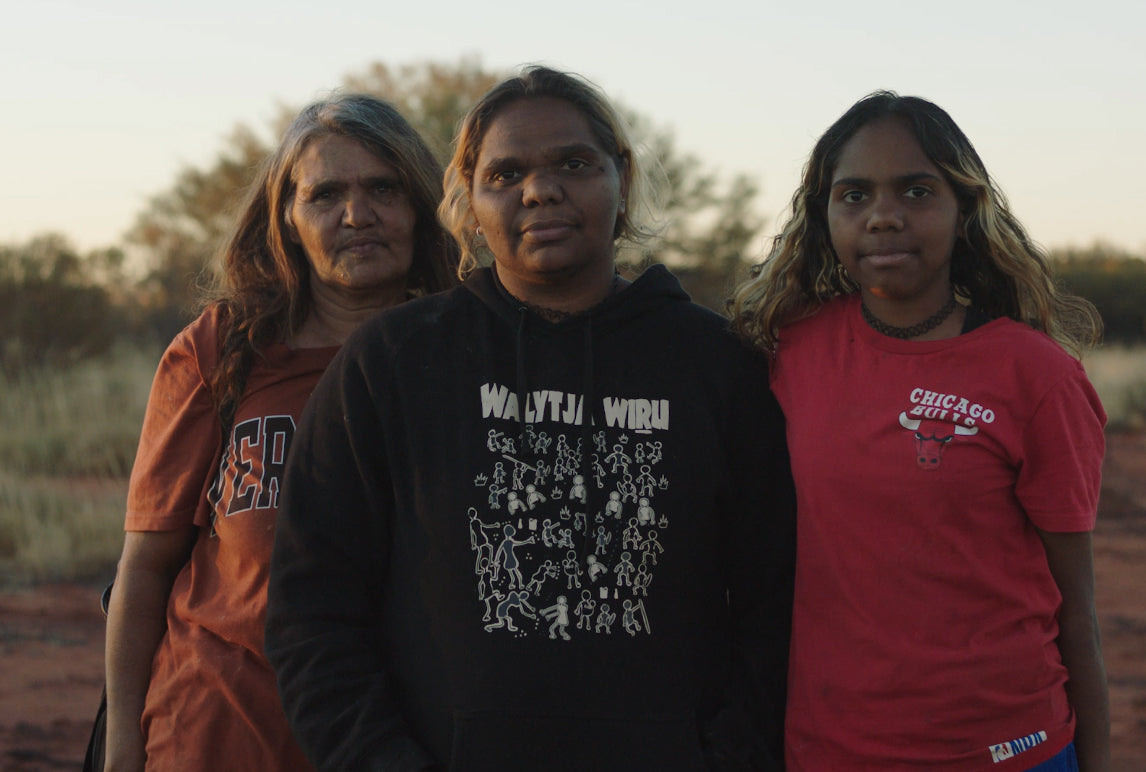
For International Women’s Day (IWD) 2026, we are proud to share a new documentary celebrating the leadership and strength of NPY Women’s Council’s youngest Director, Azaria Foster, from the Irrunytju and Wanarn communities in Western Australia.
Led by Azaria herself, the film shares her journey to becoming a Director and offers powerful messages of strength and encouragement to kungkas (girls and young women) across the region.
It’s important to speak up […] use your own voice to advocate and as a result of using your voice, great things will become possible. – Azaria Foster
UN Women Australia’s 2026 IWD theme, “Balance the Scales,” is powerfully reflected in Azaria’s story - a reminder that inclusivity, accessibility and collaboration within community are essential to creating opportunities for systemic change and lasting transformation.
Azaria’s story is about speaking up for yourself and your community, and in doing so advocating for justice and equality for the next generation. This is echoed in the film which focuses on the importance of education whilst encouraging young women to become leaders in their communities.
To overcome shame I kept attending school. By going to school I was able to learn lots of great things and when I finished school I started working. These different jobs have given me confidence. – Azaria Foster
Azaria’s grandmother played an important role in the inception of NPYWC, and the film honours this legacy by highlighting the power of intergenerational knowledge sharing. It reflects the collective strength of mothers, daughters and grandmothers, and what becomes possible when multiple modes of education come together.
Intergenerational connection and teaching are deeply embedded in Anangu ways of knowing, being and doing. Sharing knowledge, nurturing pride and uplifting one another are essential to keeping culture strong and empowering young women and girls to pursue education, employment, leadership opportunities and challenge gender-based stereotypes.
I used to go in with my grandmother for her Director meetings […] So it’s like I’ve learned from my grandmother. - Azaria Foster
The process of planning and filming the documentary further revealed Azaria’s immense strength as a young leader. Her mother, grandmother and three children feature in the film, alongside other kungkas and young people from community. As the sun set on the last day of filming, a sense of pride filled the air for what had been made possible through cross-generational storytelling.
Because you know when you undertake your work with love, it becomes easy. – Azaria Foster
The film will be used as a key resource in future kungkas education advocacy workshops and kungka careers conferences, in line with Azaria’s aspirations to share her story to inspire other young women and encourage them to speak up for their communities. Azaria reminds us:
When I was a youth worker, I made sure I had love in my heart working with kids in the community… As an Anangu, you know what you need for your community and using your voice, it’s very important. - Azaria Foster
On IWD 2026, we thank Azaria and all NPYWC Directors for their unwavering commitment to leadership that is grounded in open hearts and open minds. Without strong female role models across the 26 remote tri-state communities we serve, our advocacy work would not be possible.
We honour the next generation of leaders - the kungkas with strong hearts and minds - today and every day, as they carry our vision forward and help ensure all Anangu live well in both worlds.
This short film was shot on Azaria’s grandmother’s country in Wanarn by an external videographer Gabriel Morrisson and directed by former NPYWC Research and Policy team staff member Kiri Davies. NPYWC extend our thanks to the National Indigenous Australians Agency (NIAA) for the continuation of the Kungka Education Advocacy Project from 2026-2027.
NPY Women's Council is grounded in, and continues to live and work on, the sovereign Lands of the Arrernte people, and the Aṉangu and Yarnangu people - the rightful custodians of the Ngaanyatjarra, Pitjantjatjara and Yankunytjatjara Lands.






%20and%20Warakurna,%20a%20...)