Skip to content

Your donation supports the voices and leadership of Aṉangu women across the Ngaanyatjarra, Pitjantjatjara and Yankunytjatjara Lands. NPY Women’s Council is an Aboriginal-led organisation created by women for women, focused on improving health, safety, culture and community wellbeing in remote Central Australia.

We appreciate any contribution you are able to offer.

Please fill out the form below to make a donation.

Cart

Your cart is empty

Donate

Article: From Kiwirrkurra to boarding school & back

From Kiwirrkurra to boarding school & back

From Kiwirrkurra to boarding school & back

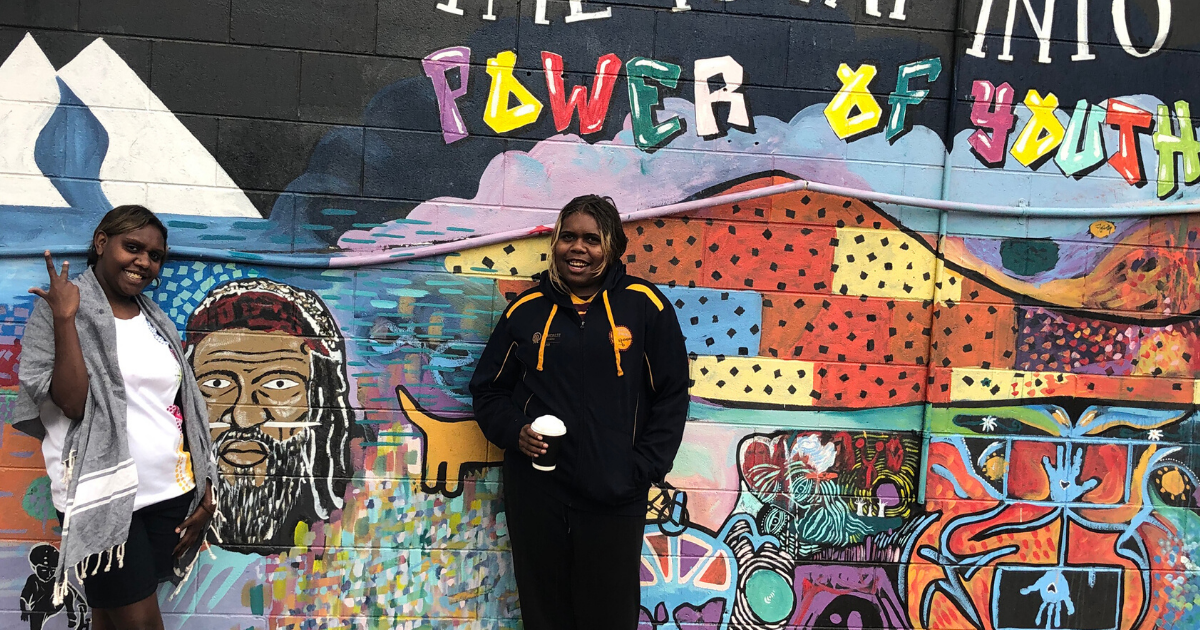
From one of Australia’s most remote and isolated communities to the bustling city, Lydia Ward and Tanella West made a brave and giant leap that has inspired them to support youth in their home community of Kiwirrkurra.

Located in the Gibson Desert, Kiwirrikurra is home to Pintubi, including the Pintubi Nine, Australia’s last family of nomadic Aboriginal people who only made contact with white settlement in 1984. Lydia Ward is the daughter of one of the Pintubi Nine.

Both Lydia and Tanella were encouraged by their family to attend boarding school. For some Anangu youth, boarding school is a good education option providing a wide range of learning and social experiences. NPYWC’s Youth Service Boarding School Program supports interested young people and their families to access boarding school programs.

Starting at boarding school was a big adjustment, Lydia’s first day at La Salle in Perth was “the scariest moment of my life”.

“When I got there I was feeling shy around them other whitefella students but then the next day they taught me to be brave and happy.” Lydia said.

Lydia’s favourite school subjects were religion and sports. Tanella loved maths and history. Boarding allowed Lydia & Tanella to explore and understand the city, go to movies, hang out at the beach and meet new people. Favourite boarding house meals were chicken curry and chicken and rice!

Last year, Lydia completed year 12 at La Salle College in Perth. Completing year 12 is a massive achievement for remote community students who may have to overcome significant cultural and language barriers to engage with the school system. The NPYWC Boarding School program supports students in their journey ensuring they are equipped practically and emotionally to engage with their new school setting.

On returning back home to Kiwirrkurra, both Tanella and Lydia approached the NPYWC Youth Service about a job. Both are now employed by NPYWC as Anangu Support Workers helping to run programs that encourage the development of young people in their community.

“Because we are local, we understand our community- our culture and language …. this helps with the kids….we have also been in their shoes and grown up just like them so that is something that makes our relationship with the kids strong already.”

“Working together is really good, we respect each other, we talk to each other if there is a problem and sort it out together….”.
Find out more about the Youth Service

Read more

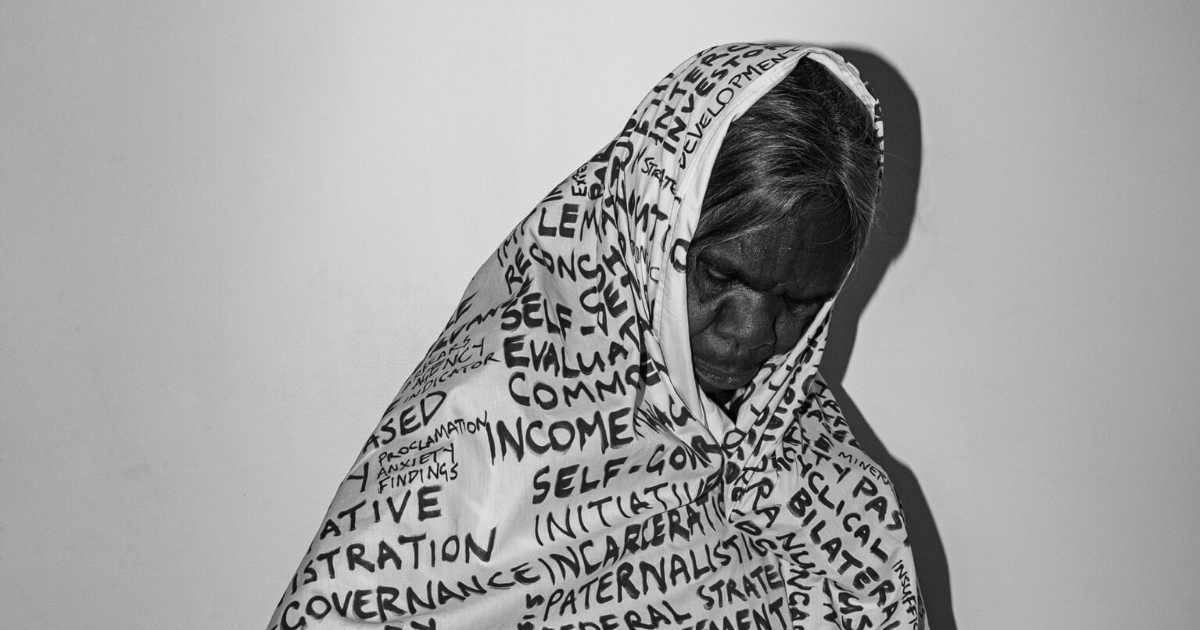
Pulangkita pitjangu (When the blanket came)
General

Pulangkita pitjangu (When the blanket came)

“I want to light a fire in you…….light a fire with spirit and knowledge.”

Behind the National Photographic Portrait Prize 2020 finalists Rene Kulitja & Rhett Hammerton’s work!

Rene Kulitja is a passionate Pitjantjatjara woman driven by a desire to enrich and care for the lives of Anangu people.

Rene was born at Ernabella/Pukatja (SA), then a remote Presbyterian mission. The mission was founded in 1938 by Charles Duguid, who insisted that all his missionaries learn Pitjantjatjara and that children be taught in their own language.

Growing up in the APY Lands in a world rich with culture, law and spirit, Rene now sees things changing:

“Today I see something happening. I see something coming towards us, something has come into our world……”

“This blanket represents English that is coming and pressing me down, I can only see through a tiny hole. I feel smothered by the blanket of English.”

“This blanket has come and covered over our language”

“I think a lot about the two worlds that we live in now – the non-Anangu world, whitefella world, the mainstream world, and the Anangu cultural world. I think about how to work within both worlds, how to bring them together so we’re supporting each other with strong knowledge about both worlds. And I think about how to pass on my experience and knowledge to my children so that they stand strong in their culture, stand strong in the two worlds.”

Rene Kulitja

Rene is a NPY Women’s Council Director, an artist for Tjanpi Desert Weavers, founding director of Walkatjara Arts and chairperson of Maruku Arts Governing Committee. She is an environmentalist, chorister with the Central Australian Aboriginal Women’s Choir, member of the Uti Kulintjaku mental health team at NPYWC, dancer, women’s rights advocate, law woman and grandmother.

Rhett Hammerton

Rhett is a long time photographer for NPY Women’s Council with many years working in and around remote communities. Rhett has built friendships and the confidence of many of his Anangu subjects. He works with a respectful and considered approach focusing on collaboration, inclusivity and adherence to cultural protocols.

Rhett has a background in Photojournalism and a growing visual arts practice.

Vote for Rene & Rhett in the National Photographic Portrait Prize Peoples Choice Award

Rhett Hammerton

Read more
NPY Women's Council opposes Cashless Debit Card
Research & Policy

NPY Women's Council opposes Cashless Debit Card

NPY Women’s Council (NPYWC) opposes the Federal Government’s proposed mandatory roll out of the Cashless Debit Card in the NT, or more broadly throughout Australia. NPYWC believes the scheme will create a lack of empowerment for impoverished people and not address the root cause of poverty and substance misuse.

Recipients of Centrelink income are currently subject to the Basics Card, brought in by the Howard government in 2007 as a part of the NT intervention. The Basics Card quarantines 50 per cent of recipients’ income for use at approved stores, compared with the opportunity for 80 per cent on the proposed Cashless Debit Card (CDC).

There is no conclusive research or evidence to suggest that the CDC will address its key objectives of ‘alleviating poverty, alcohol abuse or encouraging employment’. NPYWC believes the introduction of the CDC will negatively impact remote income recipients who are already living well below the poverty line and live in very fragile financial ecosystems.

NPYWC advocates that the causes of poverty and substance misuse in remote communities are urgently addressed in a qualified way; and that the financial cost ($1.7 million)of transitioning people to the CDC would be better spent in services that support people to achieve this, such as early job creation for school leavers.

The CDC will act to disempower remote community recipients and bring them “back to when our ancestors first walked into the missions and were fed by rations.” NPY Women’s Council Director, Maime Butler.

Remote communities have not been consulted in relation the CDC roll out and have not been able to provide input to how this will affect their lives where the reality is that no matter what kind of income management is implemented, people are still living well below the poverty line with little access to permanent employment.

A national one size fits all CDC model does not consider remote community income recipients who:

· pay substantially more for store bought goods than anyone else in Australia due to freight costs

· speak English as a second language, finding it nearly impossible to access Centrelink phone support without translators

· operate in a different cultural environment where resources are shared according to family obligations

The CDC will not reduce violence or poverty and may act to exasperate it as more pressure will be placed on community members with cash incomes to share what resources they have.

NPYWC does support voluntary engagement with the scheme.

Read more