Your donation supports the voices and leadership of Aṉangu women across the Ngaanyatjarra, Pitjantjatjara and Yankunytjatjara Lands. NPY Women’s Council is an Aboriginal-led organisation created by women for women, focused on improving health, safety, culture and community wellbeing in remote Central Australia.
We appreciate any contribution you are able to offer.
Please fill out the form below to make a donation.
Cart
Your cart is empty
Donate
Article:Community-Led Campaign to Celebrate Strong Families
Community-Led Campaign to Celebrate Strong Families
The work of keeping tjitji tjuta (children) thriving does not sit with just one or two people. It lives in relationships - grandparents, aunties, parents and children, and in the stories that have been passed down for generations.
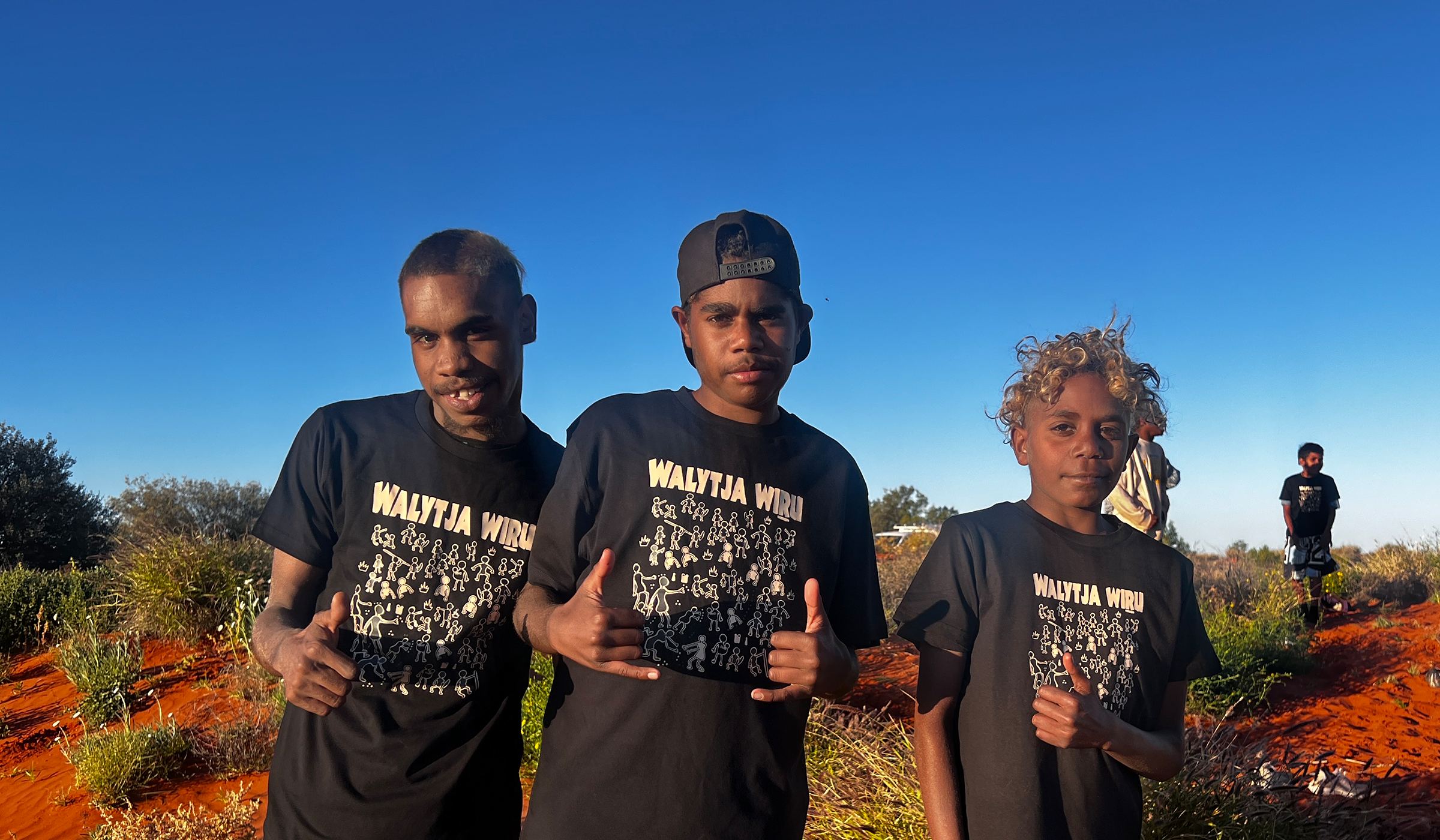
In communities across the NPY Lands, we asked: What do strong families look like to you? The answers sit at the heart of Walytja Wiru, a community-led project developed through NPY Women’s Council’s Walytjapiti program alongside Chairperson Margaret Smith and community members.
Walytja Wiru - the Pitjantjatjara translation of 'beautiful families' - is exactly that; celebrating all that is beautiful about Anangu ways of family:
Ngapartji-Ngapartji: Respect
Connection: Parents listening to kids, and kids listening to parents
Tjukurpa: Culture; sharing Anangu stories to keep culture strong
Bush Foods: Supporting healthy bodies through traditional foods
Walytja: Family; highlighting the role of grandmothers, grandfathers, aunties, little aunties, and extended kin in Anangu child-rearing
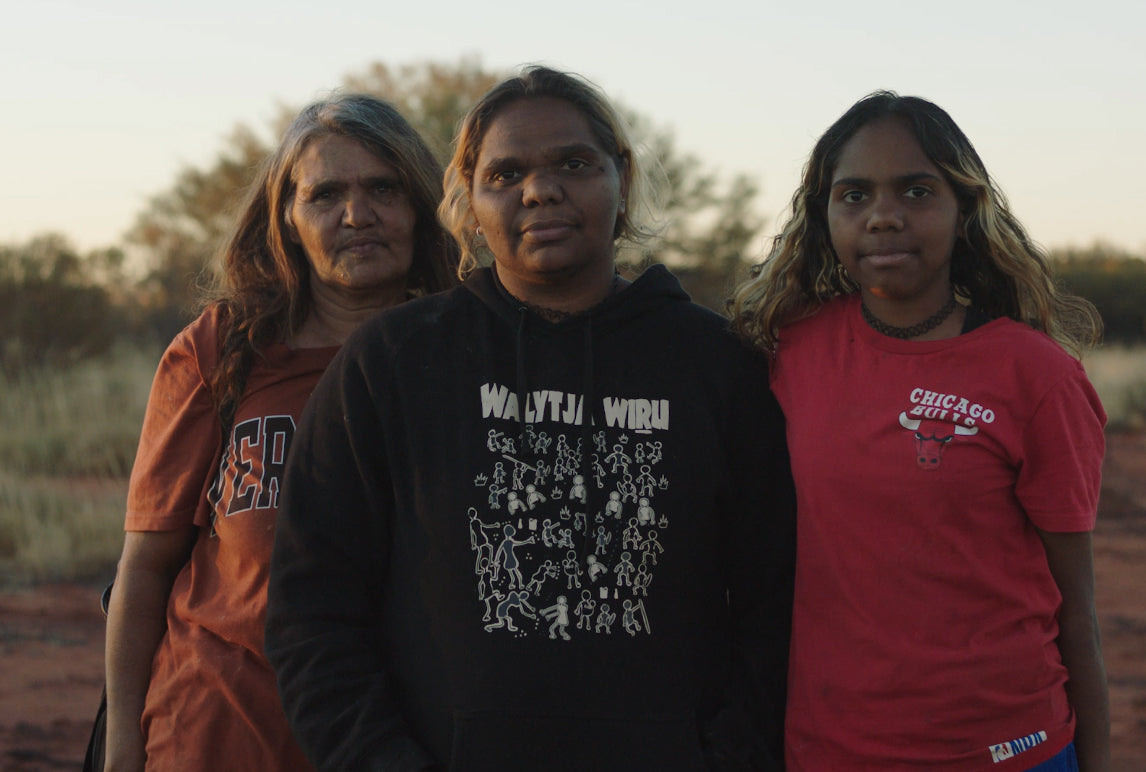
To accompany this work, these themes have been brought to life through a beautiful print designed by Anangu artist Oumoula McKenzie. This visual celebration of culture and care features on a limited run of merchandise including t-shirts, tote bags and stickers.
They will be available to purchase from a very special pop-up shop at DuYu Roastery on 15th May from 8:30am to 2pm. Each item of merchandise sold will go towards supporting Anangu families with items such as blankets, food and power cards.
For International Women’s Day (IWD) 2026, we are proud to share a new documentary celebrating the leadership and strength of NPY Women’s Council’s youngest Director, Azaria Foster, from the Irrunytju and Wanarn communities in Western Australia.
Led by Azaria herself, the film shares her journey to becoming a Director and offers powerful messages of strength and encouragement to kungkas (girls and young women) across the region.
It’s important to speak up […] use your own voice to advocate and as a result of using your voice, great things will become possible. – Azaria Foster
UN Women Australia’s 2026 IWD theme, “Balance the Scales,” is powerfully reflected in Azaria’s story - a reminder that inclusivity, accessibility and collaboration within community are essential to creating opportunities for systemic change and lasting transformation.
Azaria’s story is about speaking up for yourself and your community, and in doing so advocating for justice and equality for the next generation. This is echoed in the film which focuses on the importance of education whilst encouraging young women to become leaders in their communities.
To overcome shame I kept attending school. By going to school I was able to learn lots of great things and when I finished school I started working. These different jobs have given me confidence. – Azaria Foster
Azaria’s grandmother played an important role in the inception of NPYWC, and the film honours this legacy by highlighting the power of intergenerational knowledge sharing. It reflects the collective strength of mothers, daughters and grandmothers, and what becomes possible when multiple modes of education come together.
Intergenerational connection and teaching are deeply embedded in Anangu ways of knowing, being and doing. Sharing knowledge, nurturing pride and uplifting one another are essential to keeping culture strong and empowering young women and girls to pursue education, employment, leadership opportunities and challenge gender-based stereotypes.
I used to go in with my grandmother for her Director meetings […] So it’s like I’ve learned from my grandmother. - Azaria Foster
The process of planning and filming the documentary further revealed Azaria’s immense strength as a young leader. Her mother, grandmother and three children feature in the film, alongside other kungkas and young people from community. As the sun set on the last day of filming, a sense of pride filled the air for what had been made possible through cross-generational storytelling.
Because you know when you undertake your work with love, it becomes easy. – Azaria Foster
The film will be used as a key resource in future kungkas education advocacy workshops and kungka careers conferences, in line with Azaria’s aspirations to share her story to inspire other young women and encourage them to speak up for their communities. Azaria reminds us:
When I was a youth worker, I made sure I had love in my heart working with kids in the community… As an Anangu, you know what you need for your community and using your voice, it’s very important. - Azaria Foster
On IWD 2026, we thank Azaria and all NPYWC Directors for their unwavering commitment to leadership that is grounded in open hearts and open minds. Without strong female role models across the 26 remote tri-state communities we serve, our advocacy work would not be possible.
We honour the next generation of leaders - the kungkas with strong hearts and minds - today and every day, as they carry our vision forward and help ensure all Anangu live well in both worlds.
This short film was shot on Azaria’s grandmother’s country in Wanarn by an external videographer Gabriel Morrisson and directed by former NPYWC Research and Policy team staff member Kiri Davies. NPYWC extend our thanks to the National Indigenous Australians Agency (NIAA) for the continuation of the Kungka Education Advocacy Project from 2026-2027.
“It's like it's treading on us you know, standing on top of us to make the rules. To change our rules, what Anangu women are saying. Anangu want their kids back in their own communities, with their own kinship and proper families. Their real families. They're losing language living with carers - language, culture, everything. And their Tjukurpa. If they want to go round changing new laws, they should consult with us. " – NPYWC Chairperson
Like many concerned organisations in our sector, NPY Women’s Council (NPYWC) submitted a response to changes to the Care and Protection of Children Legislation Amendment (Every Child Matters) Bill 2026 on Friday 22 May. We are concerned about its effect on the lives of Anangu and Yarnangu children and families within the child protection system. From our work with children, families and communities across the NPY lands, we know that many of the issues driving child protection involvement are closely connected to poverty, remoteness, housing stress, service shortages, intergenerational disadvantage and the ongoing impacts of colonisation, rather than a lack of care or love for children.
We are disappointed that the NT Children’s Commissioner, Shahleena Musk, was not consulted ahead of the announcement to launch an Inquiry into the Northern Territory (NT) child protection system and was not appointed to participate in the Inquiry committee. Instead, the decision to appoint Karen Webb, former NSW Police Commissioner, shows a misalignment with the commitment from the NT Government to take seriously shared decision making with Aboriginal and Torres Strait Islander communities. Decisions such as this risk undermining the shared commitment to lived experience and subject matter expertise required for this type of reform.
NPYWC rejects Chief Minister Lia Finocchiaro’s comment regarding ACCO responses to the Bill as “hysteria”. Finocchiaro’s claim that the Bill represents the NT Government making “good laws that protect Territorians” is untrue, in NPYWC's opinion, the Bill will not protect Aboriginal and Torres Strait Islander children and young people. Instead, the Bill has the potential to make Closing the Gap targets even more unobtainable for very remote communities who face who the brunt of legislation such as this.
Further, NPYWC supports the joint media release from NAAJA, CAAFLU, CAWLS, TEWLS, KWLS, DCLS and LANT reminding us that under Northern Territory law, it is a criminal offence to disclose or publish identifying or confidential information connected to child protection matters and that every Northern Territorian should be concerned about the publication of any allegations against parents and families that have not been substantiated. These leaked reports subsequently laid the groundwork for launching the Child Protection Investigation and announcing the changes to the Bill.
The changes proposed in the Bill move further away from the Aboriginal and Torres Strait Islander Child Placement Principles (ATSICPP) of Prevention, Connection, Participation, Placement and Partnership - and will categorically increase the number of Aboriginal and Torres Strait Islander children in out-of-home care. We firmly believe that through safeguarding of the ATSICPP in legislation and in practice, the number of Aboriginal and Torres Strait Islander children overrepresented in the child protection system (Closing the Gap target 12) will actively reduce.
The 2017 NT Royal Commission, the Implementation of the Aboriginal and Torres Strait Islander Child Placement Principle Northern Territory 2025 Review, and the NT and National Children’s Commissioners have all identified systemic underfunding of family support services, the absence of early intervention infrastructure, housing insecurity, and the ongoing criminalisation of victim-survivors as the drivers of over-representation in the child protection system. Despite this, the Bill does not address any of these drivers. Conversely, the Bill will contribute to harm, intergenerational trauma, and increase pathways into the juvenile justice system by removing First Nations children from their families and kinship networks.
“Trauma from child removal affects parents in long term ways […] it is important to listen with compassion, understand the depth of grief and recognise the need for culturally safe and supportive spaces for healing” – Senior Anangu woman
NPYWC always advocates for child safety and recognises the need for effective child protection systems. However, we do not believe this Bill addresses the underlying causes driving child protection involvement in the NT.
Instead, we are concerned the Bill:
Lowers the threshold for intervention into families;
Expands coercive powers;
Increases pathways into long-term care;
Fails to adequately address poverty, housing instability and service shortages;
Risks causing further harm to vulnerable children, families and communities.
In our submission, we recommended that the Bill;
Is withdrawn pending genuine consultation with Aboriginal organisations, communities and others;
Ensures that the reforms align with the ATSICPP and Closing the Gap Priority Reforms;
Requires active and supported participation of families in all significant decisions;
Recognises poverty, remoteness, disability and housing insecurity as structural issues, rather than parental failure; and
Strengthens accountability for proactive efforts and reunification.
Importantly, we also urged the NT Government to meaningfully consider the unique, tri-state context NPYWC operates when examining the impact of this Bill on child protection, children and families. Our remote and very remote region means that Anangu and Yarnangu experience disproportionate disadvantages that increase their experience of structural discrimination, disconnection to culture and country, and intergenerational trauma.
NPYWC’s consistent advocacy on these issues led to the establishment of Ngura Kutju in 2026 to help transform the way child protection services are delivered in the NPY region. Ngura Kutju is an example of Anangu and Yarnangu-led decision making that privileges the expertise of Aboriginal Community Controlled Organisations (ACCOs). Ngura Kutju demonstrates how community-led understanding and approaches to community engagement will lead to greater outcomes in early intervention and prevention. Finally, incorporating broader ideas around Indigenous safety, kinship care, and child rearing practices will pave the way for advancing culturally safe, trauma- informed solutions.
Read our full submission to the Legislative Scrutiny Committee regarding the Care and Protection of Children Legislation Amendment (Every Child Matters) Bill 2026 (Serial 67) here.
NPY Women's Council is grounded in, and continues to live and work on, the sovereign Lands of the Arrernte people, and the Aṉangu and Yarnangu people - the rightful custodians of the Ngaanyatjarra, Pitjantjatjara and Yankunytjatjara Lands.





%20thriving%20does%20not%20sit%20with%20just%20one%20or%20two%20people.%20It%20lives%20in%20relationships%20-%20grandparents,%20aunties,%20parents%20and%20children,%20and%20in%20the%20stories%20that%20have%20...)