Skip to content

Your donation supports the voices and leadership of Aṉangu women across the Ngaanyatjarra, Pitjantjatjara and Yankunytjatjara Lands. NPY Women’s Council is an Aboriginal-led organisation created by women for women, focused on improving health, safety, culture and community wellbeing in remote Central Australia.

We appreciate any contribution you are able to offer.

Please fill out the form below to make a donation.

Cart

Your cart is empty

Donate

Article: Aṉangu Men Walk Together to Pass on Knowledge

Aṉangu Men Walk Together to Pass on Knowledge

Aṉangu Men Walk Together to Pass on Knowledge

In early August, 50 Aṉangu men – Elders, cultural leaders, and young men and boys – came together from across 350,000 square kilometres for a three-day Watiku Tjina Ankunytja (Men’s Walk) across Central Australia.

We are following in the footsteps to do the right thing for Aṉangu Tjuta (many people). They talk about footsteps… you’ve got to go step by step; you have to put a foot on the right track, you will remember, this might be the beginning, what’s coming next? Because young people are walking roughly in the towns and cities… not carefully, thinking about their footsteps. Young people are scattered, they are not thinking about their footsteps. – Jamie Nganinyu, Senior Uti Kulintjaku Watiku team member.

Young wati (man) consulting the map of the walk route
Young wati (man) consulting the map of the walk route.

Walking 60 kilometres by foot (tjina ankunytja) through a landscape alive with the spirit of ancestral beings, and following in the footsteps of past generations, was an intensive educational experience. For the Uti Kulintjaku Watiku team, Watiku Tjina Ankunytja is above all an opportunity for knowledge to be passed on through a traditional way of learning.

It’s really important for Elders to go on the walk because they’re the leaders, they know countries more than us, they know stories, they know everything, song for that place. Everything. – Thaddeus Brady, Uti Kulintjaku Watiku team member.

Group from Imanpa, NT, Watiku Tjina Ankunytjaku (Men’s Walk), August 2025, Photo by Rhett Hammerton, ©NPYWC
Group from Imanpa, NT.

Living in remote communities can be challenging for young people, with isolation, limited employment, boredom, cannabis use and family conflict creating a stressful environment that often leads to withdrawal into homes, screens and marijuana use. The walk offers a positive alternative, giving Aṉangu men of all ages the chance to step away from these pressures and reconnect with the land, where they can see the stars, hear the birds and feel the wind.

Going out to the bush is the main part , it helps all the young fellas to refresh their mind… In the community here, they just stay at home… That’s all. That’s all they do every day. That’s their normal thing to do. But taking them out bush, it’s something new. It’s really helping them to get busy on something… It’s different than coming together in the community because community’s still a distraction. Coming together out bush, just men, just young Watiku (men), it’s different. – Thaddeus Brady, Uti Kulintjaku Watiku team member.

Young man holding a mulyamaru (goanna) during men’s walk, NT, Watiku Tjina Ankunytjaku (Men’s Walk), August 2025, Photo by Rhett Hammerton, ©NPYWC
Young man holding a mulyamaru (goanna).

The walk was an important time for young men to learn from older Aṉangu men with care and encouragement, and whose ways of teaching are in sharp contrast to mainstream education. It also recognised the leadership and guidance of the senior men who shared their knowledge.

In our culture we don’t ask question to Elders, they would say ‘no, don’t, what are you trying to find out?’. We will just listen, and they will tell us, what we need to know, that’s all. They know what we need to know.Thaddeus Brady, Uti Kulintjaku Watiku team member.

Watiku Tjina Ankunytja, which began at Tjunti creek and finished in Kaltukutjara (Docker River), brought together men and boys from across the Ngaanyatjarra, Pitjantjatjara and Yankunytjatjara region, with participants travelling from communities in South Australia and the Northern Territory.

Mr Peter Mitchell teaching Tjukurpa, Kunapula outstation, Watiku Tjina Ankunytjaku (Men’s Walk), August 2025, Photo by Rhett Hammerton, ©NPYWC
Mr Peter Mitchell teaching Tjukurpa, at Kunapula outstation.

Building on the success of the 2024 pilot walk, when participants from a group of more than 30 Aṉangu men described the experience as transformative, the journey continues to provide young men with meaningful opportunities to connect and grow.

I could see they were learning, and they were really interested. Young fellas are always inside the house. This was a chance to get a fresh mind and to get out. Now they are feeling like they have done something good, and they are becoming role models. – Stanley Windy, Uti Kulintjaku Watiku team member.

The event was led by the Ngaanyatjarra, Pitjantjatjara and Yankunytjatjara Women’s Council, with support from the Central Land Council and the Pitjantjatjara Yankunytjatjara Education Committee (PYEC), highlighting the collective commitment to supporting young men’s wellbeing and cultural learning.

Uti Kulintjaku Watiku Team, Kaltukatjara (Tjauwata outstation) NT, Watiku Tjina Ankunytjaku (Men’s Walk), August 2025, Photo by Rhett Hammerton, ©NPYWC
Uti Kulintjaku Watiku Team, at Kaltukatjara (Tjauwata outstation) NT.

Images by Rhett Hammerton.

Read more

Kungkas Take the Field at Yulara
Youth

Kungkas Take the Field at Yulara

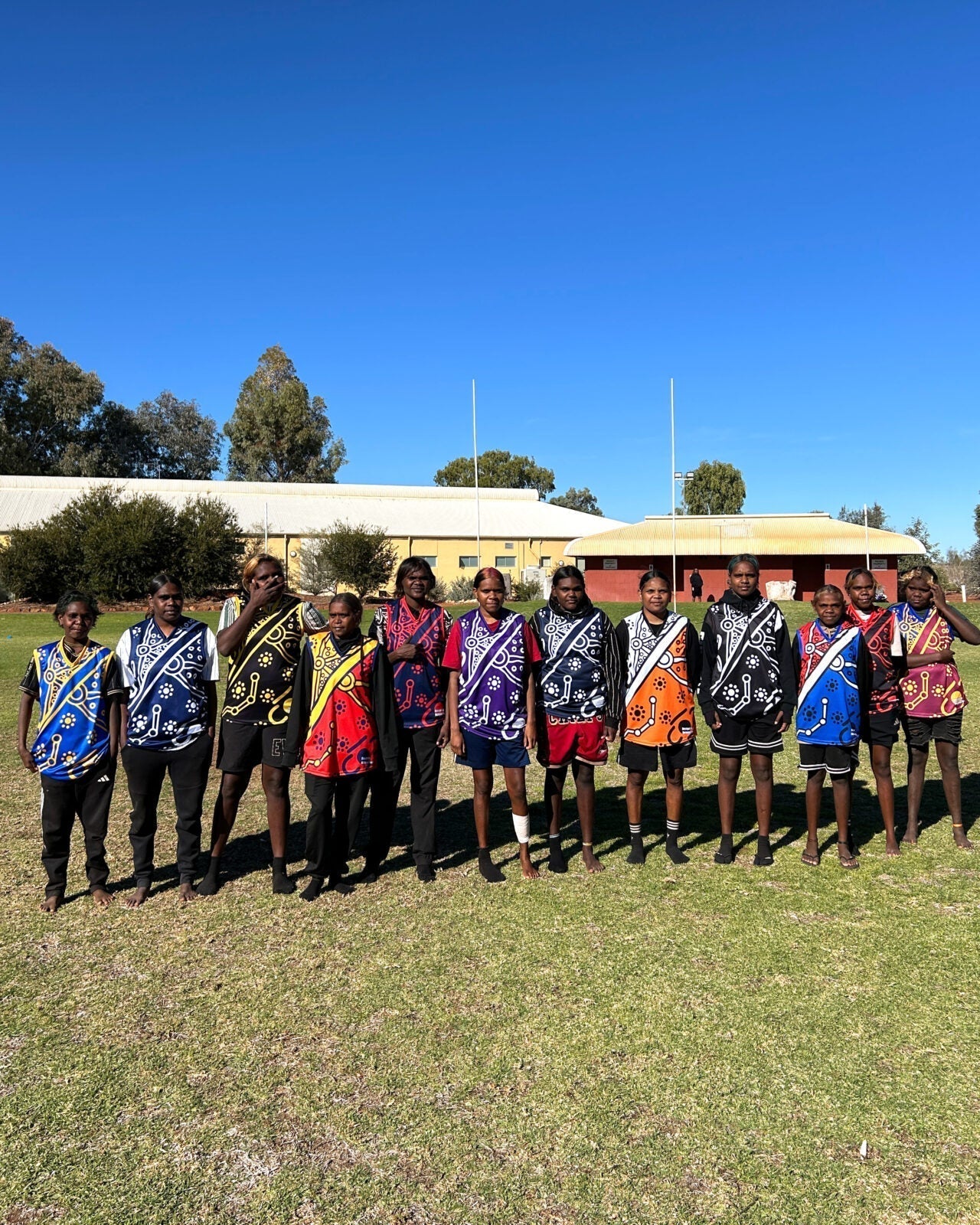
Something special happened out on Yulara Oval during NAIDOC Week this year – over 100 kungkas (young women) from 16 remote communities across the NPY Lands came together for a big, all-girl footy carnival!

It was the third year that the Kungka’s AFL 9’s event took place, a team effort by the NPY Women’s Council Youth Service creating space for confidence, connection, and young women to shine on – and off – the field.

And it wasn’t just all about footy – there was also disco, malu (kangaroo tail) cooked on the fire, crazy hair spray, face paint and all sorts of fun on the side.

For remote communities across the NPY Lands, the vast distances between communities makes the footy carnival a very special chance to come together. Kungkas travelled from right across the central and western desert regions, spanning South Australia, Western Australia and the Northern Territory to be part of the event!

It’s good to get the kungkas out of community and to bring them together to play footy. It’s good they can all come together to play and have fun. I’m happy to see them enjoy each other’s company.

– Shalaylee Coombes, an Anangu Support Worker.

With help from AFLNT and a visit from AFLW Adelaide Crows players, the carnival was full of energy and support.

NPYWC Kungka Footy

This event was made possible through collaboration with Ngaanyatjarra Council and Pitjantjatjara Yankunytjatjara Education Committee, with sponsorship from Maddocks Foundation and Igniting Change. Voyages Indigenous Tourism Australia helped bring the vision to life by hosting the event at Yulara Oval.

Read more
NPYWC Call for Ongoing Protection for Children and Young People
Research & Policy

NPYWC Call for Ongoing Protection for Children and Young People

The Ngaanyatjarra Pitjantjatjara Yankunytjatjara (NPY) Women’s Council strongly opposes a series of harmful legislative and policy changes to the youth justice system introduced by the Northern Territory (NT) Country Liberal Party (CLP) Government since August 2024.

In October 2024, the NT Government lowered the age of criminal responsibility to 10 years and imposed stricter conditions on bail, making it more difficult for children and young people to be granted release. In November 2024 the Government announced they would be relocating all children and young people from the Alice Springs Youth Detention Facility to the Holtze Youth Detention Facility in Darwin 1500kms away. NT Department of Corrections have confirmed they will provide no financial support for families to travel to Darwin to visit children and young people incarcerated at Holtze facility.

At ten – we don’t understand crime. – Young person, Imanpa

Most recently, in July 2025, further changes to the Youth Justice Act were introduced, including expanded use of force within detention facilities, the reintroduction of spit hoods, mechanical restraints, and the use of dogs. These practices are harmful and dehumanising. The reinstatement of spit hoods violates Australia’s commitments under key United Nations human rights treaties, including United Nations Declaration on the Rights of Indigenous Peoples (UNDRIP), United Nations Convention on the Rights of the Child (UNCRC) and the Convention Against Torture & Other Cruel, Inhuman or Degrading Treatment or Punishment (CAT). These changes deeply impact the rights and wellbeing of Aboriginal children and young people.

We don’t want to send our kids to jail. We need funding to keep kids active, keep them out of jail and on country. Men and women need to be taught about culture when young and we need to keep it going. Keep it strong. We need young people to make our community proud. – NPY Women’s Council Director

These changes also contradict the recommendations from the 2017 Royal Commission into the Protection and Detention of Children in the Northern Territory, which called for trauma-informed, culturally appropriate, and community-led approaches to youth justice.

Despite Aboriginal Community Controlled Organisations (ACCOs) attempting to provide feedback to the Government for their “reform” agenda, no consultation with young people, ACCO’s, or community organisations were completed prior to the legislative changes to the Youth Justice Act. NPY Women’s Council Directors are concerned that whilst these changes have been made in the Northern Territory, they will have an impact across the tri-state area due to the transience of families travelling across the NPY lands and often, into Mparntwe Alice Springs.

NPY Women’s Council are a member of the Central Australian Youth Justice (CAYJ) Coalition undertaking youth justice advocacy urging the government to address policies that sever Anangu children and young people’s connection to family, culture, and Country, perpetuating intergenerational trauma that echoes the devastating impacts of the Stolen Generations. We support the #RaiseTheAge campaign and stand with other First Nations leaders advocating to end state violence against children and raise the age of criminal responsibility to at least 14 years to align with the recommendation by the United Nations Committee on the Rights of the Child.

Further, NPY Women’s Council expresses strong opposition to the NT Government’s decision to carry out a 12-month trial, effective 1st September, to allow members of the community to purchase, possess, and use Oleoresin Capsicum (OC) spray — commonly known as pepper spray. This policy shift forms part of a broader “tough on crime” agenda that continues to disproportionately target and harm Aboriginal communities. Introducing weapons into the community under the guise of safety contradicts the evidence; such measures are far more likely to escalate conflict than to prevent it, leading to a diminished sense of safety for all.

You know all the Directors we don’t want to create more problems. It’s dangerous. It’s a big risk. It’s going to cause more violence. We don’t want that to come into communities or to be in community stores. – NPY Women’s Council Director

Although the NT Government has stated it is committed to building safer communities, it must shift its focus from punitive measures to addressing the structural conditions that give rise to harm. Communities need investment in housing, health, education and specialist domestic violence and youth services in order to achieve meaningful change. NPY Women’s Council has signed an open letter with Justice Not Jails imploring the government to reverse the OC spray trial and prevent further harm in communities.

Recently NPY Women’s Council met with the Australian Human Rights Commission Children’s Commissioner Anne Hollands as well Minister for Social Services Tanya Plibersek to discuss these issues impacting our communities and highlight our commitment to advocating for children, young and vulnerable people who are disproportionality affected by these policies. We have also engaged in meaningful conversations with state and federal stakeholders at SNAICC’s conference in Brisbane this week, alongside other ACCOs and First-Nations led organisations working towards increased protections for Aboriginal and Torres Strait Islander children across the country.

Most importantly, the voices of children, young people and families must be central to any decision-making about youth justice and criminal justice legislation to ensure that Anangu are not left behind.

Read more