
Proudly led by women’s law, authority and culture
Minyma-ku Tjukurrpa puru kulintja pukurltu-ya nintipungkulanytja / Minymaku Tjukurpa, ara munukulintja pukulpangku nintilkatinyi
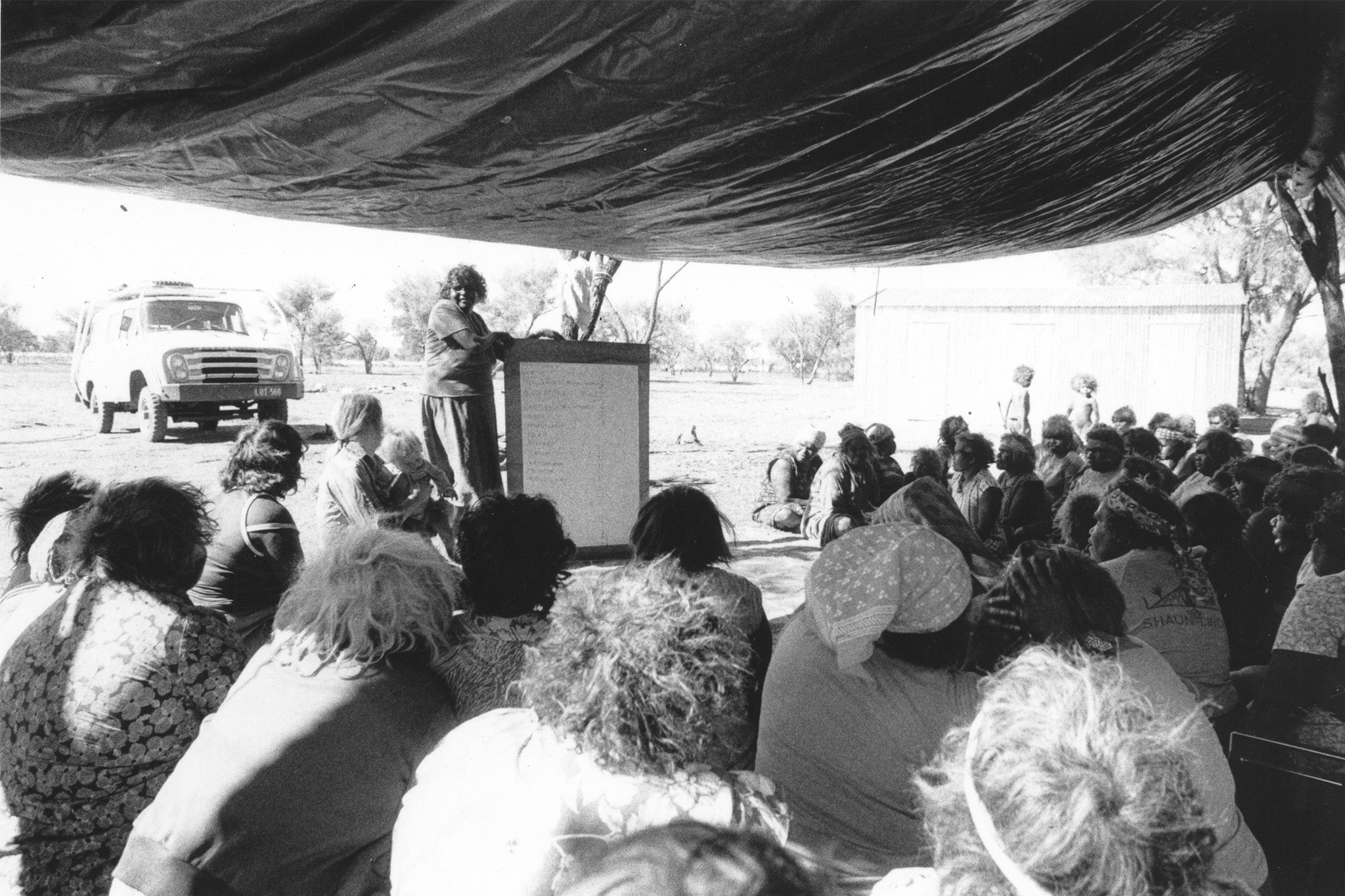
In 1980, a cassette tape recorded with a message from Mantatjara Wilson was sent from community to community in the Ngaanyatjarra Pitjantjatjara Yankunytjatjara (NPY) Lands. The cassette called for women to come together to meet and form a women’s council, so they could stand up and speak about matters important to them. At the time, many Land rights and conversations were being led by men, and women wanted to make sure Land important to women was also included in this conversation.
The power of these and subsequent women have driven NPY Women’s Council from an advocacy body to a leading and critical human services provider in Central Australia. NPY Women’s Council programs align with a deep cultural and practical understanding of remote community life. We know the best solutions come from our community, that is our power.
Proudly Anangu and Yarnangu-led, NPY Women's Council is governed and directed by Aboriginal women across 24 desert communities in the cross-border regions of Western Australia, South Australia and the Northern Territory – an area covering 350,000 square kilometres.

This map shows where NPY Women's Council operates. It shows the location of desert communities throughout the NPY Lands in the complexity of the cross borders of WA, SA and NT. The vast region is 63rd in land mass in the world, just greater than the size of Germany, yet has a population of only 6000. Most of the region is only accessible off-road.
NPY Women's Council is extremely resourceful in engaging and providing service delivery across such a wide region but inevitably the costs are extremely high. The members of NPY Women's Council consider remoteness is not an excuse for exclusion and disadvantage.

"This painting tells the story of how the NPY Women’s Council was started in 1980. I made a cassette tape and sent it around to all the communities for women to listen to. The black line going around the painting with the white marks is the cassette travelling around to all the women in communities.
All the women listened to that cassette about the idea of starting up a Women’s Council. They sat down and talked together.
Then we all came together at Kanpi to have our first meeting together.
That is the big circle in the middle with all us women sitting around.
This was the first time we came together, all us Pitjantjatjara, Ngaanyatjarra, Yankunytjatjara women."
- Mantatjara Wilson (dec), 1990
“So I said to the women, ‘Eh, we should become separate.’ I suggested this because we had been told to be quiet and leave. We all had something to say, about caring for our children and families, about our aspirations to have good lives. We wanted to talk about issues to the government. We wanted to talk together to give a strong message. That’s why we formed the Women’s Council.”
- Nganyinytja OAM (dec.) founding member of NPYWC
Timeline of Key Events

1976
The tri-state alliance of NPY people, the Pitjantjatjara Council, formed to represent Anangu land rights, but female representation was deliberately excluded
1978-79
In 1978 the South Australian Labor Government introduced a Bill recognising the Pitjantjatjara people as the traditional owners of the land in SA, but the Bill was not passed

1980
- The Pitjantjatjara Council and supporters decided to march in Adelaide to protest against the Land Rights Bill not going ahead. Senior law women, led by Nganyinytja OAM (dec.), assisted by her friend Diana James, joined the march despite discouragement as they were women
- A group of Anangu women went to Adelaide for the Australia and New Zealand Association for the Advancement of Science (ANZAAS) Aboriginal Women’s Conference in May 1980, led by Nganyinytja. Nganyinytja spoke so strongly that her words and vision inspired the formation of the Women's Council
- On 9 December 1980, about 40 women attended the first Women's Council meeting at Kanpi. Tjunmutja Myra Watson (dec.) was elected as the Chairwoman, with Diana as the secretary
1981
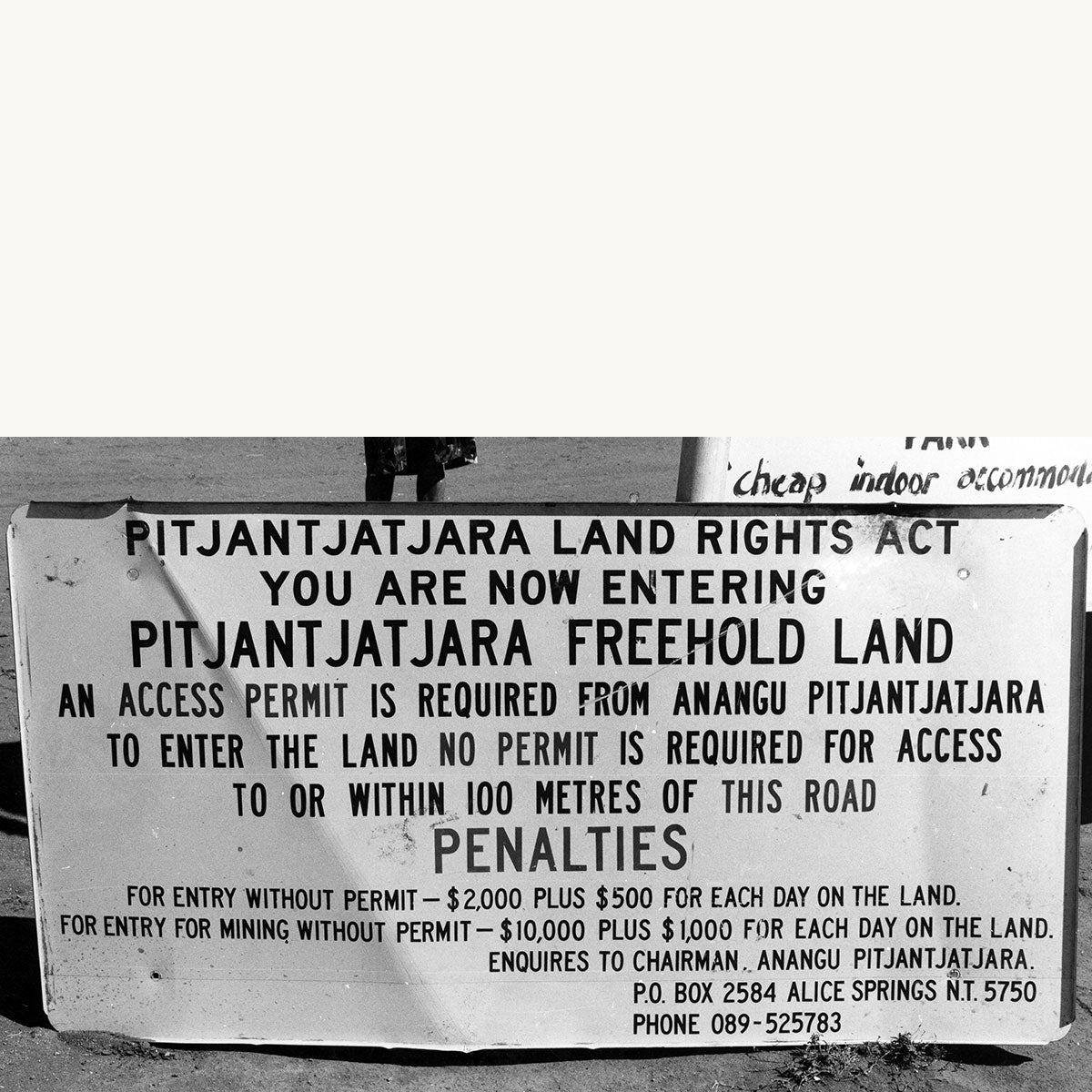
- The re-negotiated Bill came into effect as the Pitjantjatjara Land Rights Act 1981
- The old Commonwealth Department of Aboriginal Affairs provided NPYWC’s first funding - $29,000 for five part-time workers: Kunbry Peipei, Melva Davies, Mantatjara Wilson, Tjunmutja Myra Watson and Diana James
1983
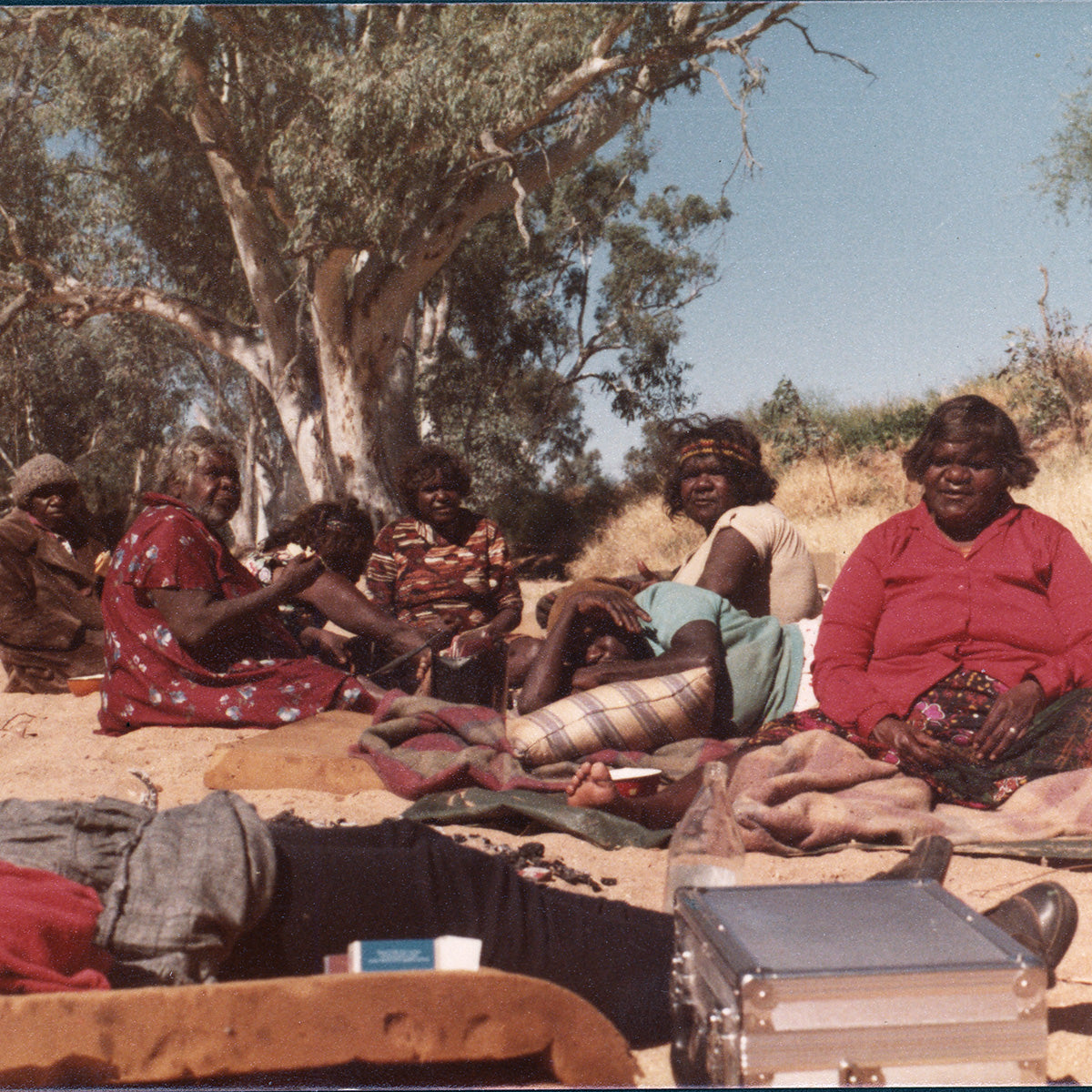
Women started to meet regularly for Law and Culture to celebrate and consolidate their traditional cultural practices and identity.
1987
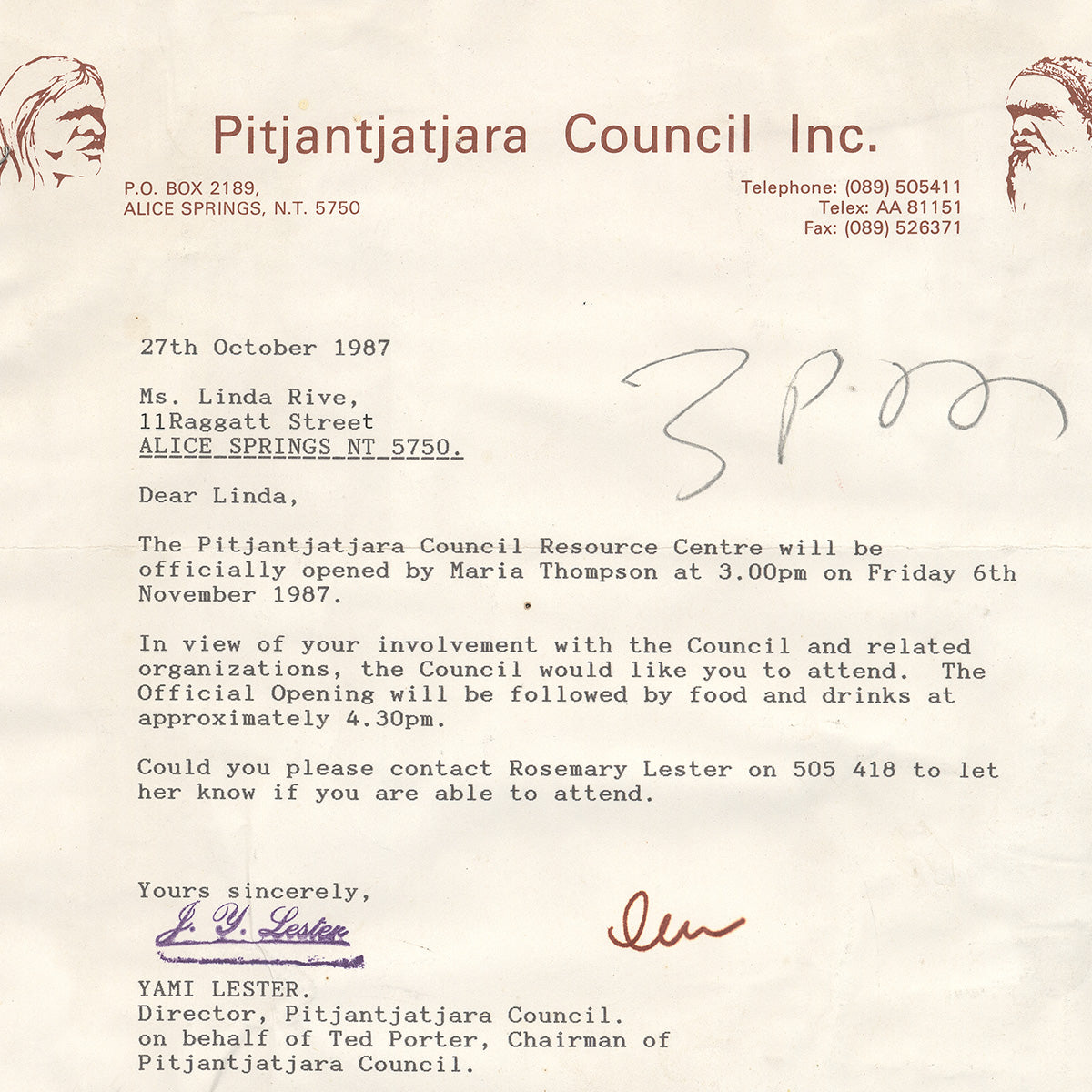
NPYWC initially worked from the Pitjantjatjara Council premises in Bath Street, Mparntwe/Alice Springs. Along with the Pitjantjatjara Council, it moved in October 1987 to a new office space at Wilkinson Street for organisations providing services to Anangu and Yarnangu
1994
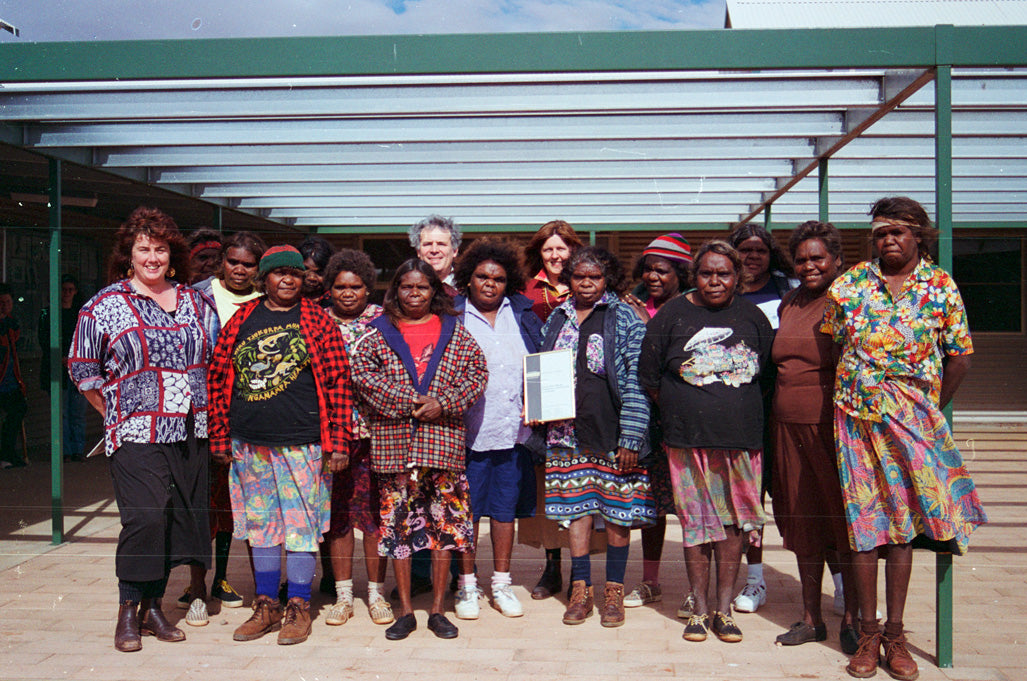
NPYWC became incorporated under the federal Aboriginal Councils and Associations Act 1976 (ACA Act.)
"From different places, we're all women. We all hold strong Tjukurpa and we don't want to see our culture lost. We must keep teaching our young girls the Laws of our grandmothers because we want them to carry it out into the future. We must sort out our problems and we must speak out strongly. That's why we started our Women's Council. If we don't talk up for ourselves, our rights, we get nowhere."
- Tjunmutja Myra Watson (dec.), NPYWC's inaugural Chairperson.
